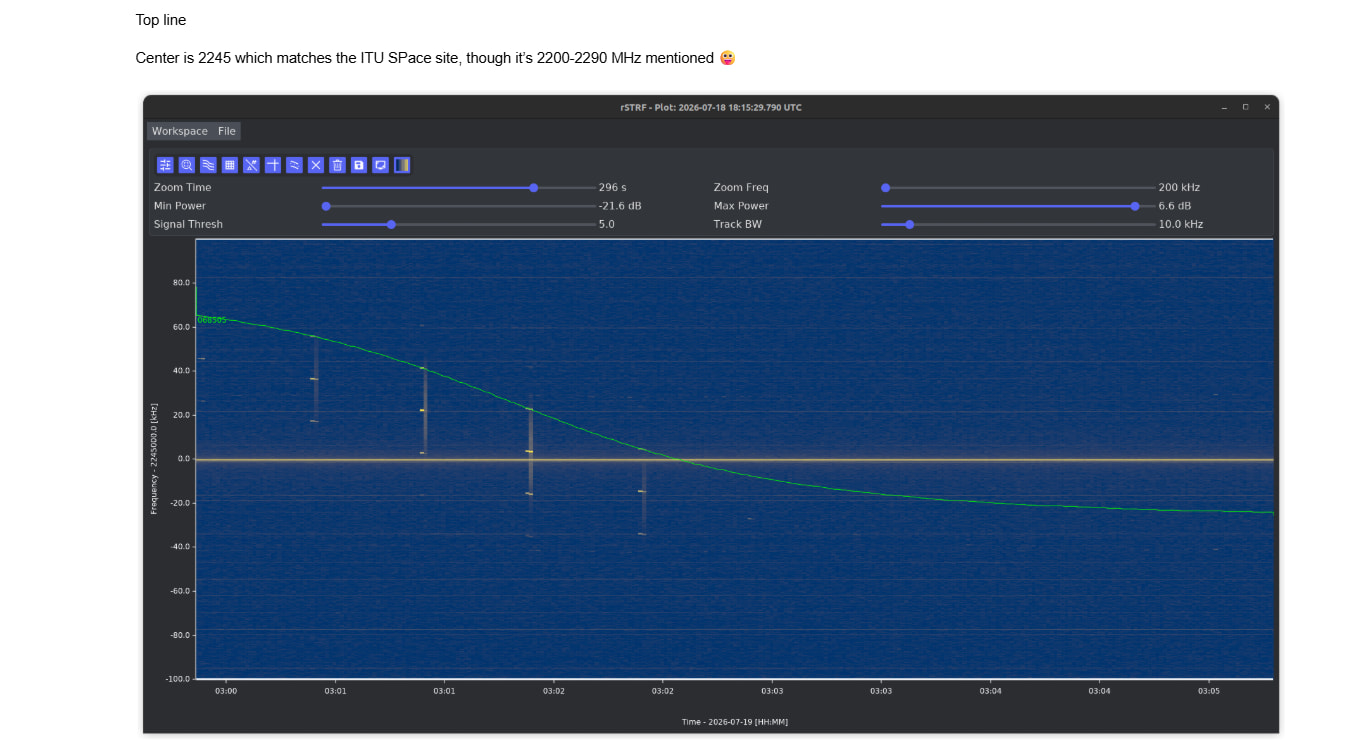
Not seeing any valid decodes in the Observation history for VEGAFLY-1… has it been heard on any of the modes?
1 Like
Yes, there were only a few observations during the first day after deployment from the deployer, and the signals were too weak for us to decode successfully. Therefore, we are truly looking forward to support from all of you and hoping for a miracle with our satellite VEGAFLY-1.
Thank you all very much for your help and support.
1 Like
Unfortunately nothing was seen on today’s pass over the Eastern U.S., but I’ll continue to watch for any signals!
Could you please confirm if the freq (436.655) and modes (cw, 500 & 1000 GFSK) listed on SatNogs are correct?
Thank you!
https://db.satnogs.org/satellite/LPUU-9270-2724-3685-4470#transmitters
Yes, that is fully correct for VEGAFLY-1, but currently, I think you should set up at 500 GFSK mode. Thank you very much!!!
1 Like
im late notice that this sat is very interesting
A 1P PocketQube mission. The mission also includes a 2MP camera as an educational payload. This subsystem, composed of a camera and a microcontroller, captures images and sends them to the onboard computer, which then transmits them to the ground station using SSDV via GFSK packets. The primary educational objective is to give students hands-on experience in designing, operating, and understanding the full image transmission process from in-orbit image capture to successful ground reception using real satellite communication protocols.
everyone should follow this sat
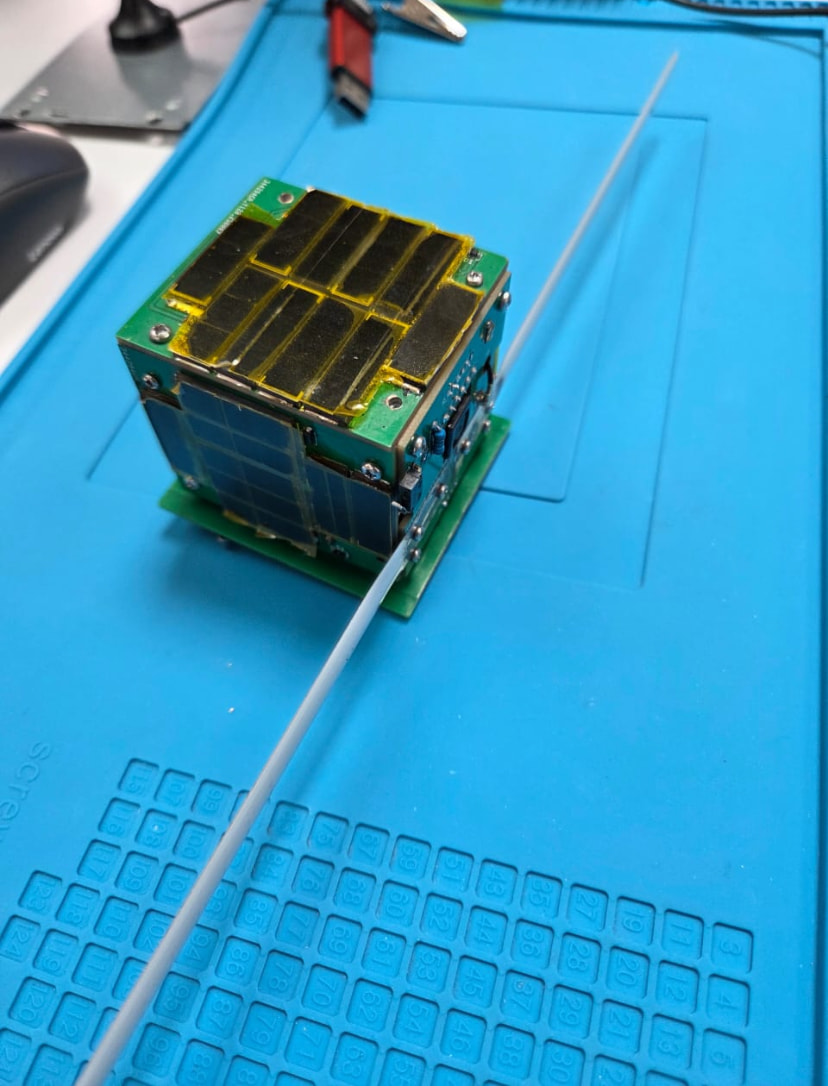
hi @vegastargs do you have better photos than this one

1 Like
Hi @bali. Thank you for your interest in VEGAFLY-1. Here is an old photo from our laboratory during the testing phase.
3 Likes
Greetings!
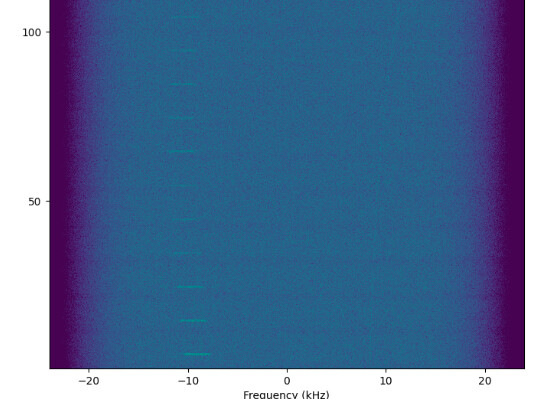
I certainly don’t want to give false-hope, but you may wish to look at this SatNogs observation for VEGAFLY-1:
https://network.satnogs.org/observations/14139485/
… I don’t know what interval you have configured, but this is one of the first waterfalls that I’ve seen w/ narrow enough signals to possibly be your 500 or 1000 GFSK downlink.
2 Likes
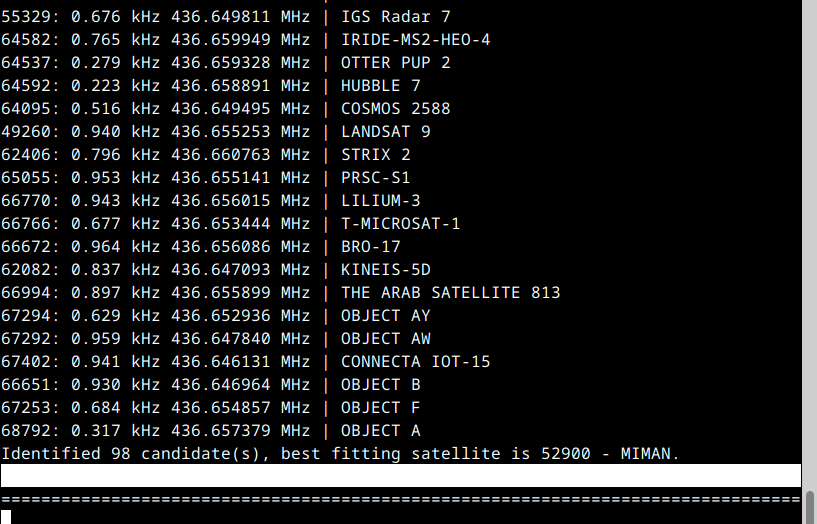
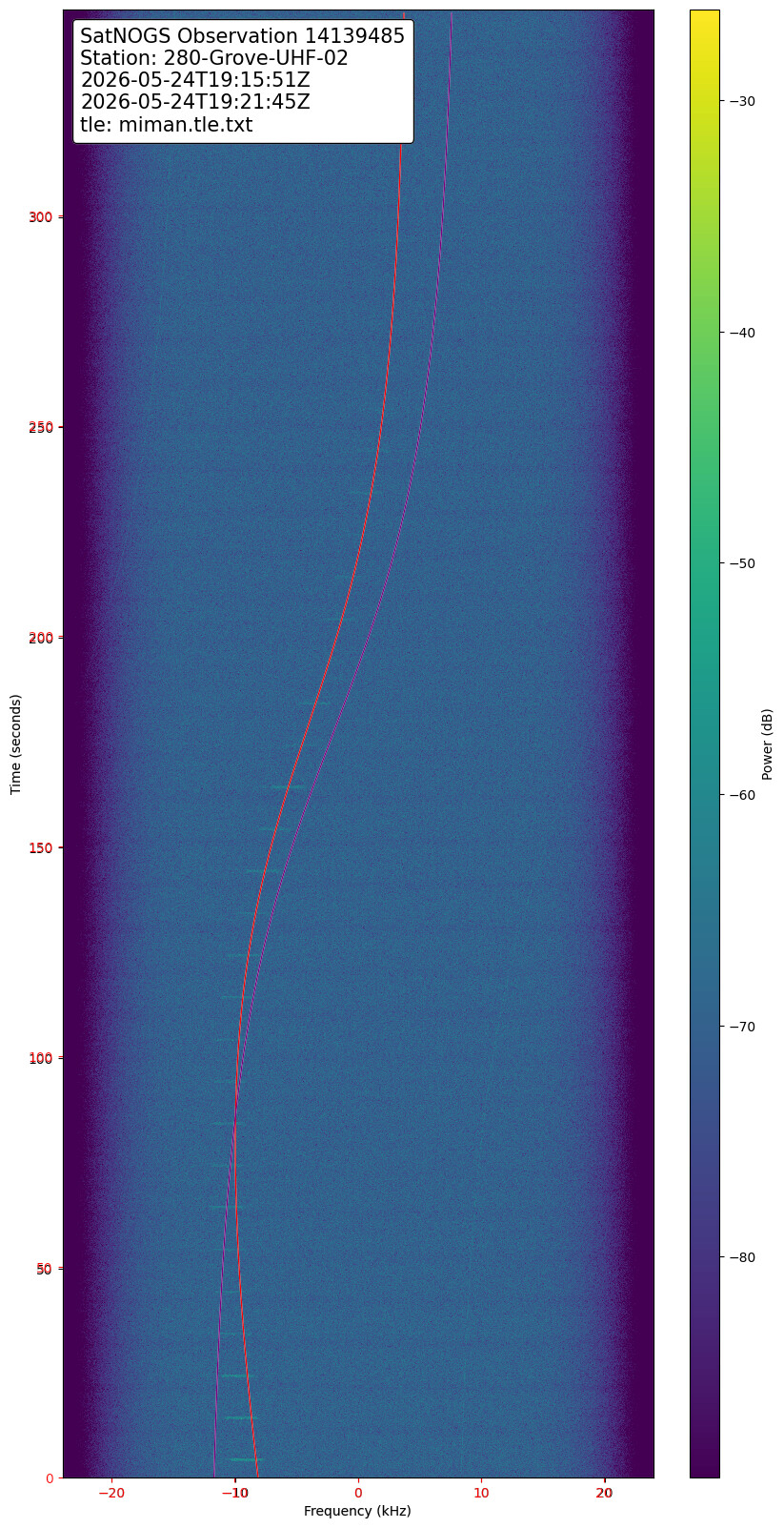
i’m trying to practice using this tutorial
(note: because the gs not provide the artifact .h5 file, im using this script to create .dat file that needed by strf)
and got the result:
rffit -d 14139485.dat -c satno.tle.txt -s 280
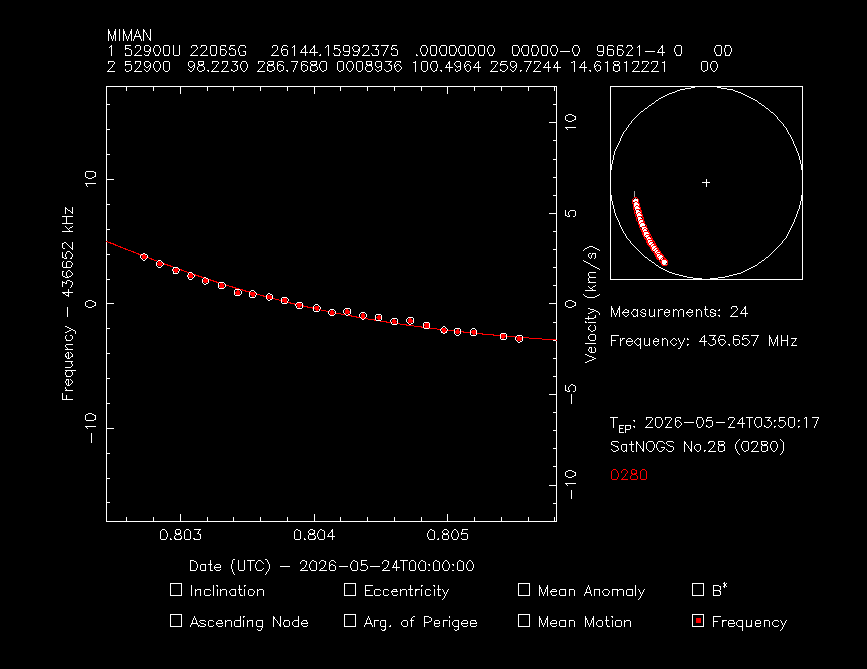
./ichnos.sh -t miman.tle.txt 14139485:3
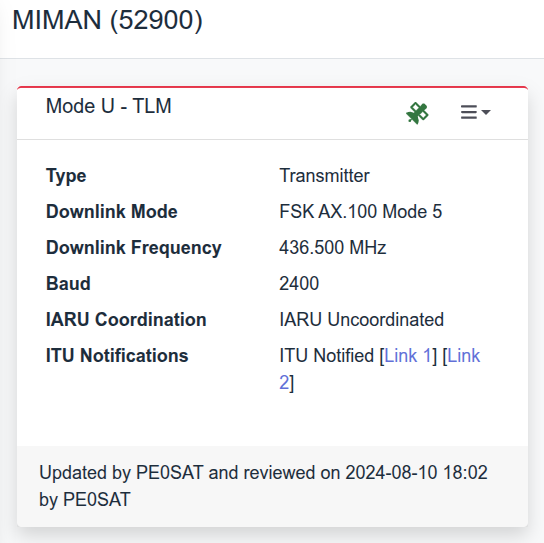
miman.tle.txt (147 Bytes)
sites.txt (1.1 KB)
14139485.dat (816 Bytes)
satno.tle.txt (240.1 KB)
2 Likes
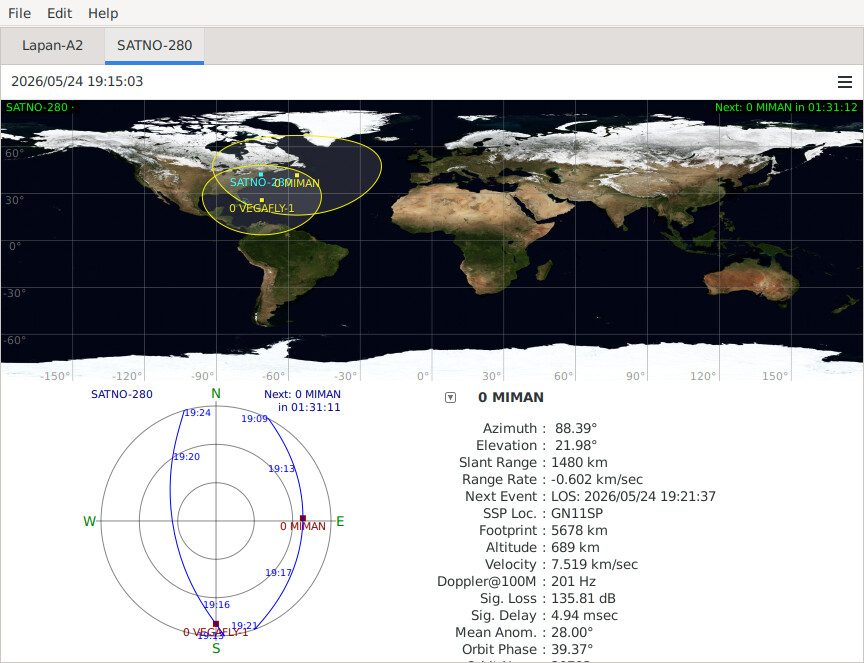
and if replay at gpredict, its more make sense the signal come from miman, when at maximum elevation
1 Like
Thank you @K4KDR .
This bandwidth is quite consistent with VEGAFLY-1; however, we currently do not have any operating mode that produces this type of waterfall pattern. This situation could only occur if the satellite is continuously restarting due to issues such as low battery voltage. In addition, if this were the 1000 GFSK downlink mode for image transmission, the transmission period would normally last less than 1 minute, rather than approximately 4 minutes as shown in this observation.
Another important point is that we were unable to decode the signal from this observation, so we cannot confirm that it belongs to VEGAFLY-1.
2 Likes
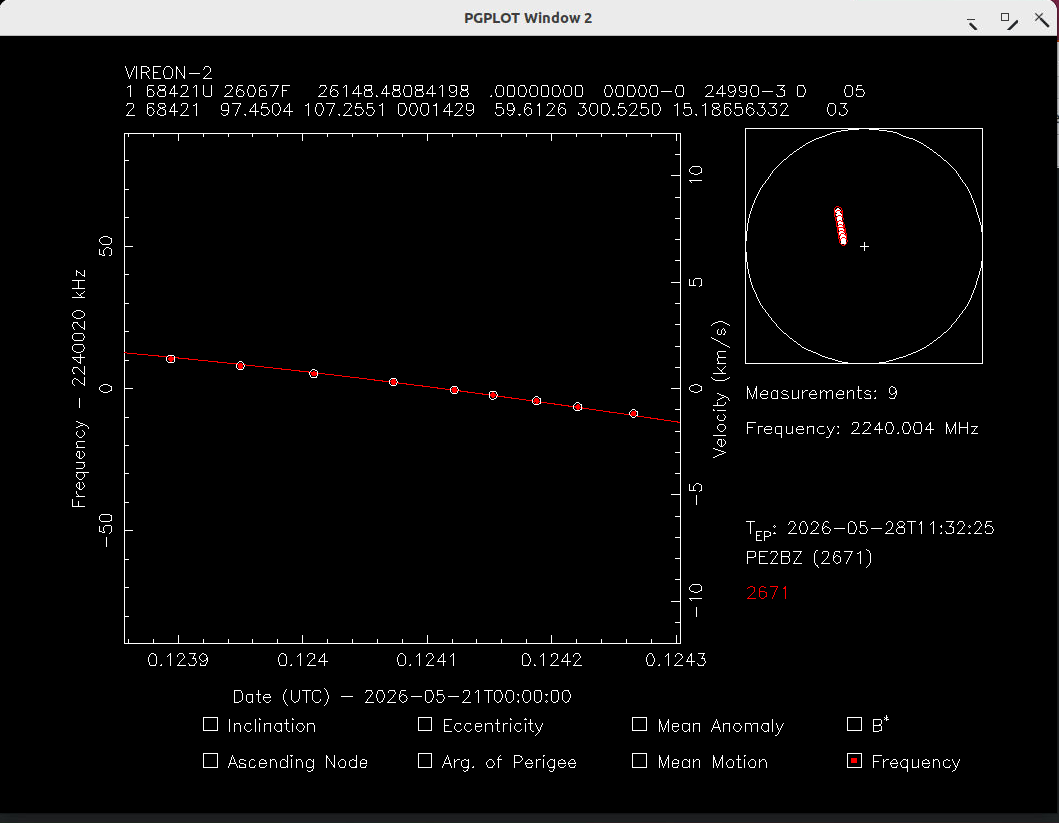
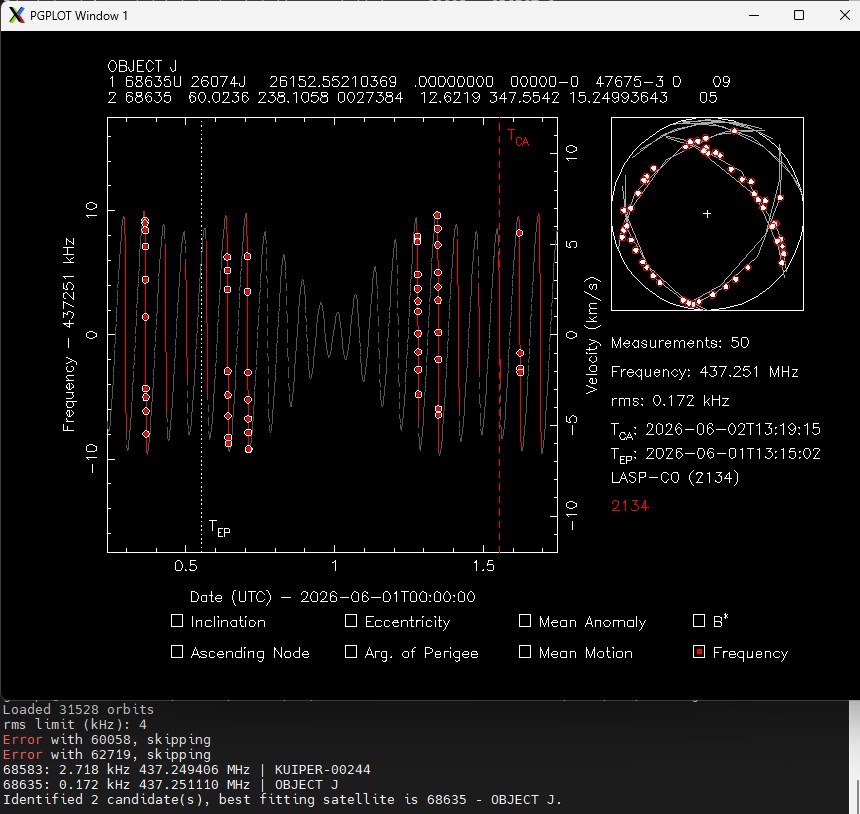
We’ve been tracking CANVAS (temp NORAD ID 98338) using NORAD ID 68635 (OBJECT-J) for the last several weeks with success. Request made in in DB to make 68635 the official NORAD ID for CANVAS..
strf obs from station 2134 as a citation
5 Likes
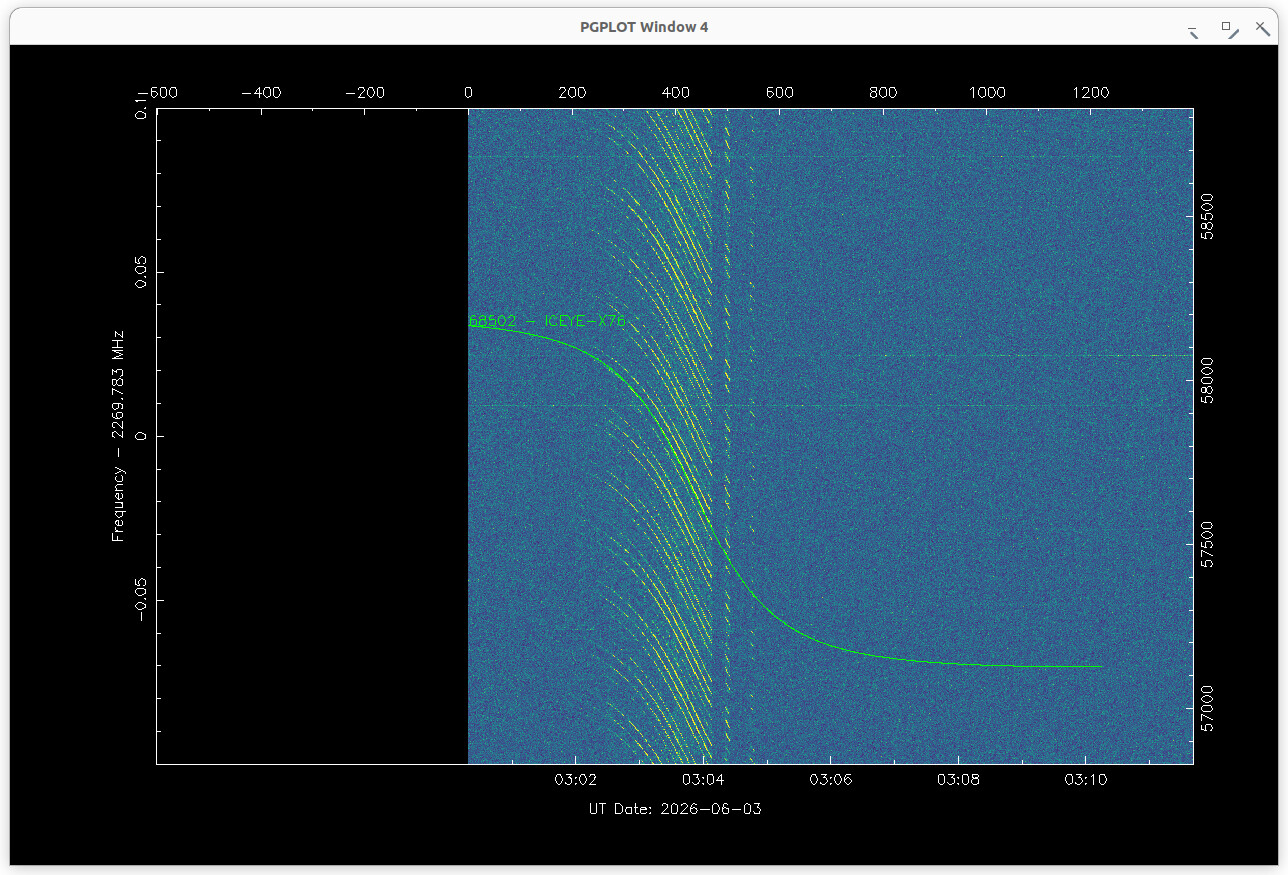
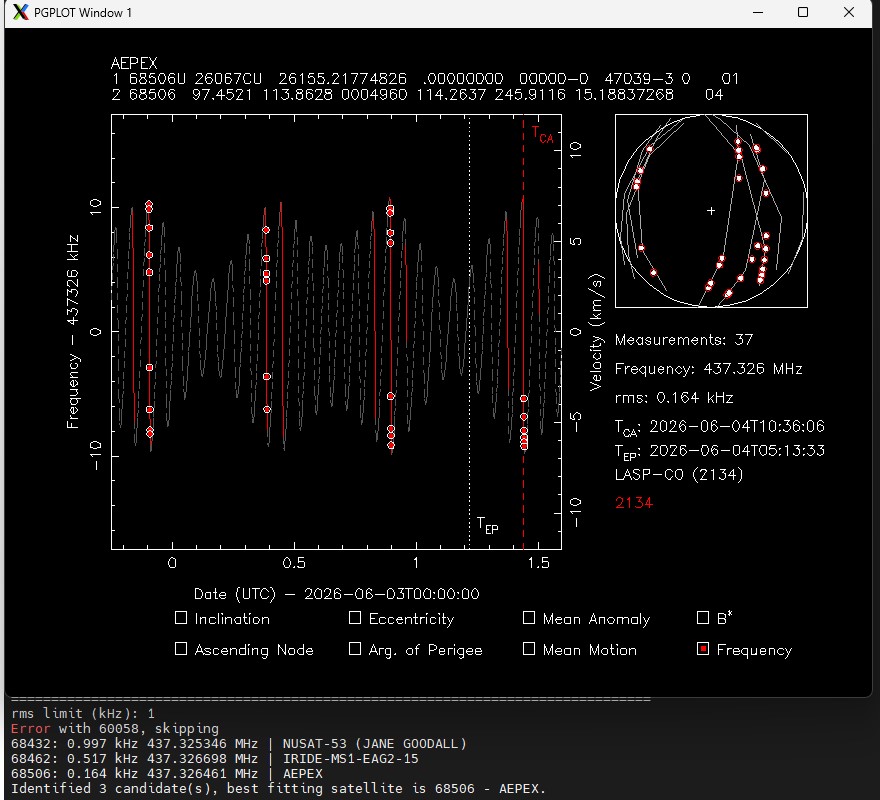
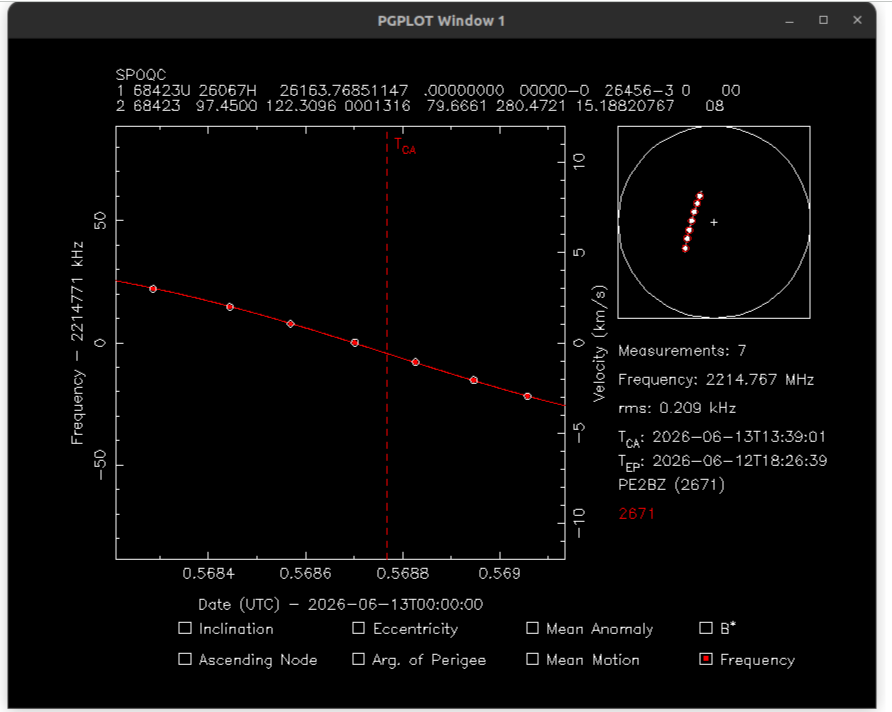
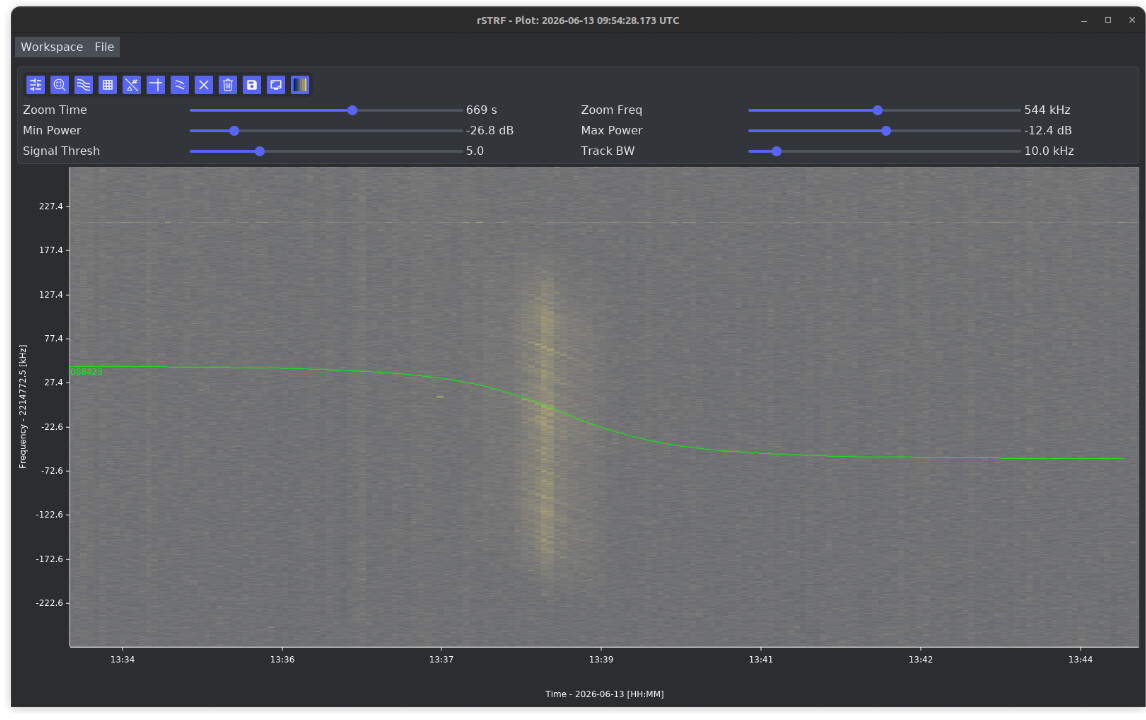
We’ve been tracking AEPEX (temp NORAD ID 98864) using NORAD ID 68506 for the last several weeks with success. Request made in DB to make 68506 the official NORAD ID for AEPEX.
strf obs from station 2134 as a citation
Thanks for catching that @EU1SAT ! Corrected
7 Likes
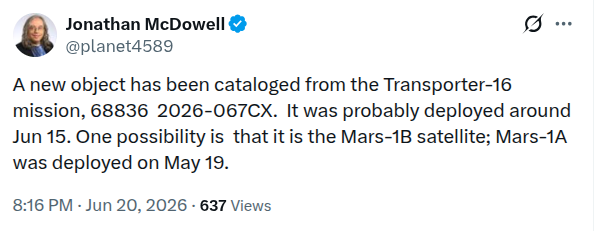
Always interesting when there is ‘new’ news about a past deployment:
3 Likes

confirmed on this observations
2026-06-28 18:44 UTC over 
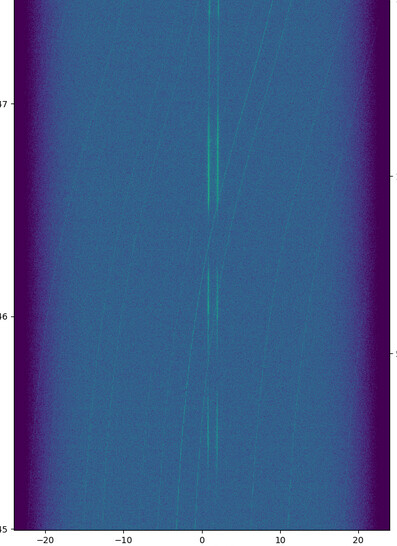
decoded by soundmodem fsk genesis 200 baud + HADES-SA decoder (reply the iq file):
****************************************************
*                                                  *
* HADES-SA (SpinnyONE) Satellite Telemetry Decoder *
*           AMSAT EA - Free distribution           *
*               Version 1.05 (Bytes)               *
*            Compilation : Mar 30 2026             *
*                                                  *
****************************************************
Searching KISS TNC ...
KISS TNC Connected

20260629-05:52:01 : Satellite id 3 (SpinnyONE HADES-SA) packet type 10 (SSDV). E
xpected bytes are 251 for this packet type

*** SSDV frame received on local time 20260629-05:52:01 ***
sat_id    : 3 (SpinnyONE HADES-SA)
image id  : 112
packet id : 36
width id  : 320
height id : 240
flags     : 024
mcuOffset : 053
mcuIndex  : 296
checksum  : BEC638D4
FEC       : E715275B01C65604F18277028B943E9E7E1B9548043B6923A9ABC4BB7427E14F
3 Likes