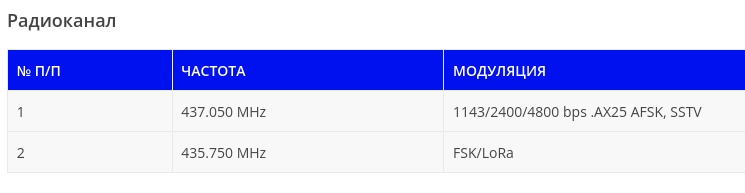
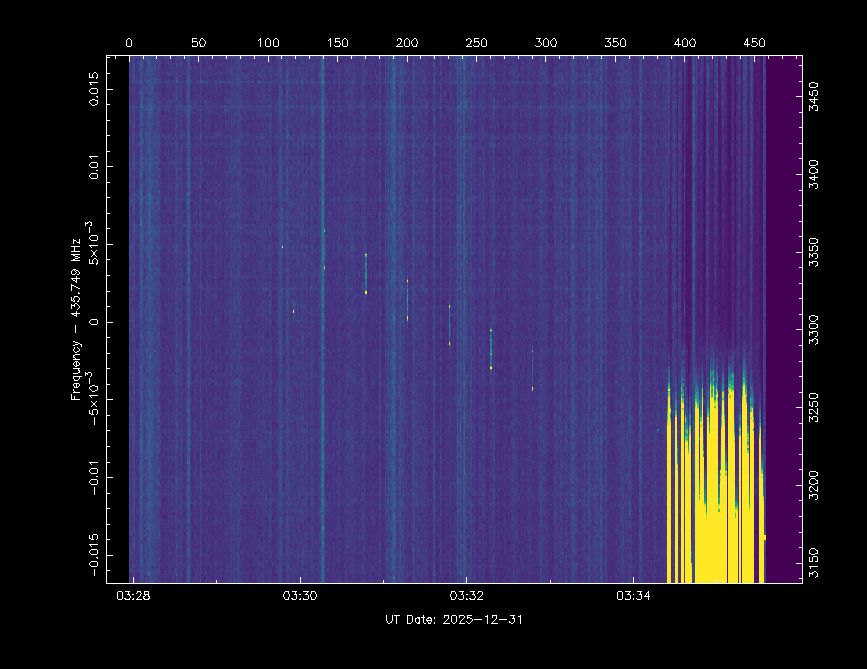
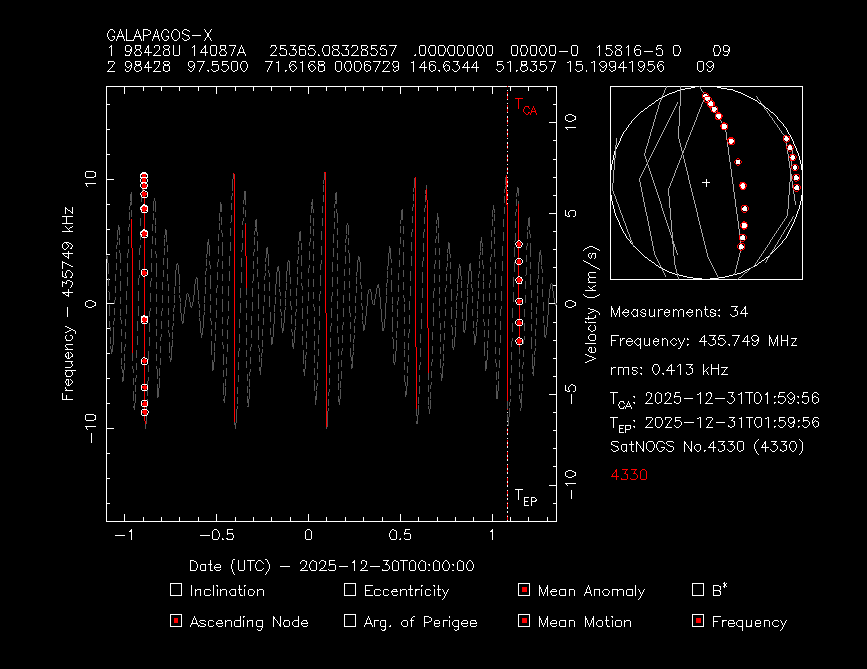
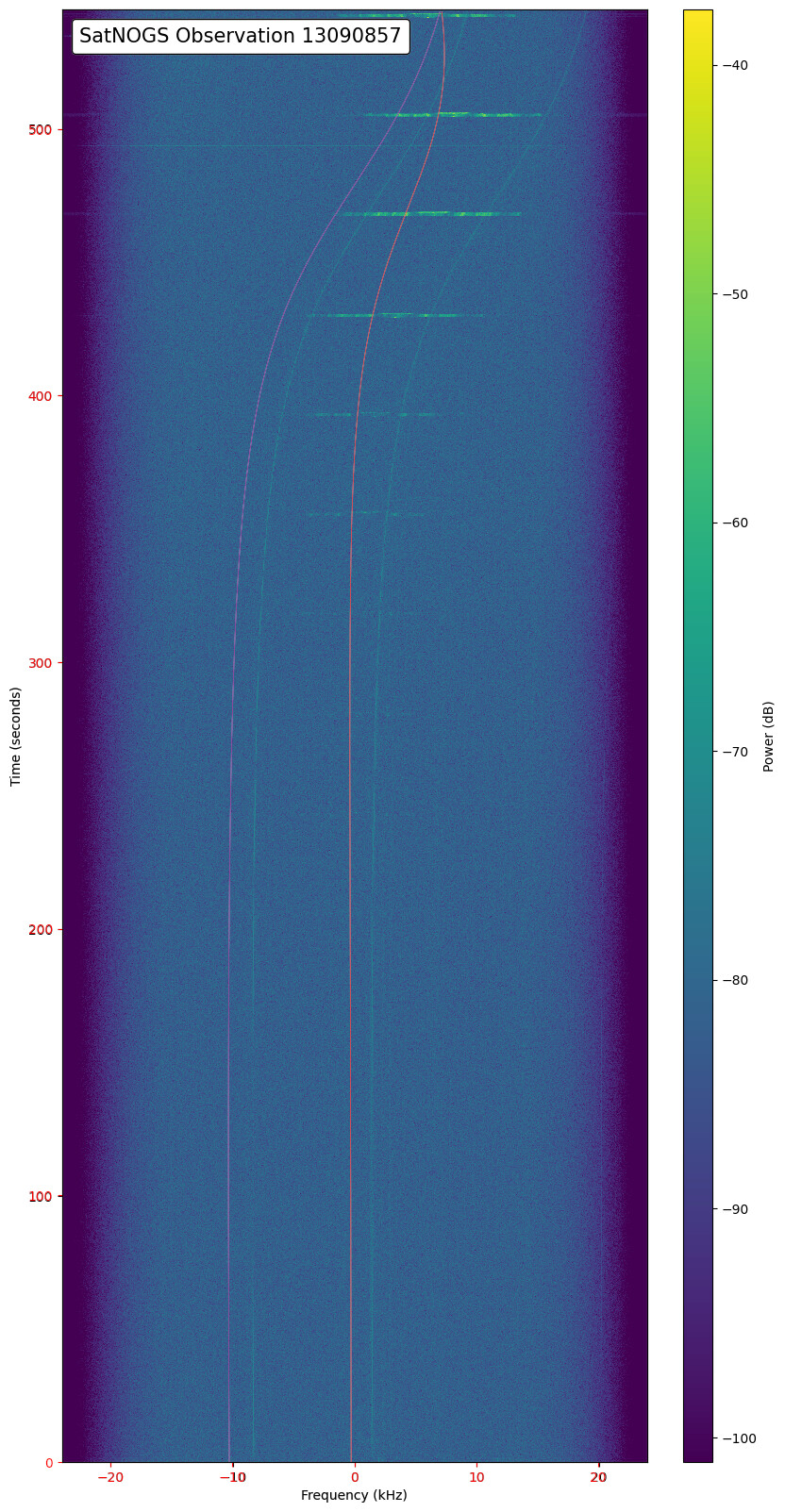
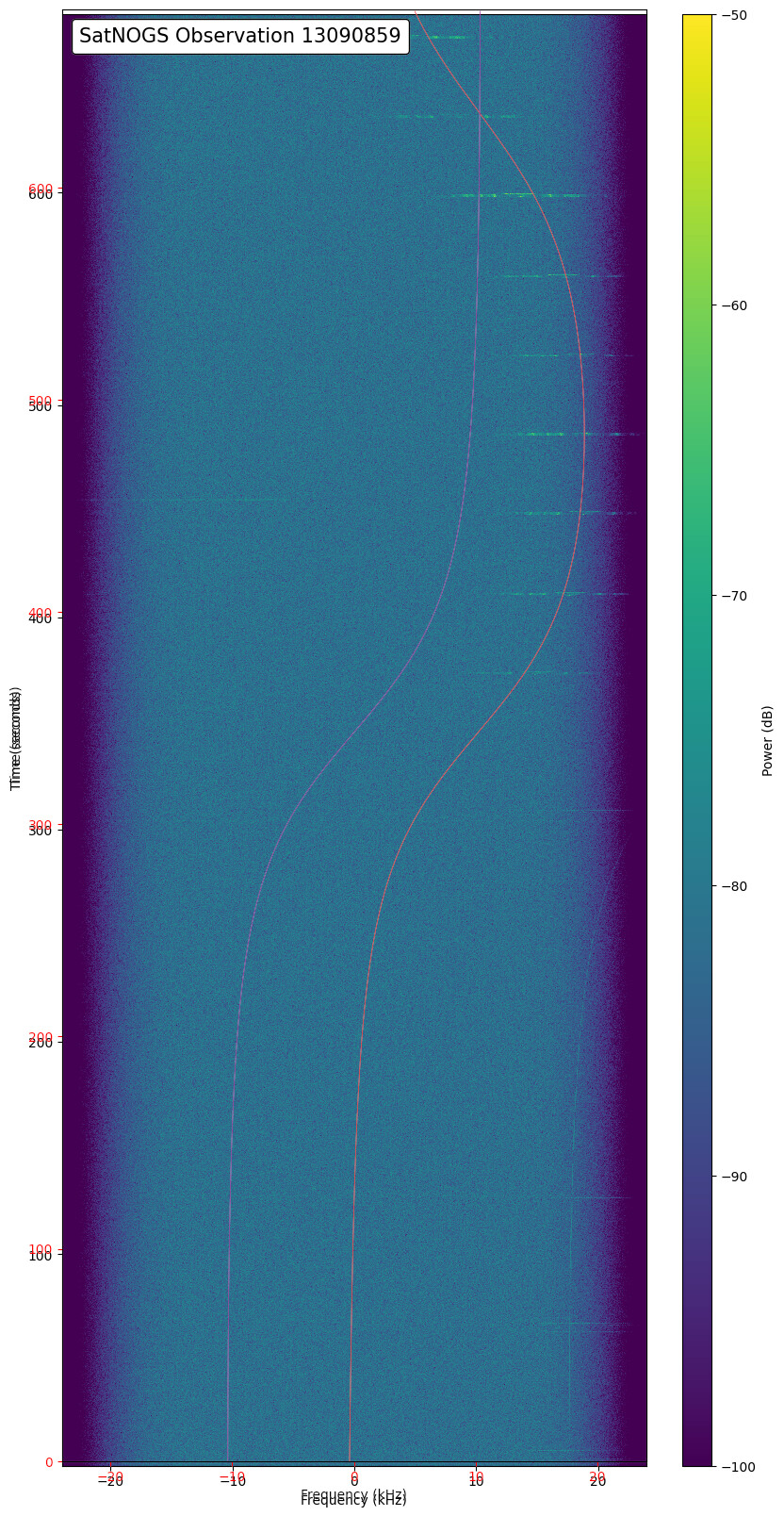
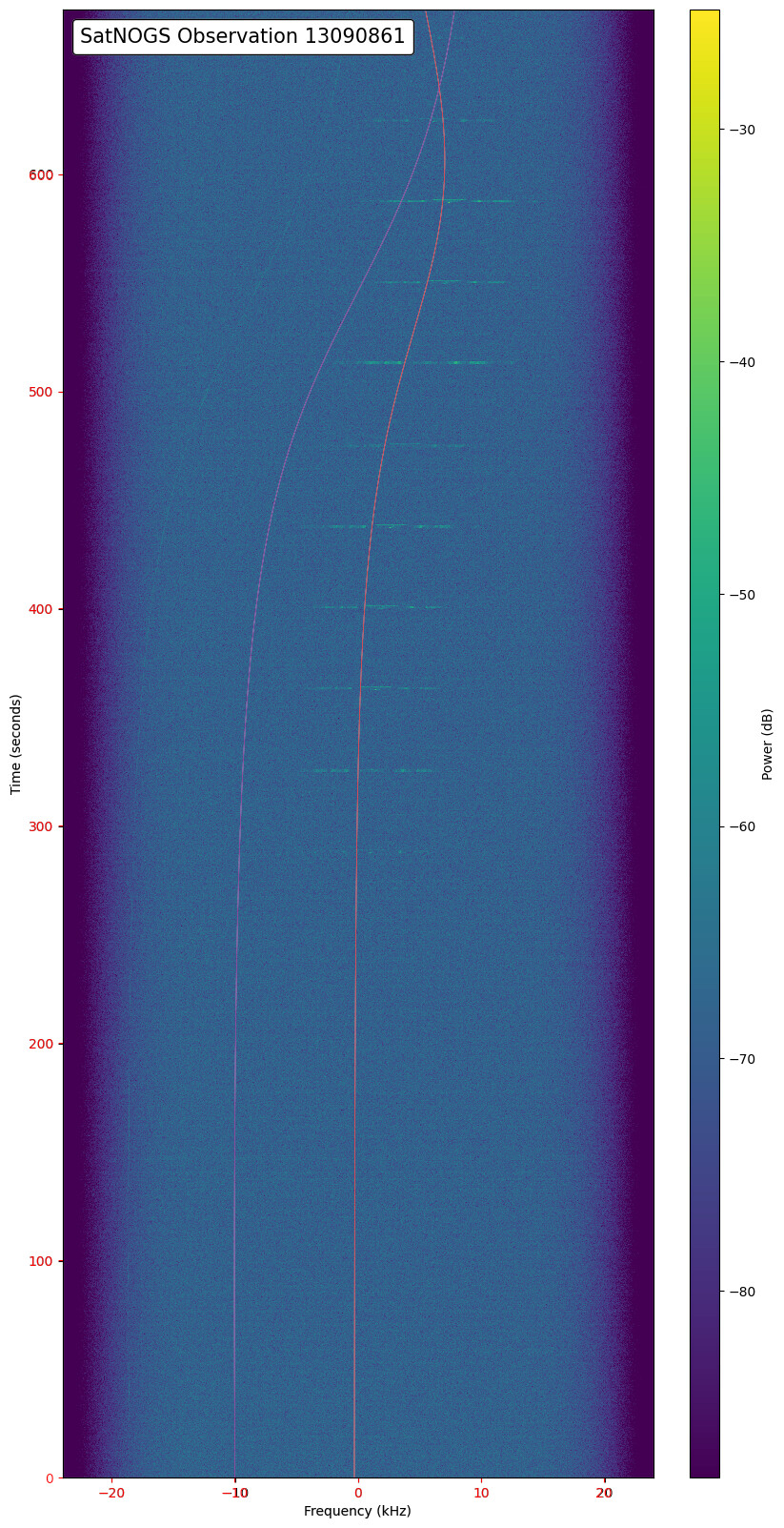
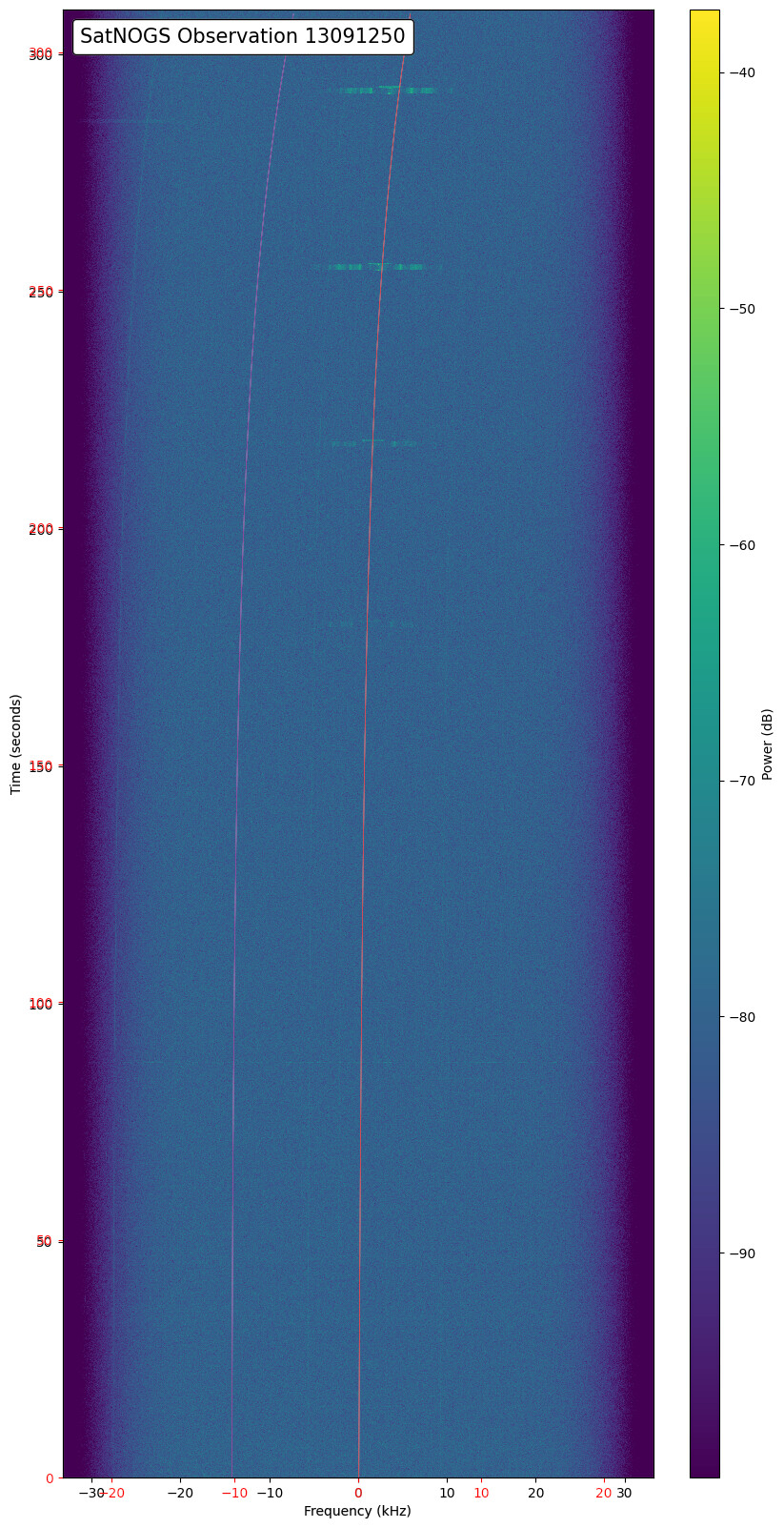
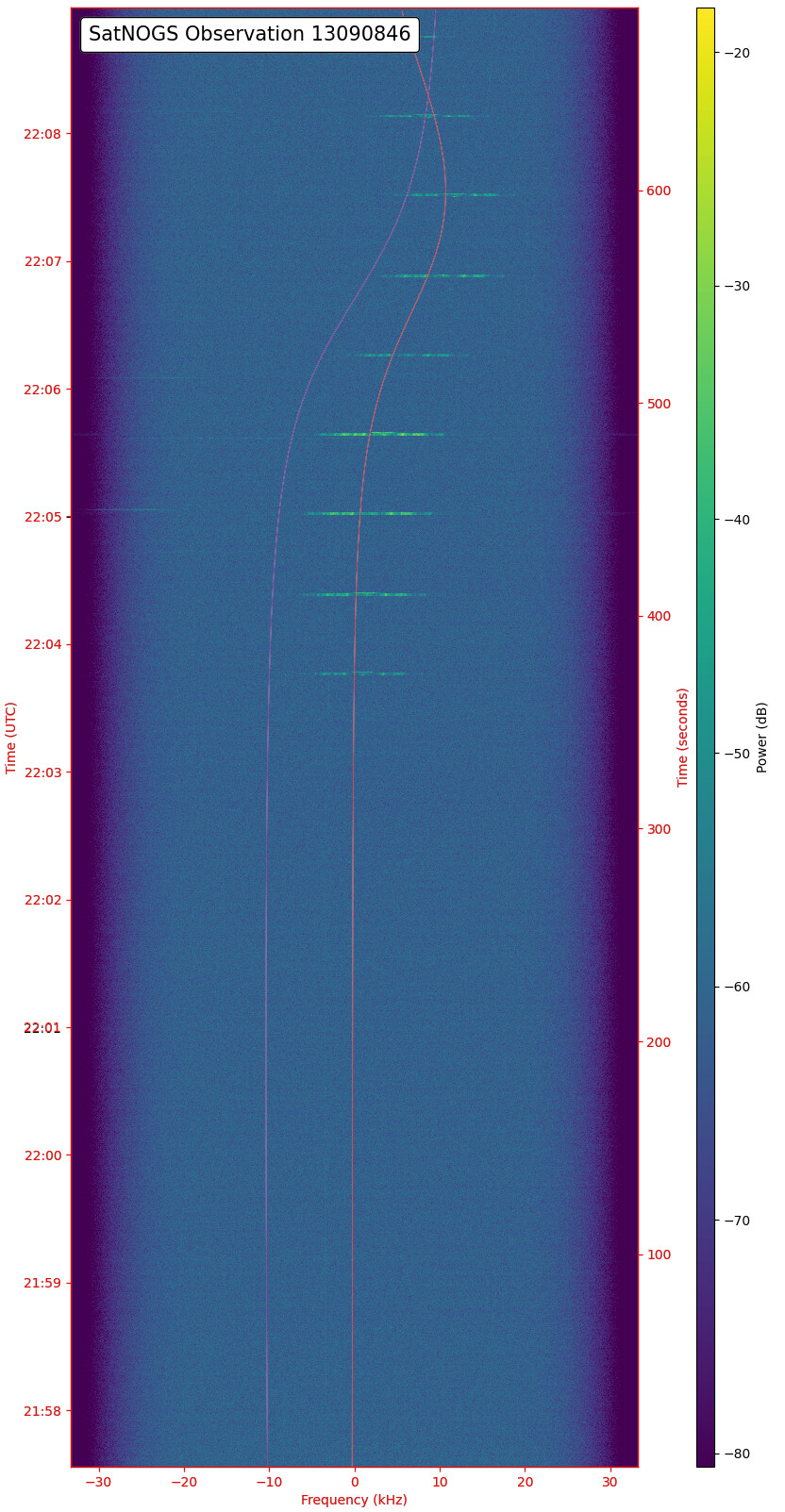
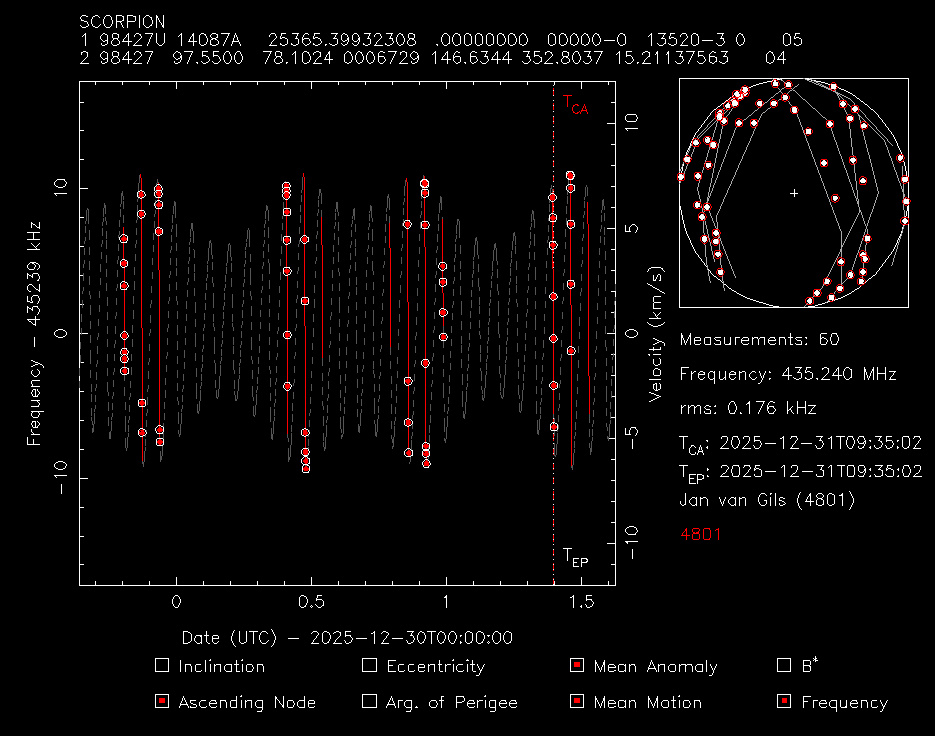
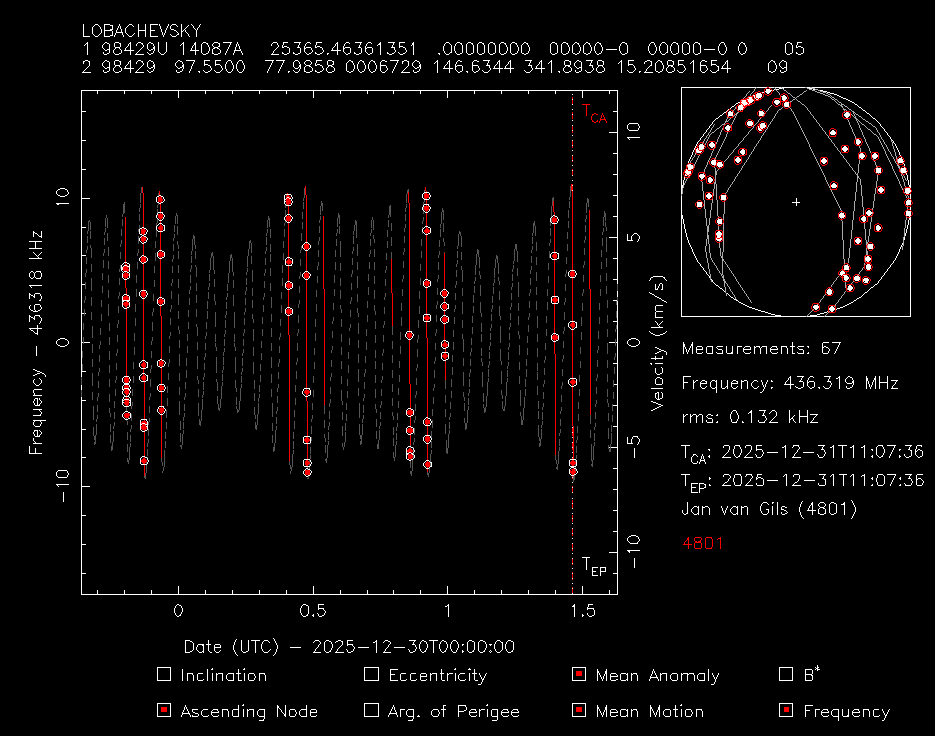
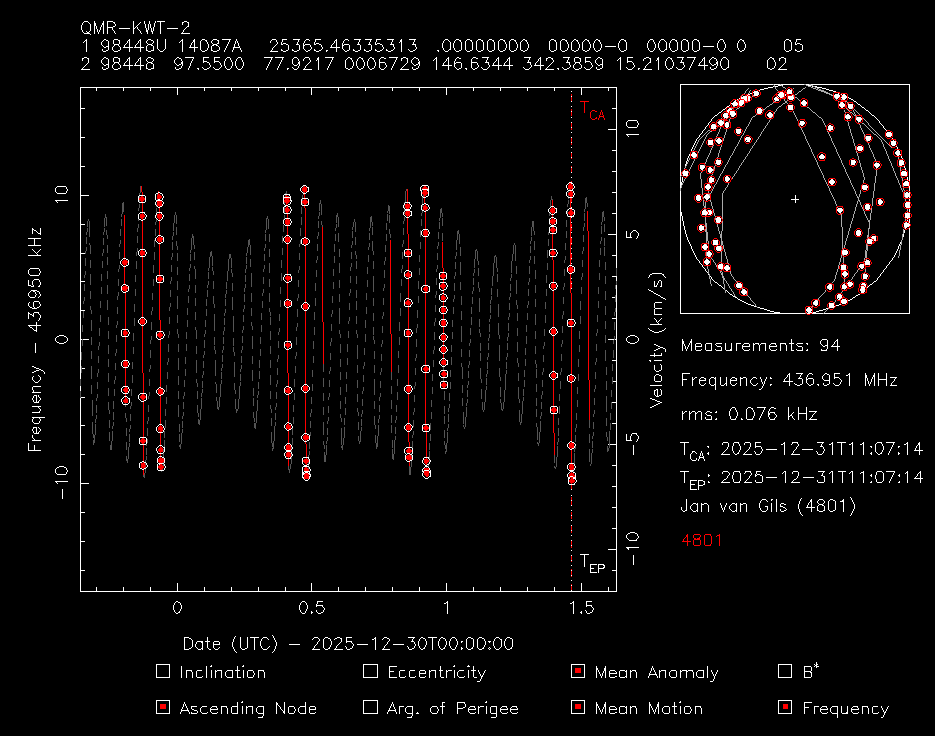
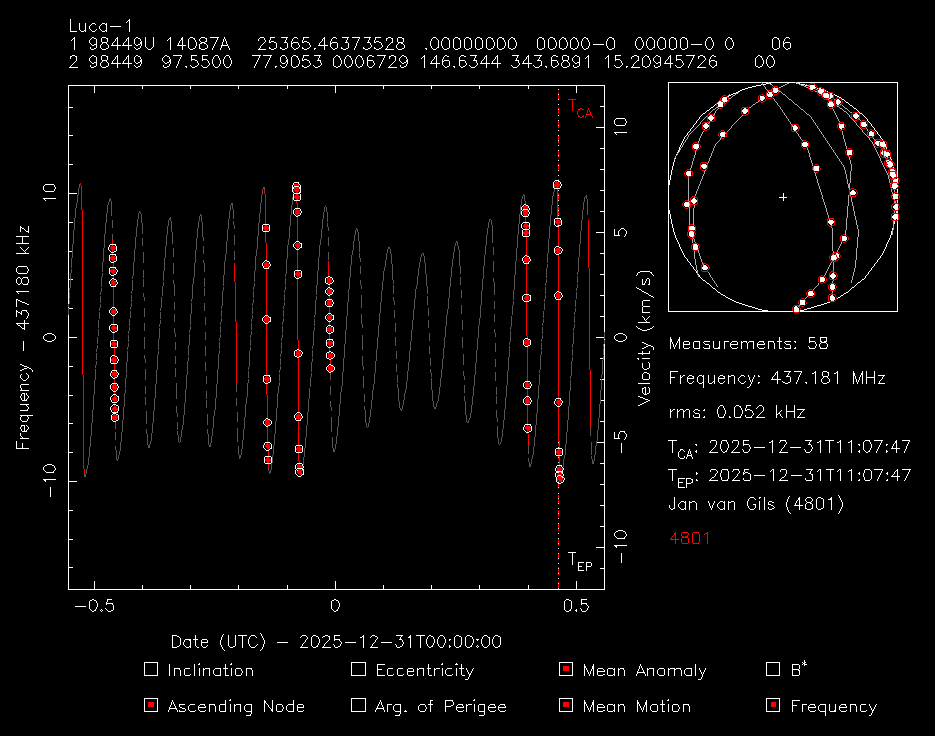
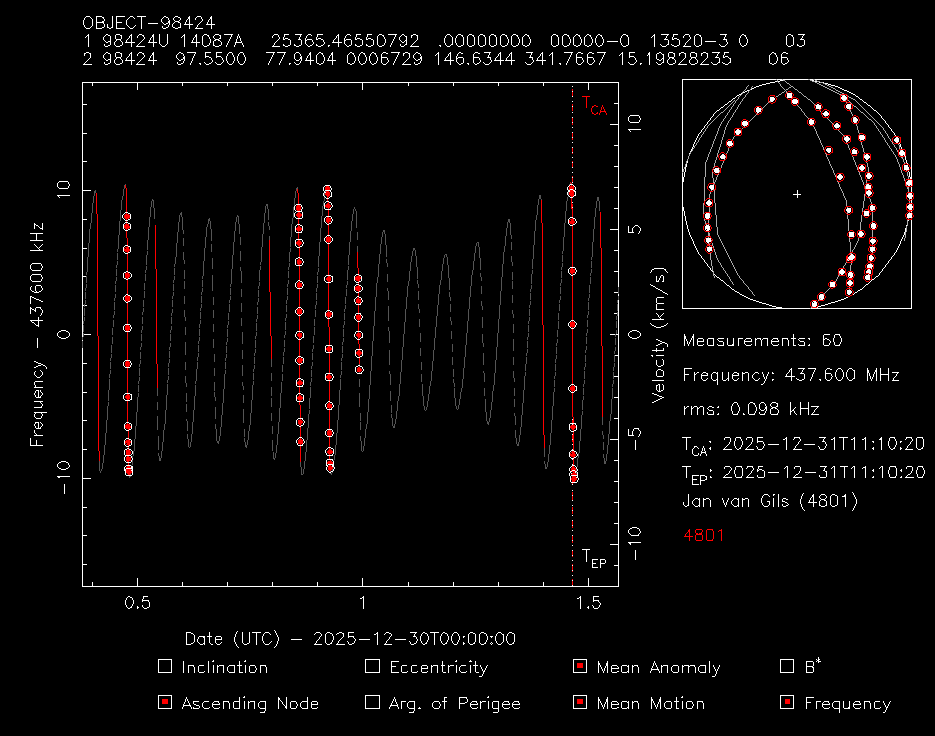
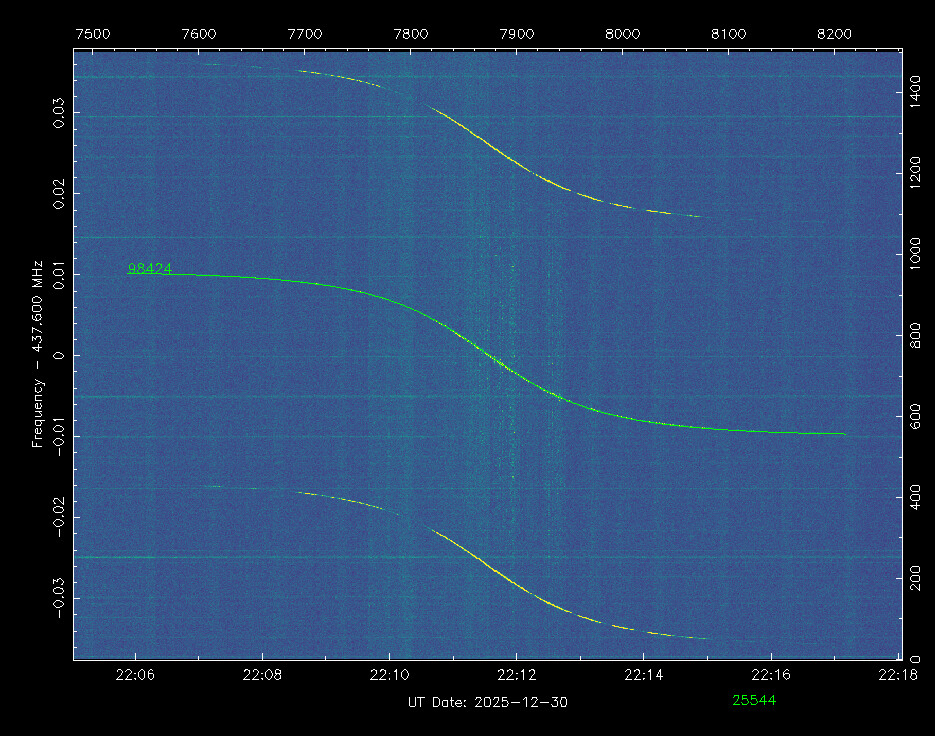
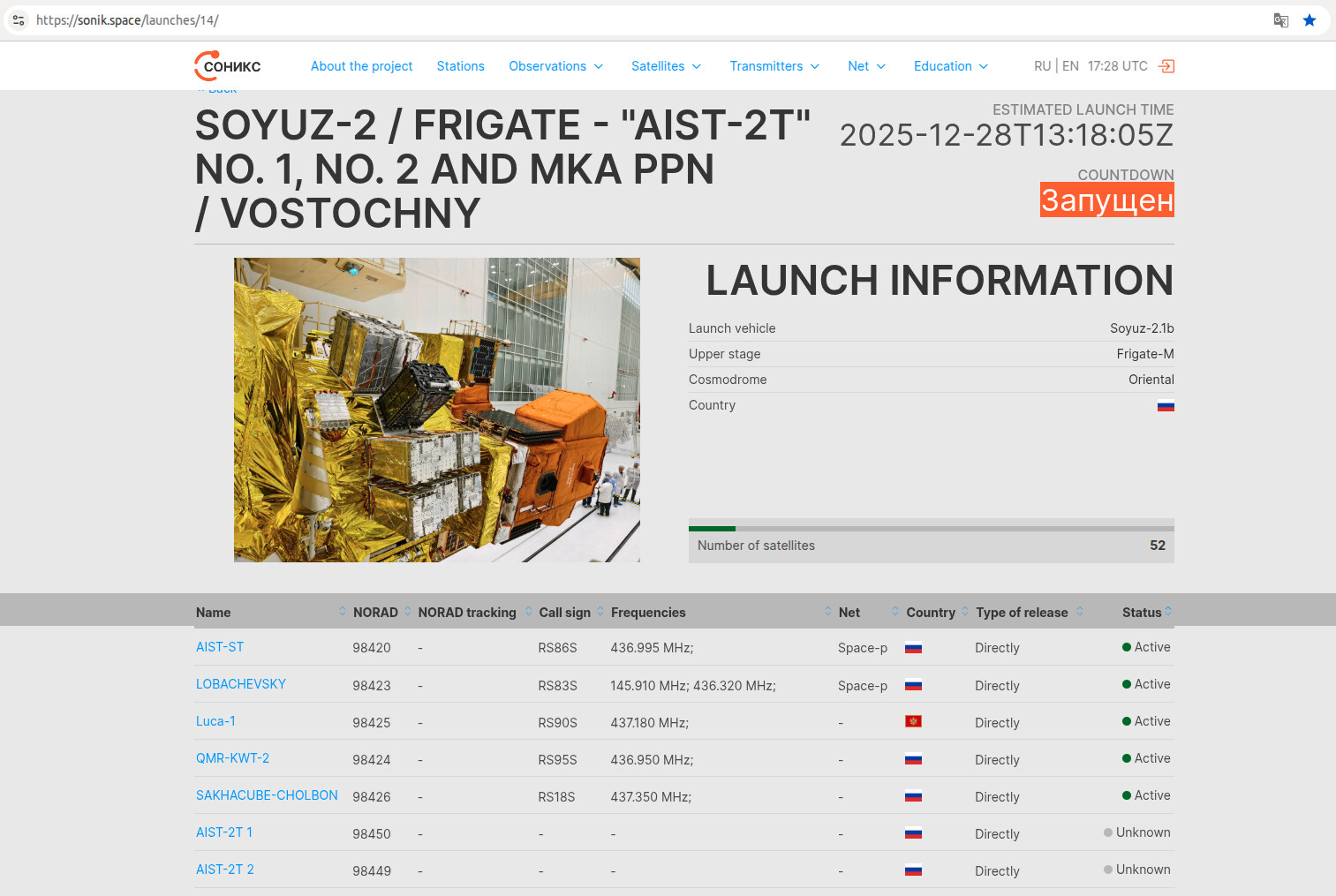
If you notice a couple more transmissions in next passes from this, let’s add it in DB as an unknown satellite and try to track it. If we can identify it later we can change its details or merge it with other entries.
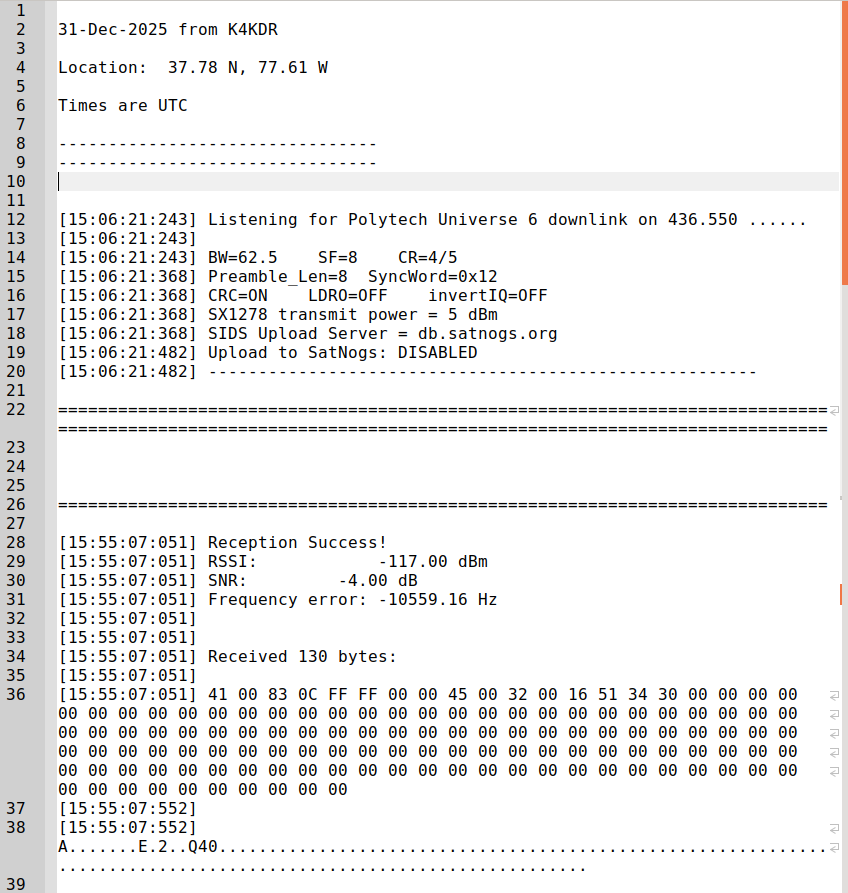
Glad to! A short time ago, there was a high pass of the 28-Dec objects over the eastern U.S. Looks like -6- decodes on 436.550; I will attach those as a TXT file.
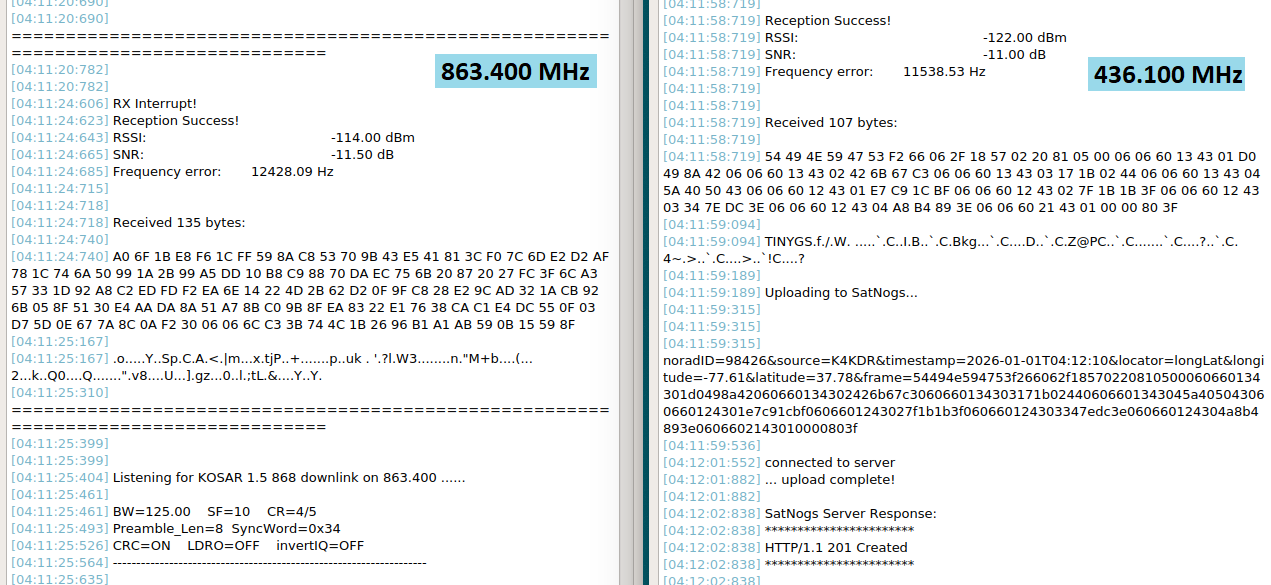
While using not nearly as much TX power as the downlink on 436.100 MHz (4 watts), the 863.400 MHz downlink from KOSAR-1.5 does transmit world-wide.
This is a departure from most other satellites utilizing the EU868 LoRaWAN spectrum; to date (that I am aware of), the satellites operating in that band have not been active over North America.
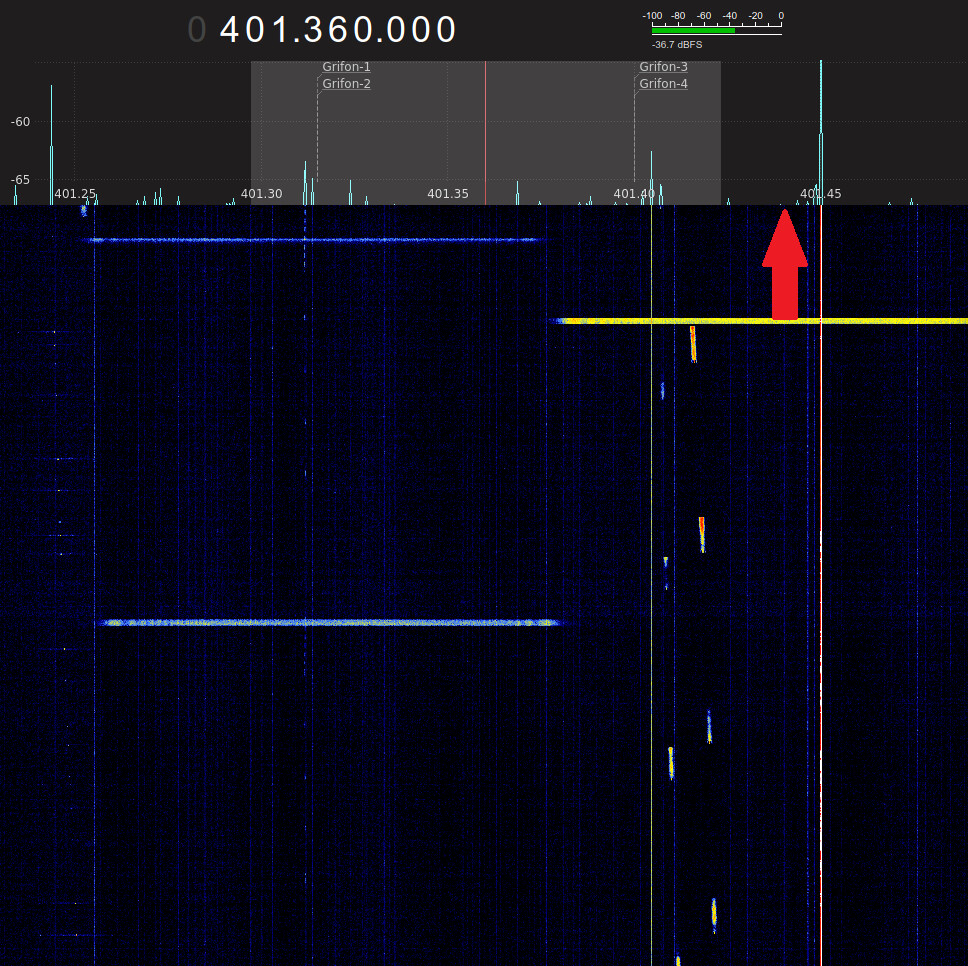
So, if you have any 868/915 receivers or antennas that you would like to test on a LEO signal and you are not where they are normally seen, now is the chance. Even if you’re not setup w/ a LoRa-capable device, spectrum is spectrum if you want to look for these 125k LoRa signals on 863.400 in the waterfall of an SDR app.
My first (ever) decode tonight from a sat on 800 MHz was from only 10°, so it was quite a surprise!
I belief that there are some changes been done, but the https://en.sonik.space/ link is still experiencing problems. For now I use the https://sonik.space/ link and try to guess and translate as good as I can.
Oh, and I’ve been trying a avoid passes of Polytech Universe-3 since it’s on the same frequency & has the same LoRa parameters. But if I slip up, the payloads are quite different so it’s easy to tell one from the other.
Seems odd that they claim 2 sats using SF9 & 2 using SF10… I was only setup for SF9 so time will tell if we really have both SF values in operation or not.
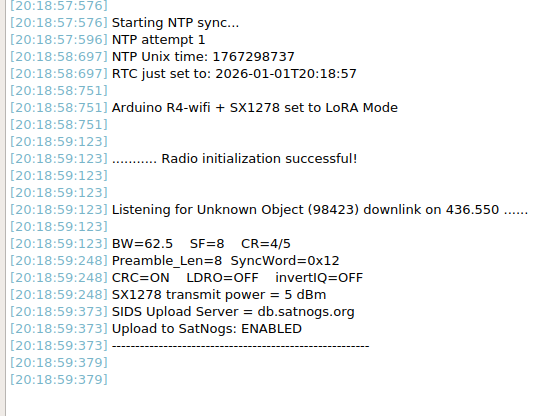
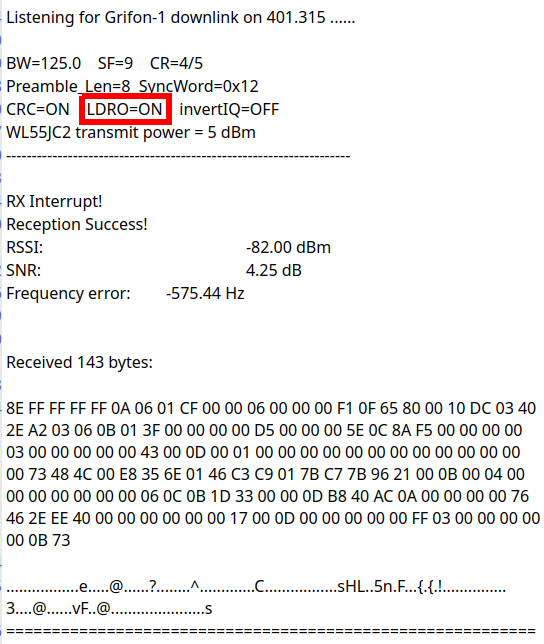
Side note for anyone reading this & wanting to configure a LoRa device to decode the packets… you normally wouldn’t expect the LDRO setting to be enabled with SF9 or 10, but here are the settings that worked on tonight’s pass: