Great job Dave and SilverSat team.
Looking forward to more SSDV events. Perhaps in future the team will entertain down link timing requests as well.
Thanks!
Bob
N6RFM(/5)
Great job Dave and SilverSat team.
Looking forward to more SSDV events. Perhaps in future the team will entertain down link timing requests as well.
Thanks!
Bob
N6RFM(/5)
Funny you should say that. We have a table of stations that have expressed interest in receiving us that we use for planning downlinks, and I just added you. In fact, yeah, send me some view times after Jan 19 00:00 UTC and we’ll put it into the command load.
superb. Tweet from space become reality now.
Getting the actual tweet from space working is what we’re concentrating on right now, which is why we may be kind of slow answering questions on the SSDV mode. The signal fading appears to be messing with the TCP exchange between the satellite and X.com when we attempt to post a picture to X. We’re going to try again over the weekend.
i have an idea. why not use satnogs network that over around the world. you can pick or make observation around the world, get and download the audio ogg, decode and post to X. maybe the unique id of the ssdv image can be used as parameter to make sure the images decode is from you sat. and total number of frame decoded can be used as quality parameter to post is image in good or not. or just decode and post for experimental
Thanks Dave. Sent you a message with a few times to consider. Best, Bob
"Nice to meet you in this thread. Also, the info from Daniel @dl7ndr that the latest Direwolf supports IL2P. Previously, @alpha_adhito and me experimented with how to send and receive SSDV formatted image files using FM handheld to the Lapan A2 satellite (FM transponder).
We chose to use the AFSK 1K2 protocol because it’s the most feasible option. You can see the script here: a Python script to create audio for transmission and a script to decode as well. In AFSK, there is no Reed Solomon, so it really relies on RS inside SSDV. I just found out from Silversat post yesterday that there is an IL2P protocol that has a built-in Reed Solomon. With RS on I2LP fully supported by Direwolf, this is very helpful, no need to create a manual rs script anymore. It inspires me in the next time to update the file2afsk script to also support the IL2P protocol, allowing for more optimization in sending SSDV in terms of size and transmission duration time, which could be significantly shorter i guest.
i’m blessed, read and motivated from this thread, from zero knowledge about IL2P
and now have a more info about it and can decode and built the silversat script .
huray!
73
I was wondering how it was possible that the 17 packets, I managed to demodulate, produced half the image, as did the approximately 200 packets received by Daniel @dl7ndr or Vlad @EU1SAT. Although the image is transmitted several times consecutively, SSDV processes only the first data sequence, as Scott @K4KDR found.
So, I ran SSDV-merge with Vlad’s original bin file and a copy of it. The result was that SSDV created the entire image from the combined bin.
running this script:
./ssdv-merge-v2.py /tmp/2026-01-14T22_06\ SilverSat\ -\ DL7NDR\ \(215\ packets\)/2026-01-14T22\:06\ SilverSat\ -\ DL7NDR\ \(215\ packets\).hex
Found 1 image(s)...
103:WP2XGW:23:320:240:4:0.bin: 54 packets
Done
from 200 packets , the unique one is 54 packets. and that is full image
And packets are not in order warning is the reason why, even though there are many packets in the hex file, the image does not appear. This is because SSDV requires that the hex file contains packets with ordered IDs. why? i think because Silversat is disable the reed-solomon ( encode SSDV packets with no FEC). because they have already implemented Reed-Solomon through the IL2P protocol. So there is no need to add extra header burden in SSDV.
ping @conrad26
image = dict(sorted(image.items()))
vlad @EU1SAT 1.bin also in unsorted packet.
Packets are not in order. 52 > 24
Packets are not in order. 52 > 25
Packets are not in order. 52 > 26
Packets are not in order. 52 > 27
Packets are not in order. 52 > 28
Packets are not in order. 52 > 29
Read 185 packets
just sorted:
./ssdv-merge-v2.py 1.bin
Found 1 image(s)...
103:WP2XGW:23:320:240:4:0.bin: 54 packets
Done
so both obs, is very good. full image. very good station. as usual they are pro
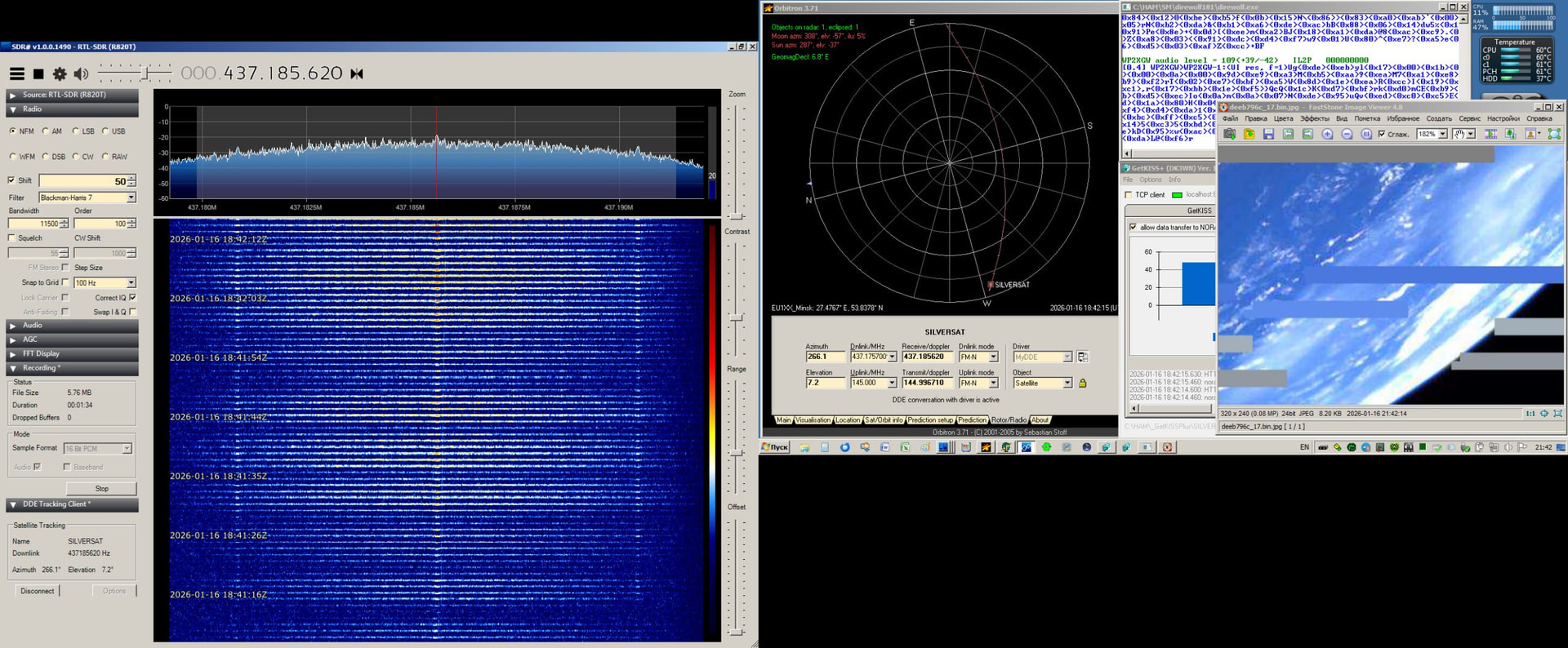
SILVERSAT SSDV Image 18:42 UTC
Max. Elev. 56°.
261 Frames uploaded to SatNOGS DB
Huge thanks to @bali for python script
Same image:
2026-01-16 18:41
195 packets decoded, saved as hex file, merged hex file to 54 packets by ssdv-merge and then decoded to jpg with ssdv.
Thanks a lot for all the information shared.
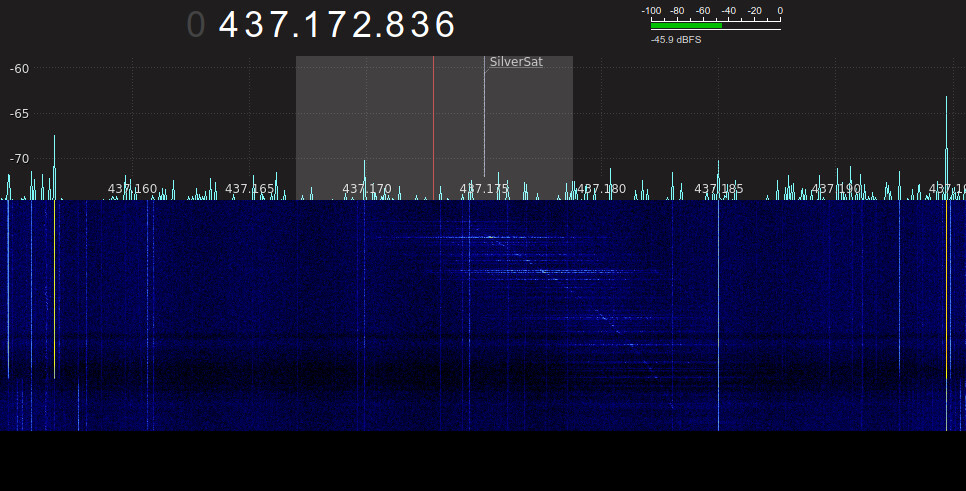
Observation received with a HydraSDR RFOne SDR - GPSDO Locked clock.
IQ replay the observation and decoding the image taken by the satellite.
Jan | PE0SAT
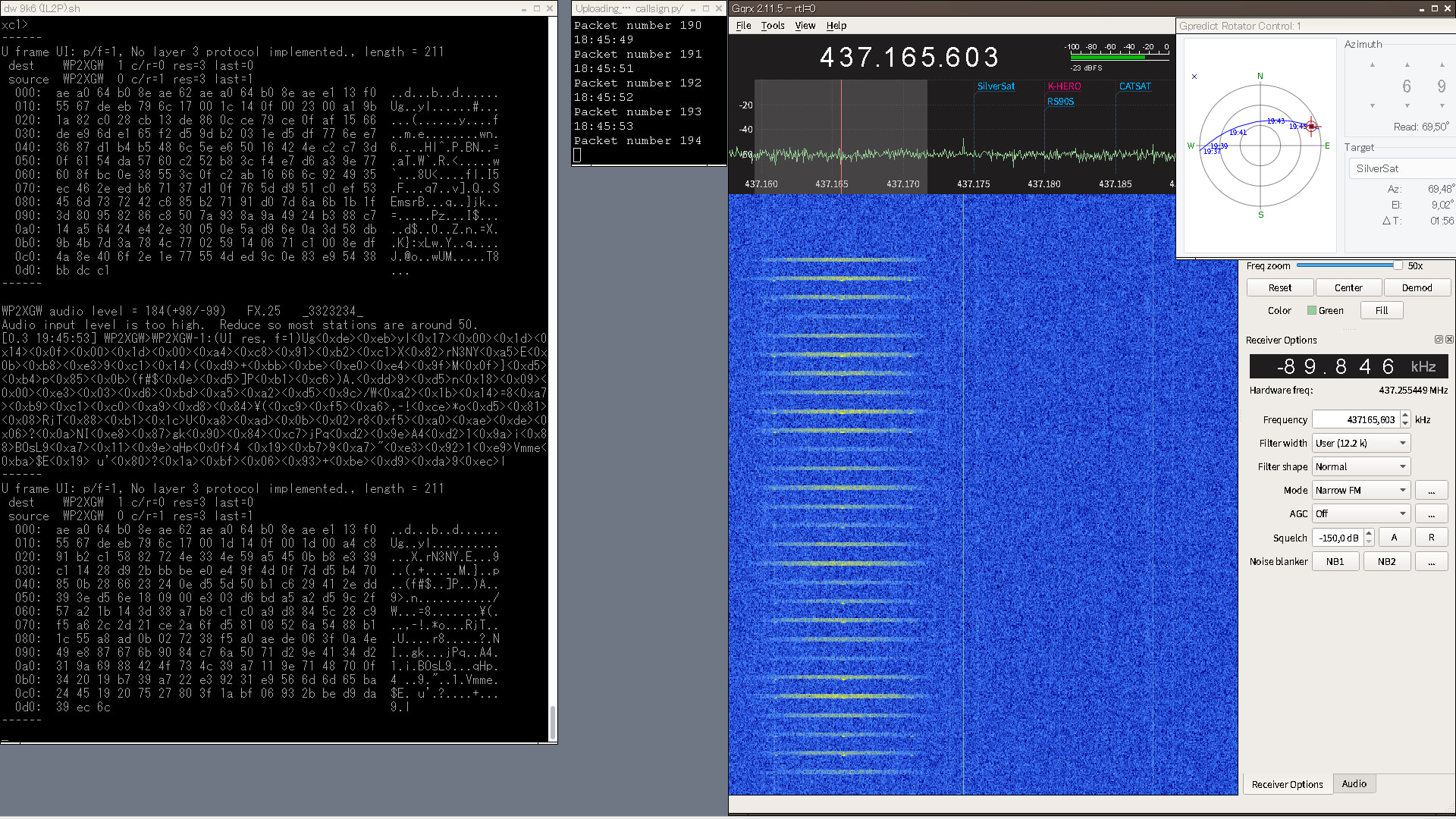
I decoded the entire signal from today’s flyby.
10-element Yagi antenna + SDRSharp.
163 packets decoded. 54 per image.
Thanks for all the advice!
Well, at least instruction works (thank you, K4KDR and others) as for results, I hoped for more, at least during the last minute signal was significantly stronger as satellite rises over horizon (near +10dB over -90 dB noise floor, on 7 el. Yagi and RTL SDR V4). Also from my location I could only recieve the last half of the transmission(18:40-18:46 UTC, AOS 18:42:40). If needed I can send an IQ file. Audio from it is in the SSDV.zip. Pictures from the same pass and same IQ, but I tried to rerecord audio.
SSDV.zip (4.6 MB)
Great job! Getting ‘anything’ proves that you have a working setup & know how to use all the software tools.
I “might” be able to out-do you on the least number of frames decoded… on yesterday’s pass over the U.S., I got…… ONE!
I decoded your SSDV.wav using a script from @bali.
I didn’t do any more actions (merging).
output.zip (16.8 KB)
Huge thanks to @bali for python script !!!
glad and very happy it work! 
A small update. Now tried to decode picture using bali`s script from the post by myself. Used the same recoreded IQ from the same flyby (16.01.2026 18:40-46 UTC). It turned out that 2 partial and 2 full pictures were received. and the final result is - much better
Almost forgot - I also received an CW beacon a minute after the SSDV transmission
.-- .–. ..— -..- --. .-- … … .- - WP2XGW SHAT
Many thanks to @EU1SAT for all the help and @bali for the script - it saved my day…and my picture too.
We only got a portion of our command load up to the satellite today. SSDV should be active at the following times UTC:
2026-01-17 23:53:00
2026-01-18 03:07:00
2026-01-18 05:54:45
2026-01-18 06:17:00
2026-01-18 07:30:59
2026-01-18 15:15:00
2026-01-18 18:25:43
2026-01-18 19:58:43
2026-01-18 21:34:51
I will also be interested to see if the beacon changes. That ‘S’ means the battery is at full charge. This may change tomorrow with this many SSDV passes. We’ll get some more commands up tomorrow.