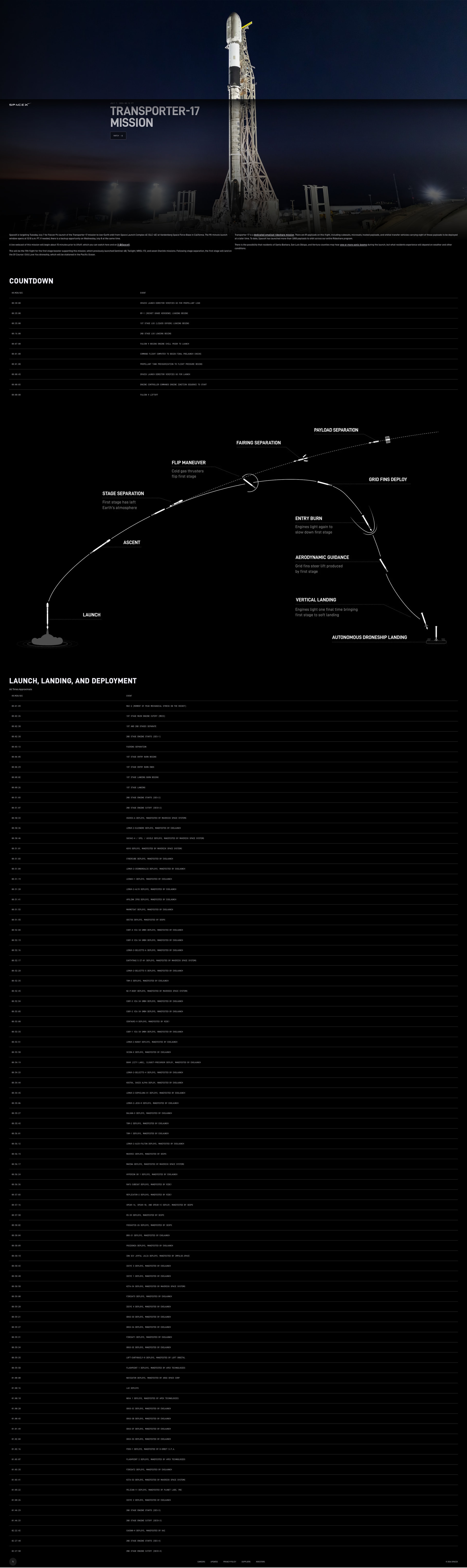
The pace of announcements from individual cubesat teams as well as from deployment providers with payloads on Transporter-17 is really picking up now, so we should start organizing.
Exolaunch alone has announced that it will deploy -49- sats from T-17, so this is going to be a big one.
Some individual sats that have public info available are:
… I’ll stop there since the list is going to get VERY long. Anyway, let’s hope for a successful launch and that most (if not all) of the payloads are heard after deployment!
Thanks for the update. Indeed we should start gathering information.
Given that my current focus is on the SatNOGS Development, any help with suggestions in DB for this launch is more than welcome. You can find information on how to suggest satellites and transmitters can be found in these wiki pages:
Priority satellite for getting them in DB are the ones that we know their transmission frequencies and they are in VHF, UHF and S-band. For transmission frequencies, a good generic source is the ITU explorer site and for the amateur radio ones the IARU coordination site.
Maybe there are already some satellites suggested already, you can take a quick look in https://db.satnogs.org/suggestions before making a new one.
Finally I’ll be able to check most of the suggestions during the weekend (unfortunately I’m still the bottleneck on satellites suggestions review).
We can add FossaSat-26 to this launch. I assume that it’ll use LoRa as all their previous missions did, but hopefully we can get all the details and find out whether there are any other transmitters on-board.
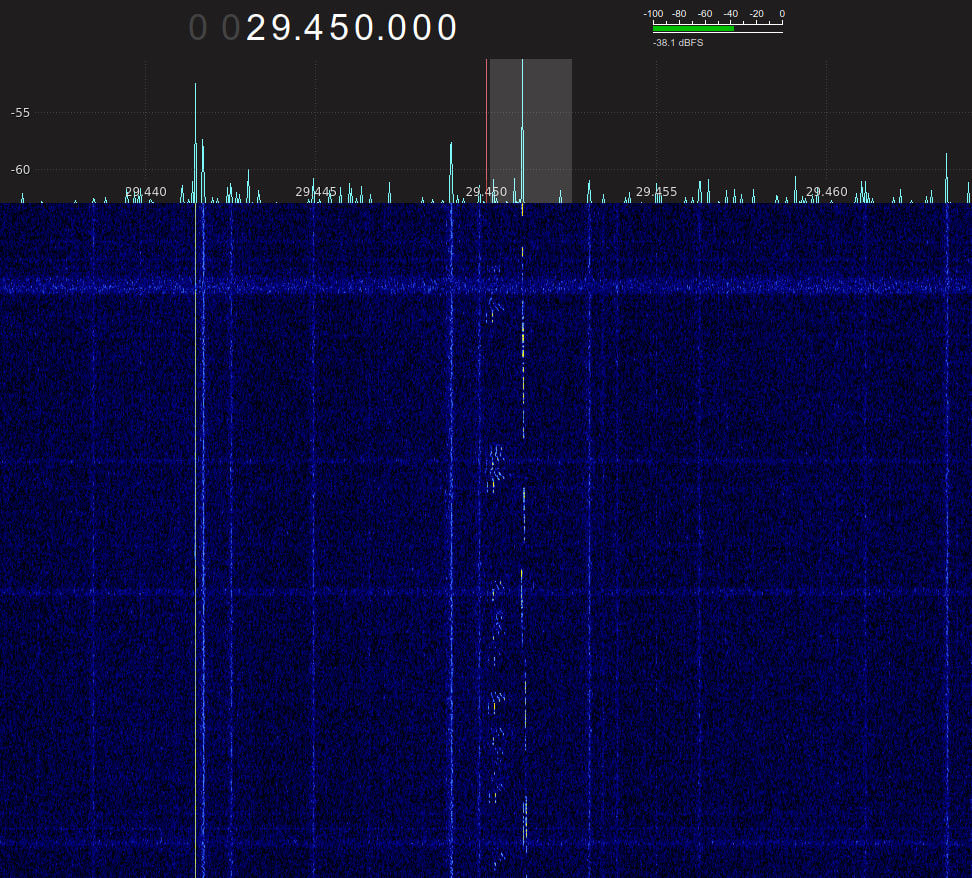
Regarding the 10-meter downlink planned for MARMOTSat, today I used my newly-acquired ‘Ham-It-Up’ converter from NooElec to successfully receive the downlink from AO-7. Today’s test was not ideal… just using a non-resonant SkyLoop. Will experiment with other antenna options & report if anything works well.
Hi, I’m a member of the YSpace team, which is responsible for the KOSTKA (temp. NORAD ID 98395, callsign OK0KST) CubeSat. As mentioned earlier, we are also launching on this mission. KOSTKA uses the frequency 436.870 MHz with 9k6 G3RUH GFSK modulation. It will transmit 4 types of AX.25 beacons and one CW beacon. A decoder for the AX.25 beacons is already available in the satnogs-decoders repository on GitLab. KOSTKA also contains a digipeater, and in a few months it will transmit images from the onboard camera using SSDV. One of its objectives is to test our custom in-house antenna and UHF receiver. More info can be found on the website https://cubesat.cz/.
I would also like to ask one question. I noticed that for previous launches, you scheduled observations for the satellites integrated into SatNOGS for the first 24 hours after launch. Are you planning to do the same for this launch, or should we schedule the observations ourselves? Thank for the answer!
Yes there will be a systematic scheduling until a couple of days/weeks after TLE for this launch are published in space-track.org and we have performed any possible identifications.
Scheduling usually starts ~1h before launch. For the satellite missions, keep us updated if you have any updates, like changes in launch time, any preliminary or post launch TLE sets etc.
I’m hoping i can get a HF station up and running so i can track MARMOTSat on HF. I would like to get signal from its CW transmitter and maybe its DVB-S2 signal on the same frequency. I also have submitted a suggestion here: SatNOGS DB - MARMOTSat that should have all of the transmitters and modulations of the transmitters. Some of the data might be inaccurate
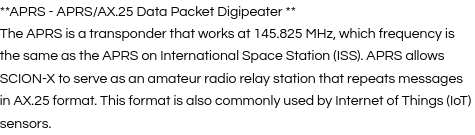
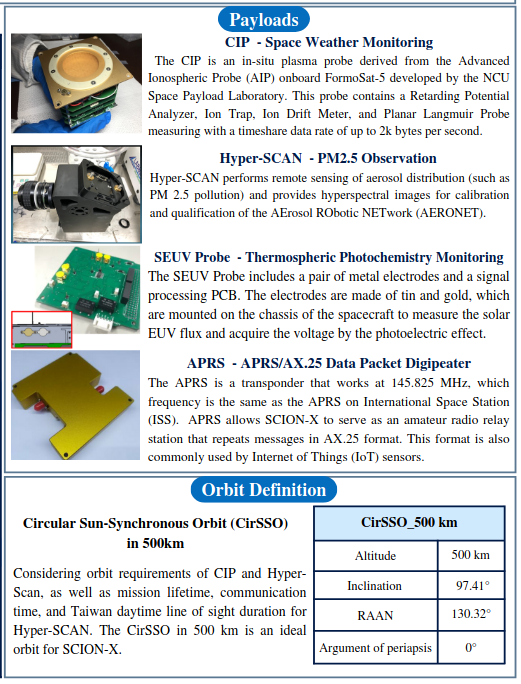
I am a member of the SCION-X team, responsible for the SCION-X CubeSat (temporary NORAD ID: 98266, callsign: BV0SCX).
Here are our transmission specifications:
Frequency: 437.500 MHz
Data Rate: 9600 bps
Modulation: GFSK
Protocol: HDLC/AX.25 (Note: NRZI encoding and scrambling are NOT used)
First post updated with the satellites and frequency details. There are some suggestions pending some answers before checked.
Unfortunately until now we don’t have any TLE from celestrak, if we don’t have any, later we are going to produce our own.
There are a 9 satellites from Germany that will transmit in the range from 435.400 Mhz to 435.800 MHz and in the range from 437.600 MHz to 438.000 MHz, in DB have been added with the center frequencies of these ranges, so we will may need help to check these whole ranges to find the real center frequencies.