System Performance

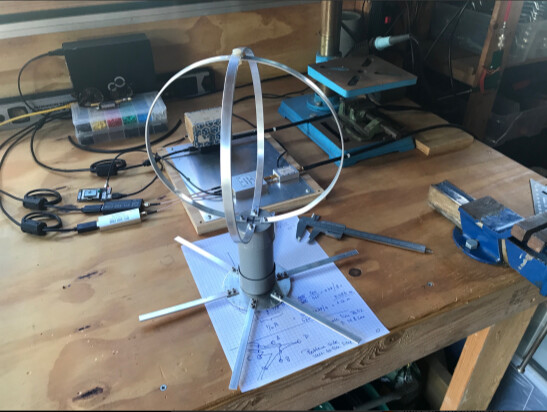
I recently posted about an issue related to powering the LNA in my Libre Space provided ground station kit. V4 RTL-SDR Bias Tee Issue? - SatNOGS - Libre Space Community That issue is resolved and the LNA is now powered during observations. More info about the ground station is included in that message thread. The station ID is DSES WT0DX 4837. Apparently, it’s still waiting to be approved by the administrators…

Now that I have a few days of observations under my belt, I’m disappointed in the performance of the system. I have only ever picked up the ISS and CANVAS satellites. Even then, the signal strength hasn’t been very good. All the other observations scheduled by Fredy have failed with no signal. Note that I’m partially blocked to the East by my house but have wide open sky to the West. I’m located in the SE Denver, CO suburbs.

Here is my configuration data:

    "satnogs_antenna": "RX",
    "satnogs_api_token": "[redacted]",
    "satnogs_log_level": "INFO",
    "satnogs_rf_gain": "36.4",
    "satnogs_rx_samp_rate": "2.048e6",
    "satnogs_soapy_rx_device": "driver=rtlsdr,biastee=true",
    "satnogs_station_elev": "1875",
    "satnogs_station_id": "4837",
    "satnogs_station_lat": "39.563",
    "satnogs_station_lon": "-104.735"

Any suggestions, or comments on the results so far?

73 Bill WT0DX

1 Like

Hello Bill,

I have created some obs on your station and used Satellites that are active over Europe.

You can also try to change the gain value to see if that will bring better performance.

This are all the gain values that can be used:

Supported gain values (29):
0.0 0.9 1.4 2.7 3.7 7.7 8.7 12.5 14.4 15.7 16.6 19.7 20.7 22.9 25.4 28.0 29.7 32.8 33.8 36.4 37.2 38.6 40.2 42.1 43.4 43.9 44.5 48.0 49.6

But with higher gain SDR the noise will also increase, so some trail and error on your side to find the best value.

Jan | PE0SAT

Thanks Jan. I noticed that you scheduled some observations.
I increased the SDR gain to 48.0.

73 Bill WT0DX

1 Like

Good day Bill,

It is a bit of a mystery why Satellites that should produce a good signal aren’t in your case.
There is one settings that could be influencing this behavior and that is the SDR LO correction, set with ppm value.

If the LO correction would be very high, then it is possible that currently the received signals are outside the tuned range, bw.

Connecting the SDR to a computer with SDR software like, GQRX, SDR++, SDR#, SDRConsole and manually try to received signals that would give you a good indication if the SDR is receiving signals at the correct frequency, you can use a local Ham Radio repeater or another stable signal preferable with a locked freq.

Now a days it is possible to measure the ppm correcting with the rtl_test utility, this can be done in the following way:

Start rtl_test -d 0 -p and keep it running until the cumulative PPM: value stabilizes, that could be a few minutes.

example output:

Found 1 device(s):
  0:  RTLSDRBlog, Blog V4, SN: 40004541

Using device 0: Generic RTL2832U OEM
Found Rafael Micro R828D tuner
RTL-SDR Blog V4 Detected
Supported gain values (29): 0.0 0.9 1.4 2.7 3.7 7.7 8.7 12.5 14.4 15.7 16.6 19.7 20.7 22.9 25.4 28.0 29.7 32.8 33.8 36.4 37.2 38.6 40.2 42.1 43.4 43.9 44.5 48.0 49.6 
Sampling at 2048000 S/s.
Reporting PPM error measurement every 10 seconds...
Press ^C after a few minutes.
Reading samples in async mode...
Allocating 15 zero-copy buffers
lost at least 168 bytes in buffer 0
real sample rate: 2047993 current PPM: -3 cumulative PPM: -3
real sample rate: 2047994 current PPM: -3 cumulative PPM: -3
real sample rate: 2047992 current PPM: -4 cumulative PPM: -3
real sample rate: 2047985 current PPM: -7 cumulative PPM: -4
real sample rate: 2047997 current PPM: -1 cumulative PPM: -4
real sample rate: 2047982 current PPM: -8 cumulative PPM: -4
real sample rate: 2047990 current PPM: -5 cumulative PPM: -4
real sample rate: 2047989 current PPM: -5 cumulative PPM: -5
real sample rate: 2047993 current PPM: -3 cumulative PPM: -4
real sample rate: 2047998 current PPM: -1 cumulative PPM: -4
real sample rate: 2047985 current PPM: -7 cumulative PPM: -4
real sample rate: 2047990 current PPM: -4 cumulative PPM: -4
real sample rate: 2047988 current PPM: -6 cumulative PPM: -4
real sample rate: 2047989 current PPM: -5 cumulative PPM: -4
real sample rate: 2047981 current PPM: -9 cumulative PPM: -5
real sample rate: 2047994 current PPM: -3 cumulative PPM: -5
real sample rate: 2047996 current PPM: -2 cumulative PPM: -4

Some information on running the command on your docker environment, there can be a chicken and the egg challenge. My best guess is, that that the rtl_test command is only part of the docker container so it needs to be running, but at the same time if an observation is running the rtl_test command can’t connect to the SDR because it is already in use. I hope I make myself clear.

Running the command with the container enabled, normal operations:

docker exec satnogs_satnogs-client rtl_test -d 0 -p

Jan | PE0SAT
1 Like

Hi Jan, thanks for the suggestion on using rtl_test. Here are the results after running for 5 minutes or so:

real sample rate: 2047988 current PPM: -6 cumulative PPM: -10
real sample rate: 2047994 current PPM: -3 cumulative PPM: -10
real sample rate: 2047736 current PPM: -129 cumulative PPM: -12
real sample rate: 2048677 current PPM: 331 cumulative PPM: -6
real sample rate: 2047551 current PPM: -219 cumulative PPM: -10
real sample rate: 2047881 current PPM: -58 cumulative PPM: -11
real sample rate: 2048094 current PPM: 46 cumulative PPM: -10
real sample rate: 2047941 current PPM: -29 cumulative PPM: -10
real sample rate: 2047933 current PPM: -33 cumulative PPM: -10
real sample rate: 2048531 current PPM: 260 cumulative PPM: -6
real sample rate: 2047443 current PPM: -272 cumulative PPM: -10
real sample rate: 2048010 current PPM: 5 cumulative PPM: -10
real sample rate: 2048070 current PPM: 34 cumulative PPM: -9
real sample rate: 2047950 current PPM: -24 cumulative PPM: -9

Two other comments/questions:

  • Is the simple antenna that I’m using adequate for a ground station (it was provided by Libre Space as part of the kit)?

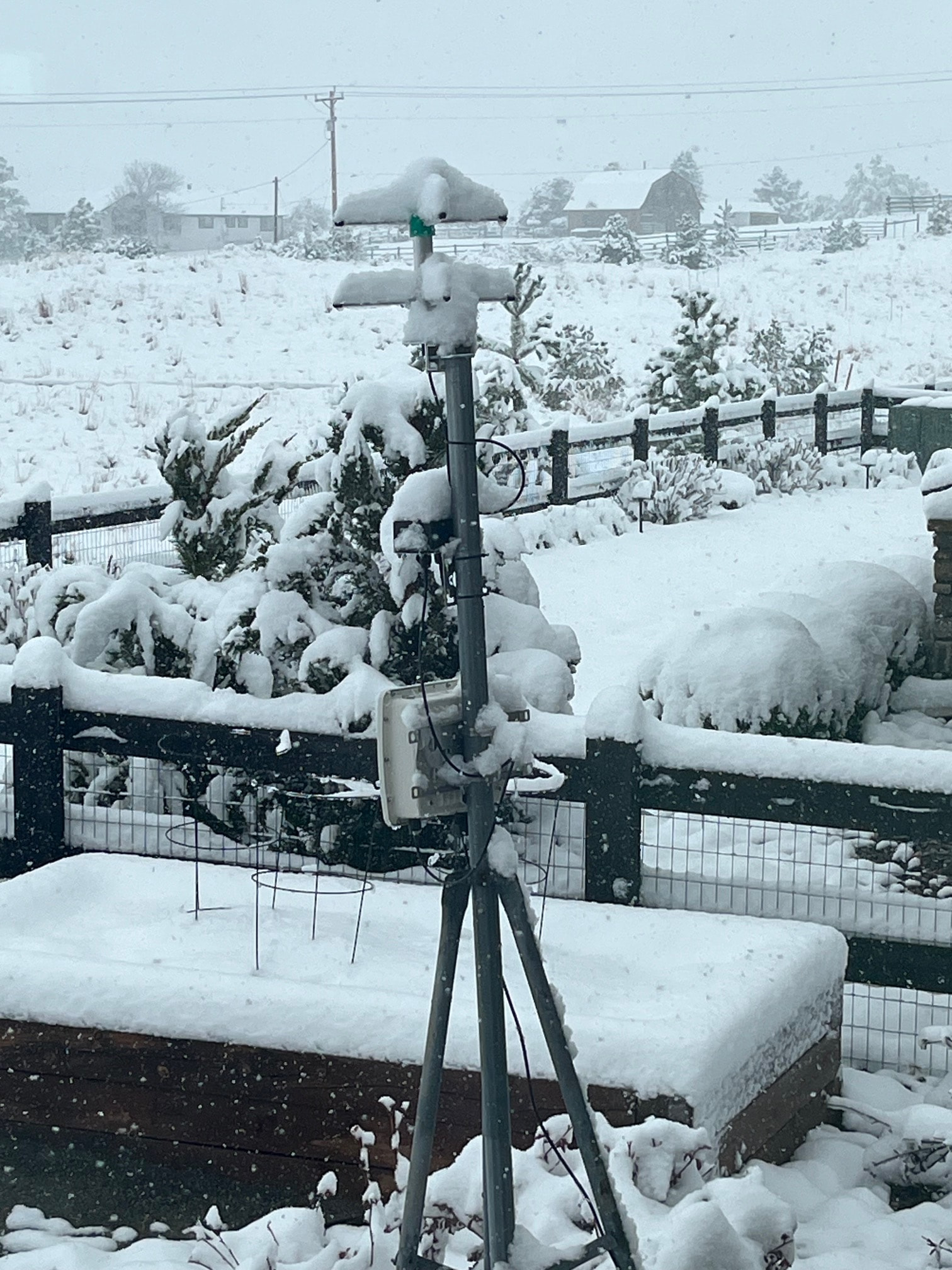
  • We have had a snowstorm for the last day or so, which has most certainly affected the antenna. See the following photo…

73 Bill WT0DX

1 Like

Hello Bill,

That is a pretty high ppm value, but looking at the environment where the system is in ..
For now, set the ppm value to -10 and lets see how that will change the systems behavior.

Regarding the Antenna, there are many ground stations with a similar setup, and simple UHF turnstile setup.

In the past I used the same turnstile but a couple of months ago I build a EggBeater and that also work fine.

My experience so far is that this EggBeater is a more quite, less noise and can receive signals to almost 0 degree (not always it also depends on the satellite).

I do think that the ice and moisture will have a negative effect, but wasn’t expecting it to be this much.

Maybe @SA2KNG can share his experience in a similar environment (Sweden)

Let me know if the ppm change already has a positive effect.

Jan | PE0SAT

1 Like

Hi Jan. I made the frequency ppm adjustment, but it just shifted reception away from the center of the waterfall. As such, I’m removing that correction.

The change that has affected reception in a positive way is to reduce the SDR gain to 19.7. I believe that the SDR gain was too high and overloading the device. After that change I am now receiving multiple satellites, including some that you entered in my observation list!

My question now is how can I determine the optimum gain setting?

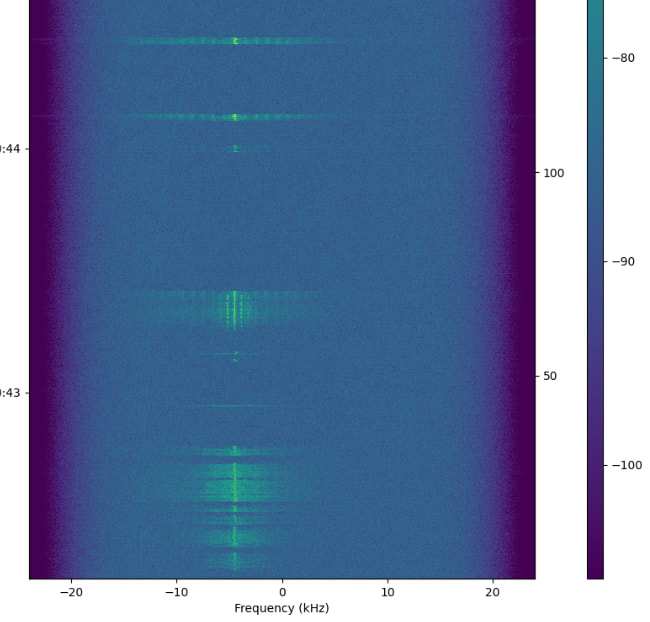
Here is an ISS pass with the new gain setting:

73 Bill WT0DX

Hi Bill,

Yes the ppm will shift the LO, still something to check for the next couple of days.

Why do we always think that the gain value is to low, I should have informed, investigated the LNA gain earlier. I guess this LNA has a gain over 30dB and this can indeed happen.

Lets see the next couple of days if you get a good performance with these new settings.

Jan | PE0SAT