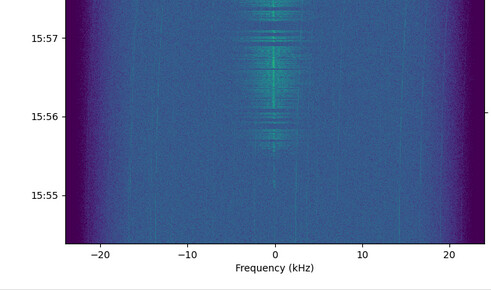
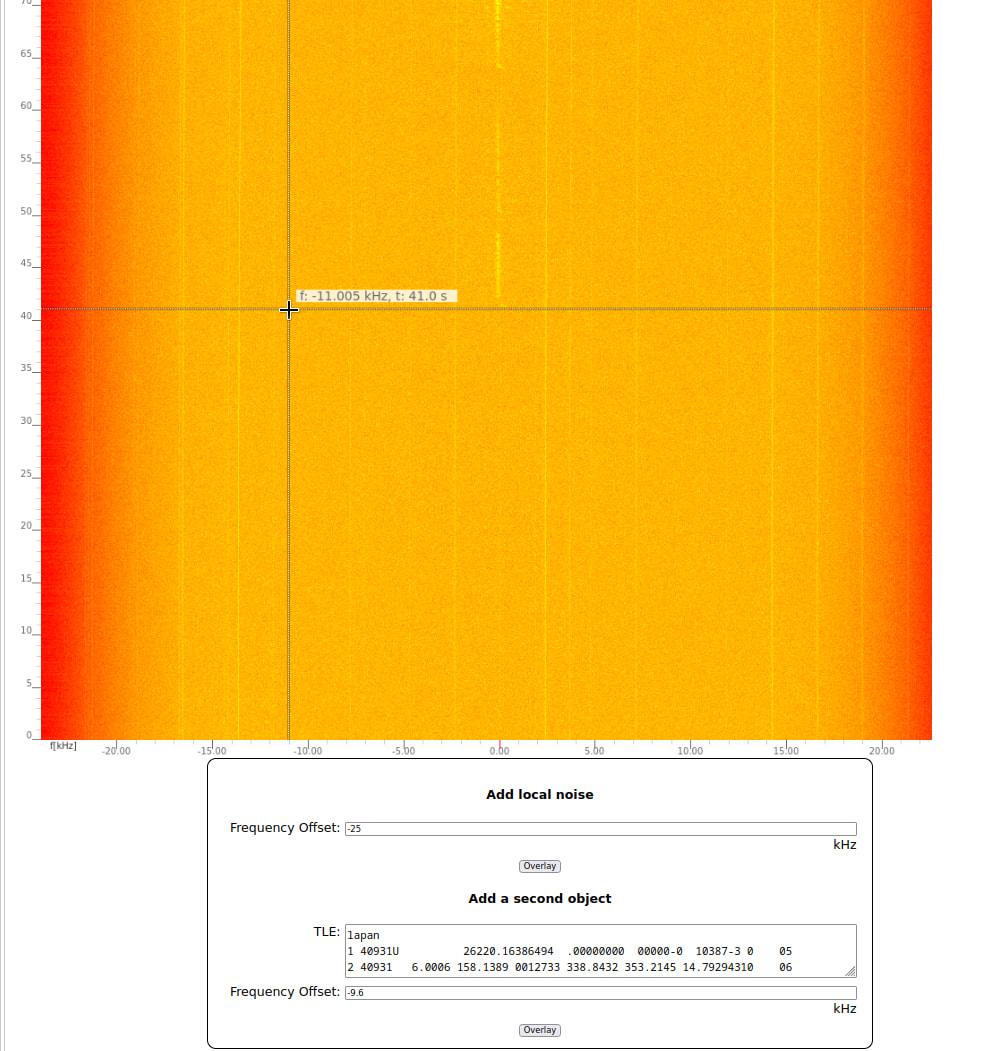
The 41 s is doing the work. SatNOGS starts the observation before predicted AOS, so the thumbnail looks early until you measure the .h5.
One pass landing on 15:55 UTC means the TLE epoch is close enough for that orbit. If the next two also hit the published AOS, mean motion is probably fine. If AOS walks later each time, the elements are aging.
Station clock error looks the same as a late TLE. I’d check NTP on the box before blaming the elements. kerel’s spectranalysis is the right zoom tool.