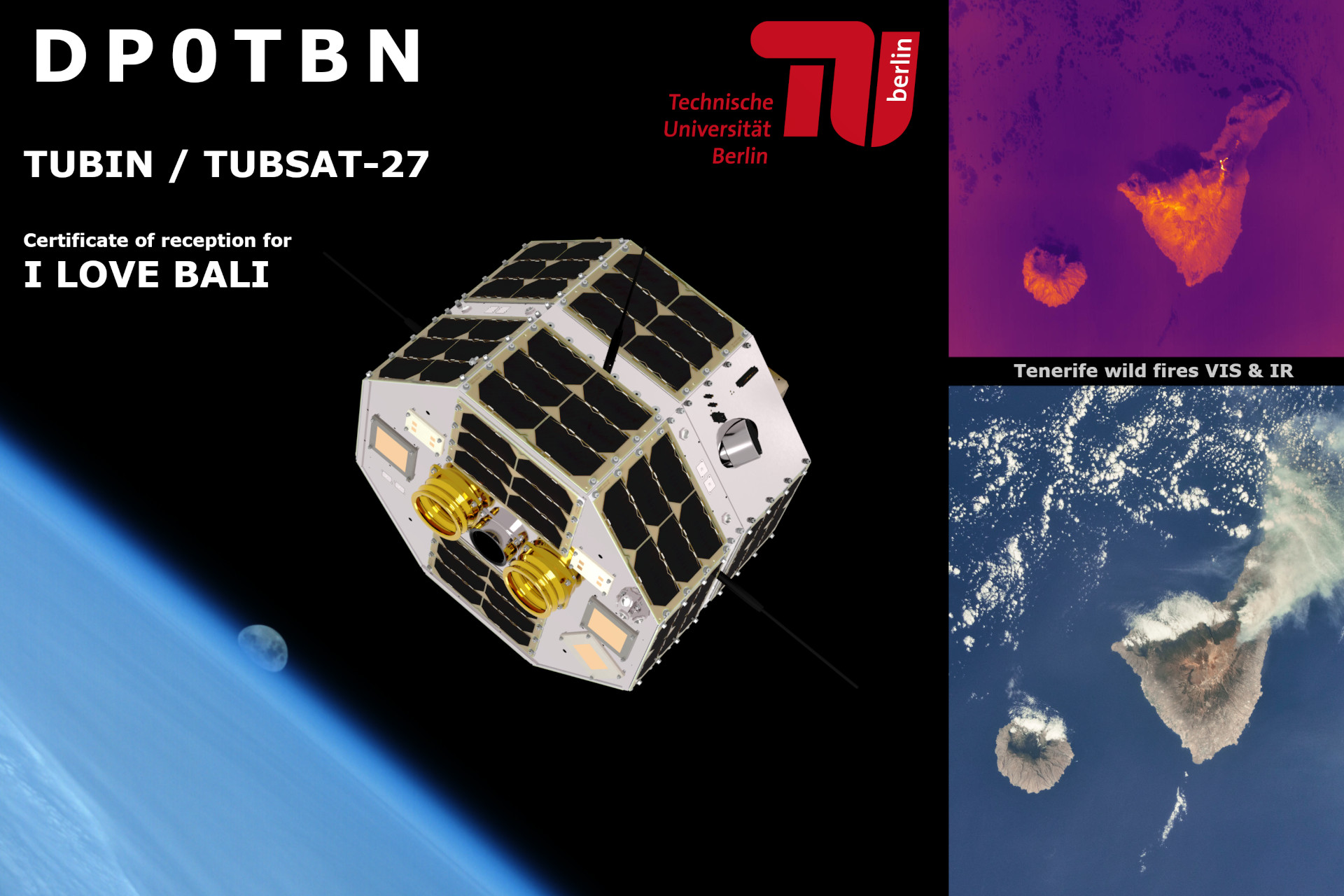
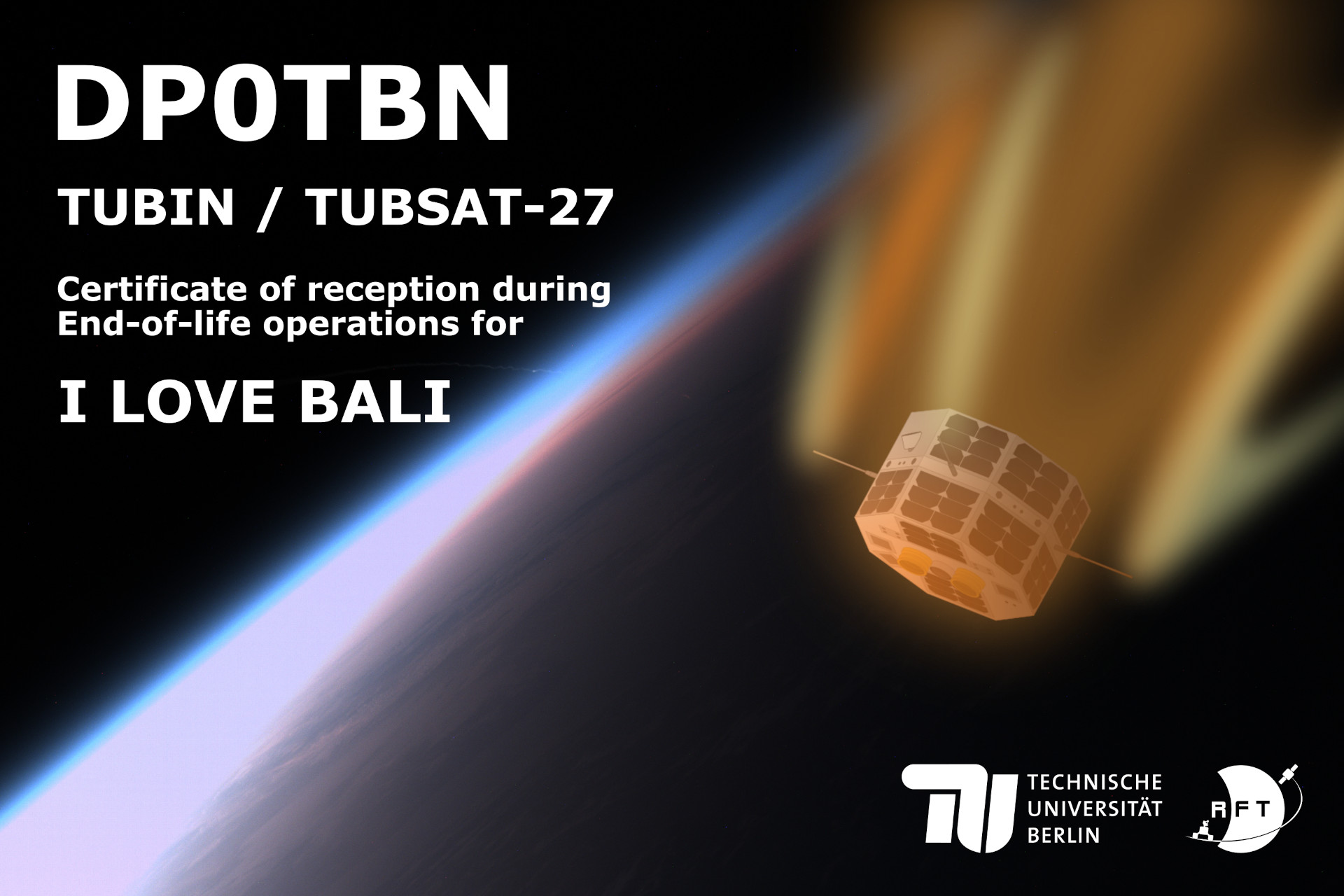
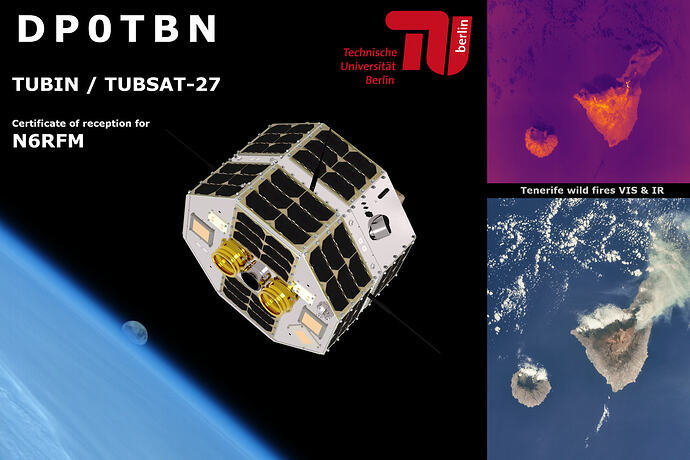
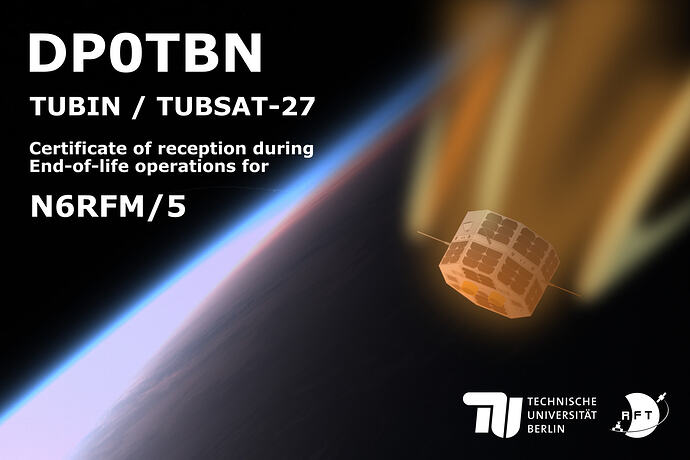
I was very happy to receive two eQSL cards a few minutes ago  (one standard and the other a special re-entry card).
-
Standard
-
Special re-entry
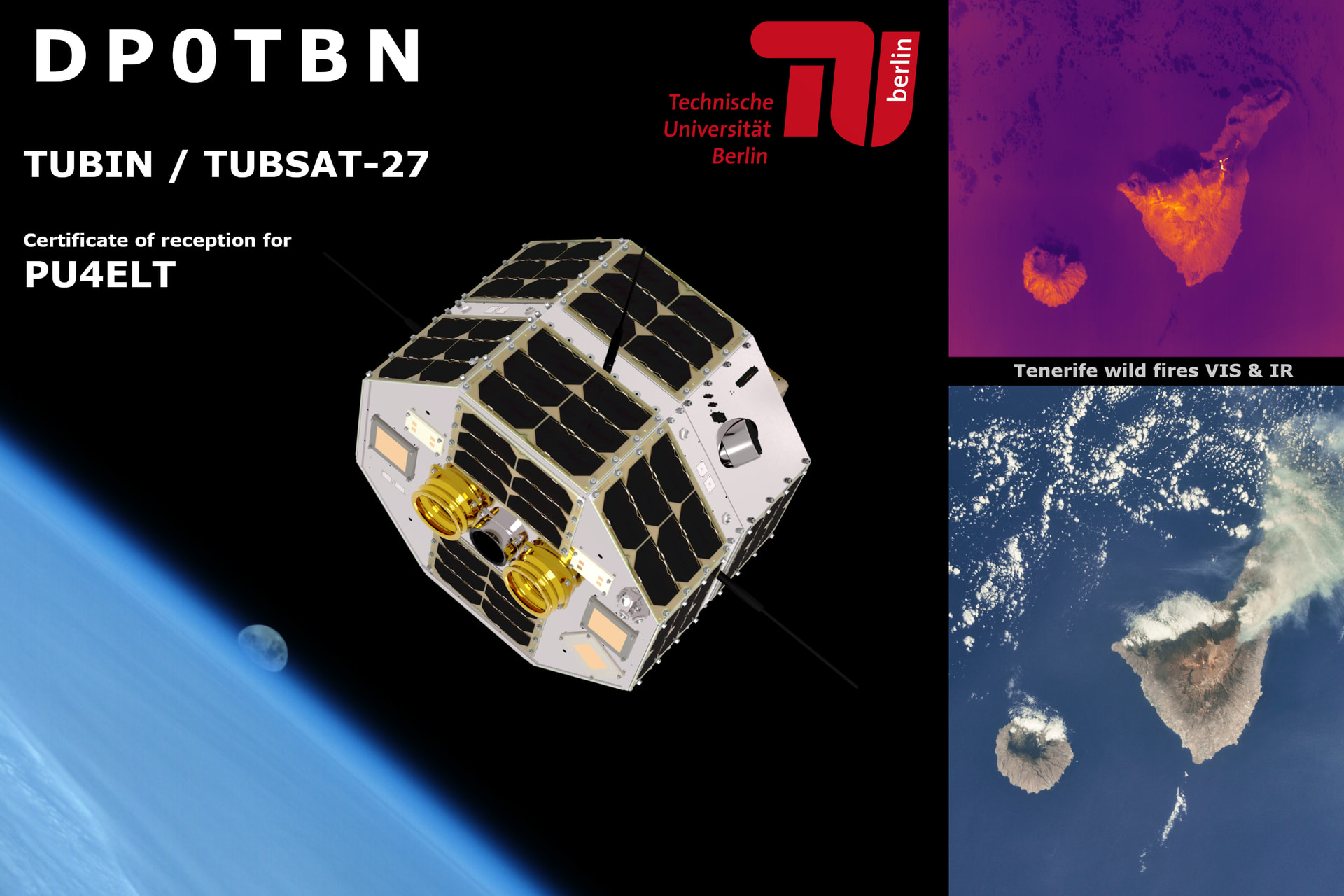
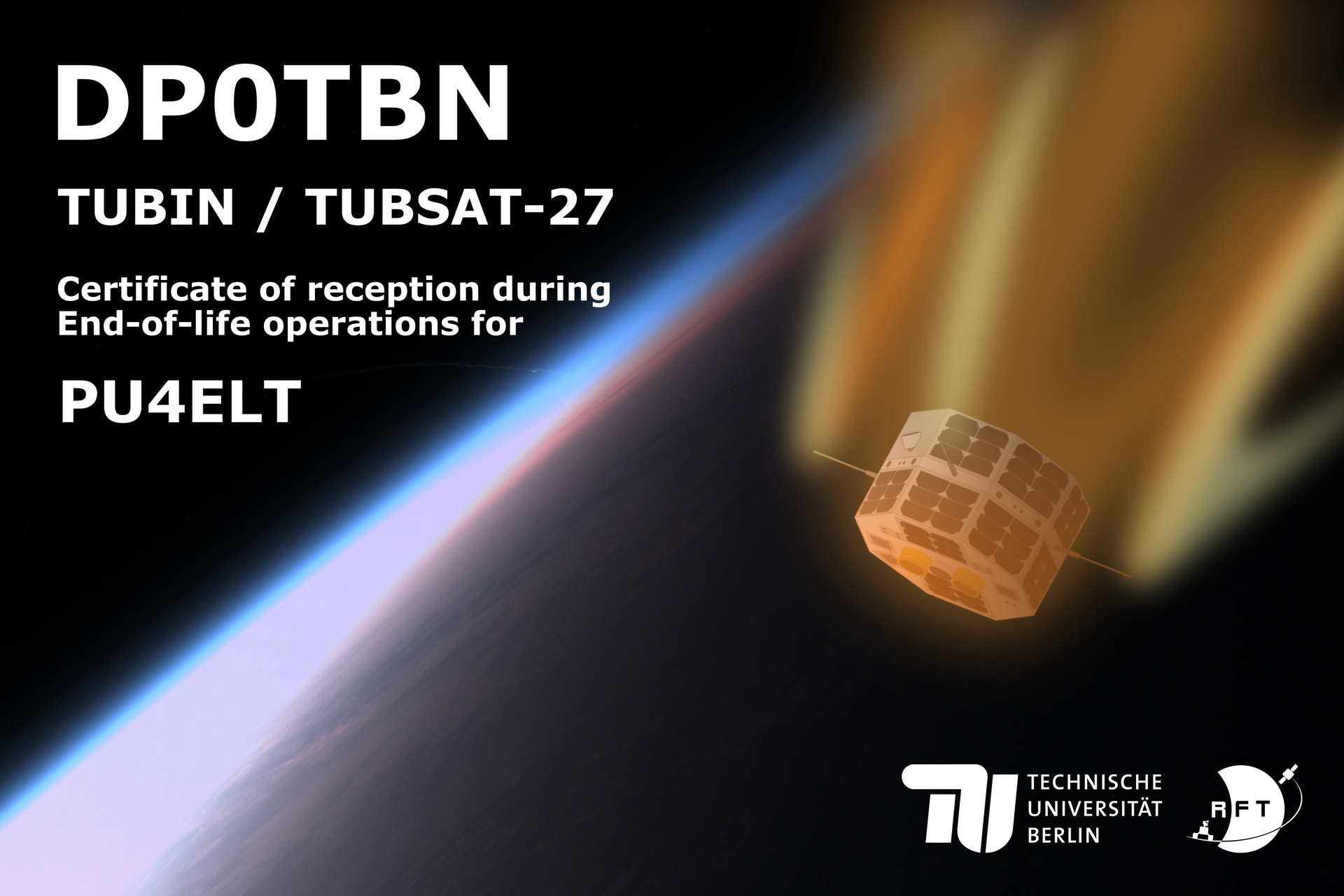
Many thanks to all team members of the TUBIN/TUBSAT-27 satellite 
I was very happy to receive two eQSL cards a few minutes ago (one standard and the other a special re-entry card).
Standard
Special re-entry
Many thanks to all team members of the TUBIN/TUBSAT-27 satellite
Awesome, and thanks for sharing. It’s things like this that’s motivating me to build my own satNOGS station. (My inner collector gremlin…)
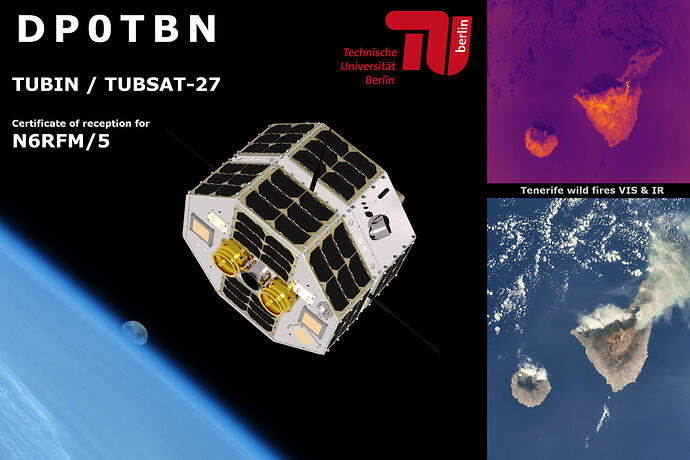
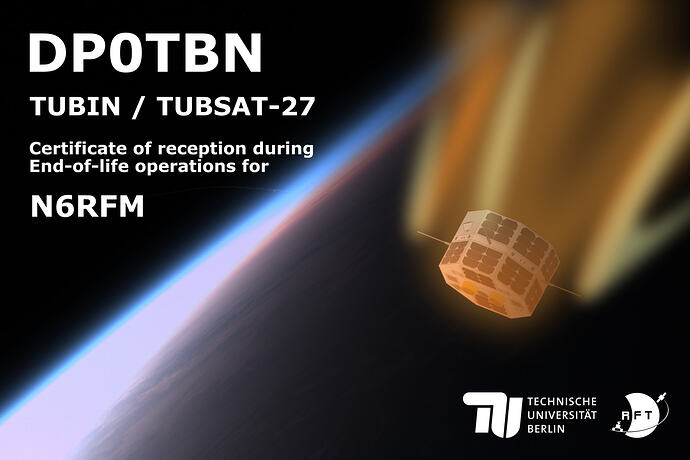
Nice Christmas present QSls from @julianharbeck @TUBspace for the last frames received at my our Rhode Island and Texas QTHs for Tubin satellite. 1043Z 14Dec25 (N6RFM) FN41iq and 0051Z 15Dec25 (N6RFM/5) EM12jw. Great team, great mission. Thank You again @julianharbeck 
Hi everyone,
today it is already five months ago that our TUBIN satellite decayed. Last week we presented our results about the re-entry campaign at the 4S Symposium in Sardinia. As part of our submitted paper we also released a dataset containing most telemetry recorded during TUBIN’s time in VLEO (below 400 km in altitude) / from 2025-05-01 until 2025-12-16. You can find the dataset with the title TUBIN - Dataset of Satellite Telemetry during VLEO and Re-Entry under a Open Data licence on the platform Zenodo with the DOI: 10.5281/zenodo.19114904
The dataset contains decoded data from the Attitude Determination and Control System (ADCS), Electrical Power System (EPS), and thermal data from various components. Included are also some images to clarify the different axis. If you are interested into more attitude data, there are more data sets from TUBIN and TechnoSat also recently released on Zenodo in our community (more comming hopefully soon): Zenodo - TU Berlin - Chair of Space Technology
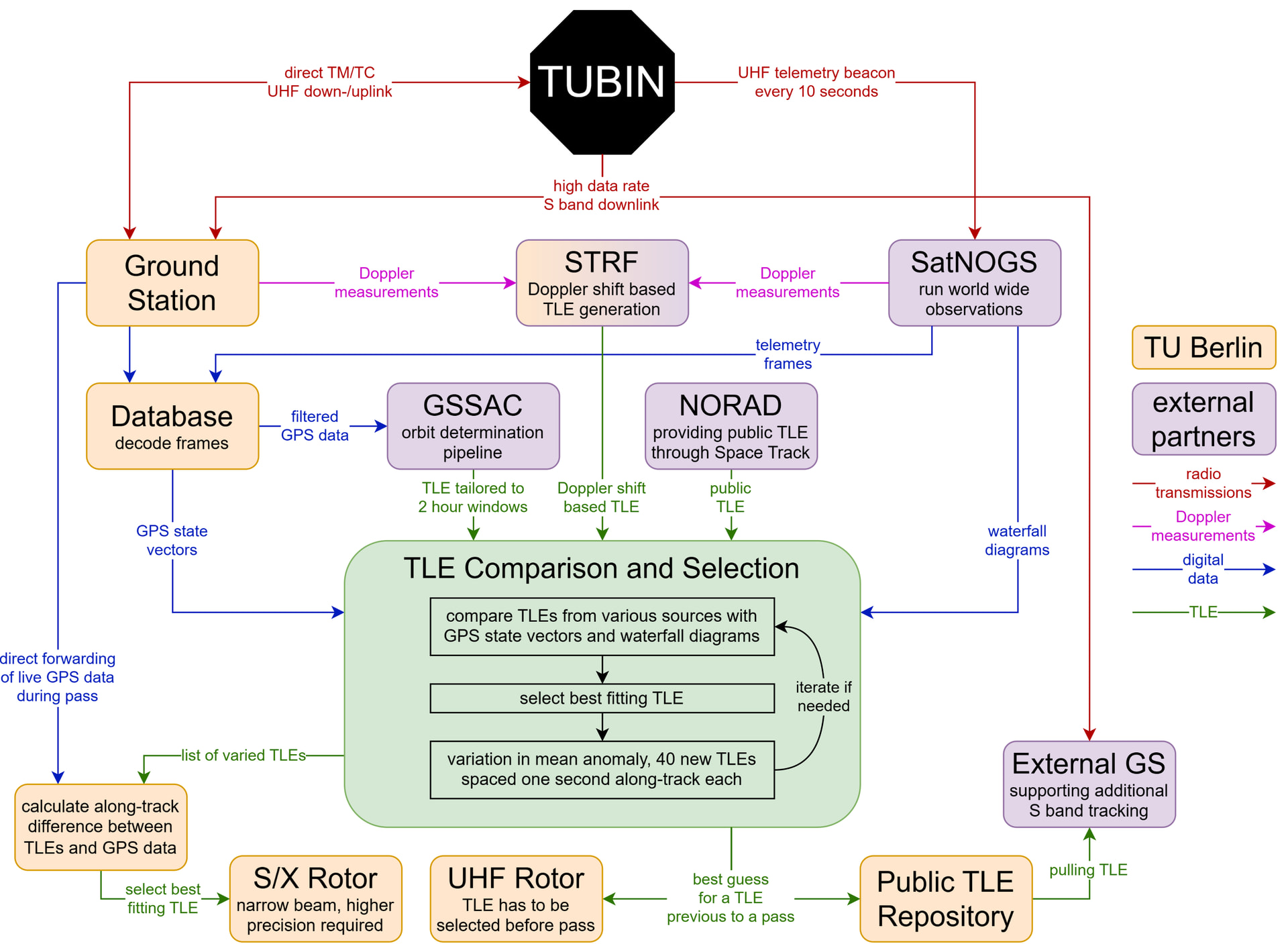
We will also release the paper, VLEO and End of Life Operations of the TUBIN satellite, Operational Strategies, Results, and Lessons Learned, soon, which will include some analysis of this data, specifically on the latest months. But there is one flowchart I want to already show you as it shows the process of how we created and selected TLEs in the last days of TUBIN operations, maybe this will also help in future re-entries:
Thank you all again for your support, we hope we can also give something back with this data release and soon our analyses. If you have any questions let us know 
Best Julian
And here is the paper available on ResearchGate:
https://www.researchgate.net/publication/404964772_VLEO_and_End_of_Life_Operations_of_the_TUBIN_satellite_Operational_Strategies_Results_and_Lessons_Learned
Abstract:
The End of Life (EoL) phase of a satellite offers unique opportunities to monitor its final days in orbit in the Very Low Earth Orbit (VLEO) environment. However, the same physical effects, that are interesting to observe also make operations increasingly challenging as re-entry approaches. Based on experience gained from the EoL operations of past CubeSat missions, an elaborate strategy is developed that scales up to the nanosatellite TUBIN. This strategy aims to maximize orbital lifetime through a low drag campaign and introduces continuous adaptive orbit determination utilizing GPS data and Doppler shift evaluations enabling the ground station contacts until re-entry. Additionally, the results and lessons learned from the EoL campaign are presented. Results include an evaluation of the effectiveness of the low drag campaign, looking into the ADCS system operating well outside its original design specifications, as well as taking a look at temperatures prior to the final loss of contact. Finally, a publicly accessible dataset containing 8 months of telemetry from VLEO is presented and implications for the operations of future VLEO missions are discussed.
If you have a use for the flowchart above and mention it somewhere, please cite this paper. It also explain the interaction between the components in more detail and presents some analysis of the Open Data published through Zenodo.