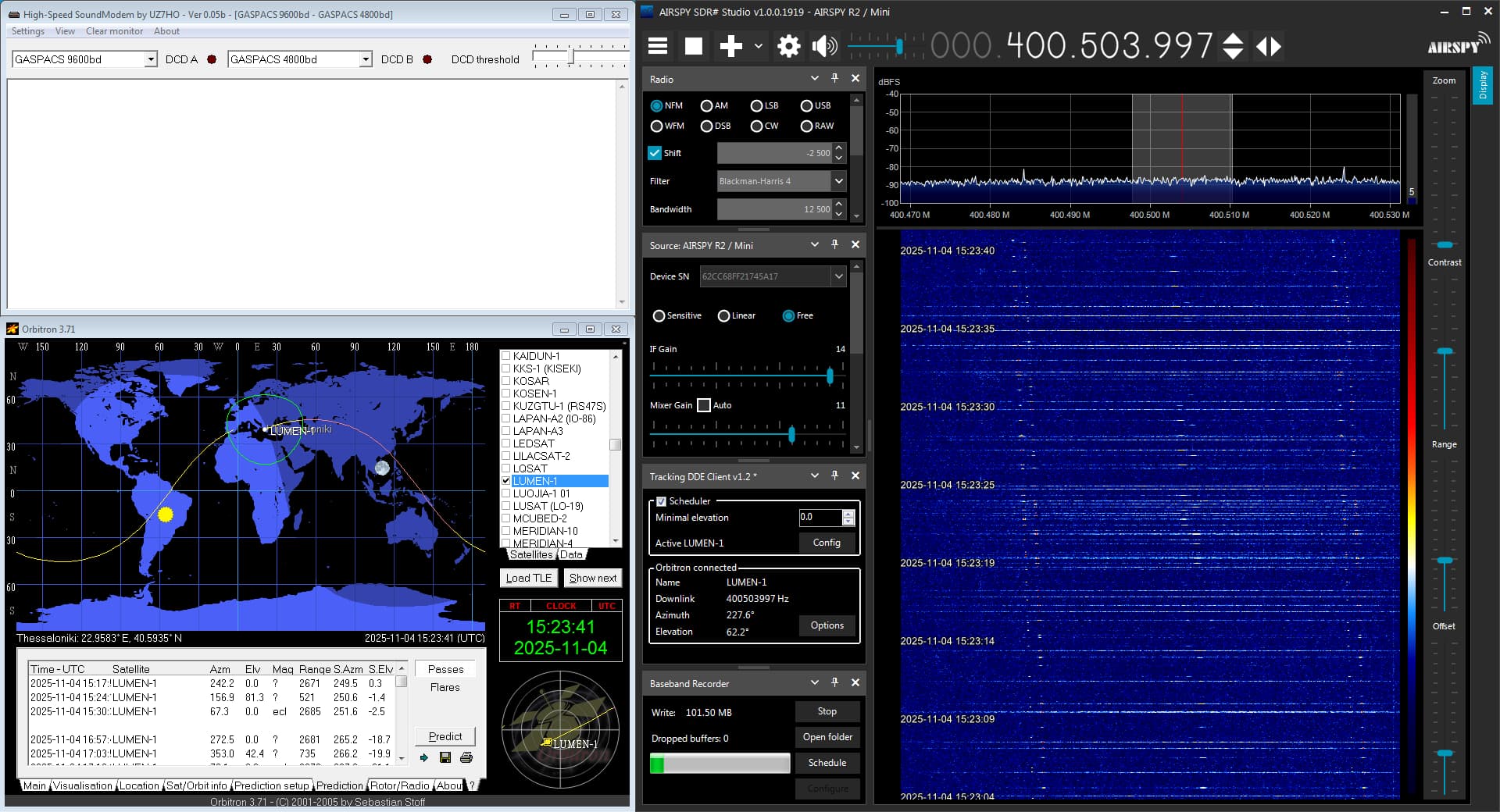
The every-15-second packets on 400.500 (i.e., SatNOGS Network - Observation 12662131) are decoding as 14-packet streams of 9k6 ENDUROSAT (although check me because that framing is often a false positive).
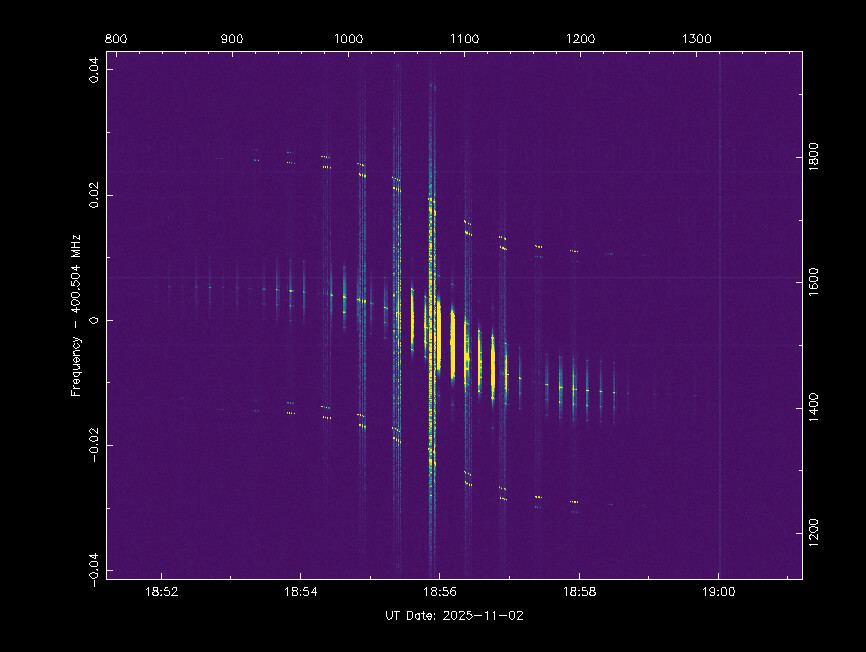
400.500 MHz is unfortunate because there are very strong & near constant 500k LoRa packets on 400.450. So, in any given observation, don’t be surprised to see a lot of very wideband signals.
Having the sat up and alive and regarding the packets description at cevrosat.cz , can I hope someone would be so kind and produces a kaitai file from it/ and any type of Grafana then, or is it strictly up to me? The Kaitai file is out of my possibilities, for Grafana, I would like to cooperate with anyone experienced, or I would experiment myself.
DL7NDR To JN48AP Via OK0CVR-7 [15:57:49]
cq


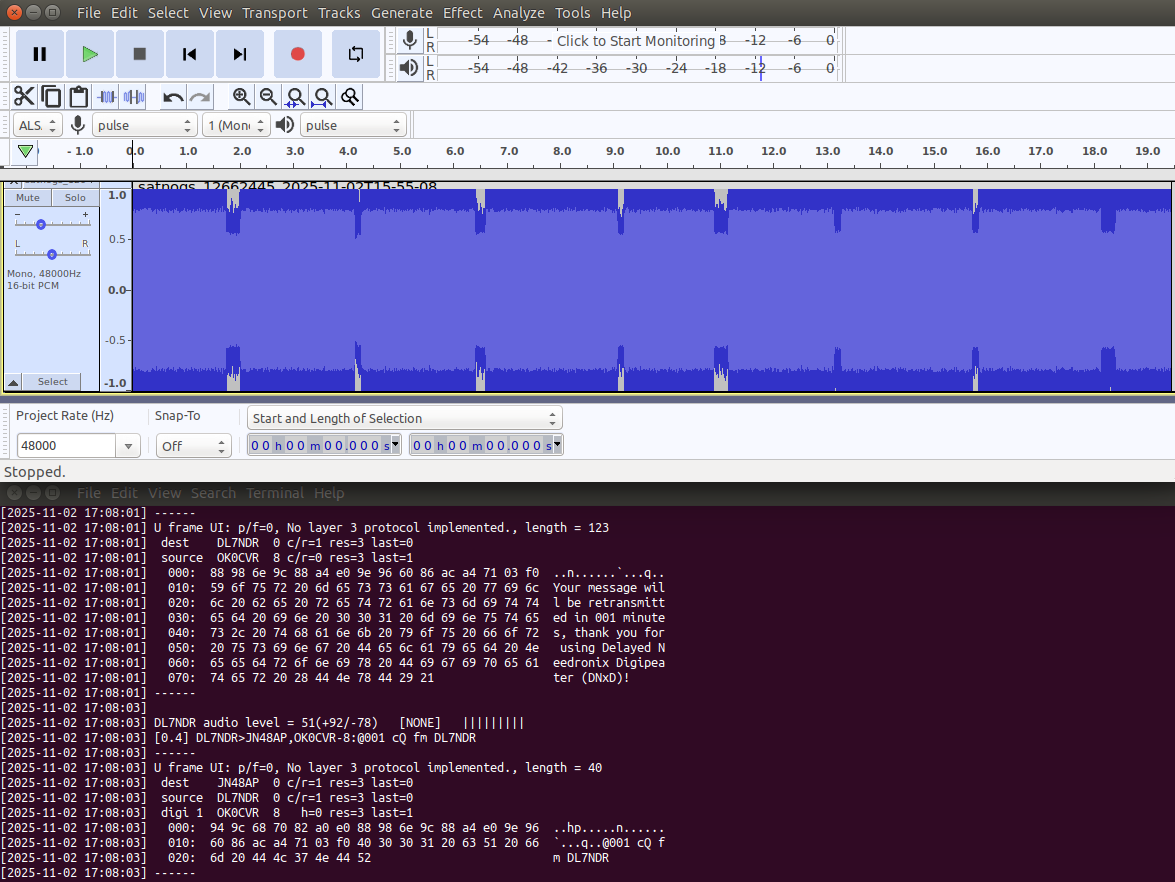
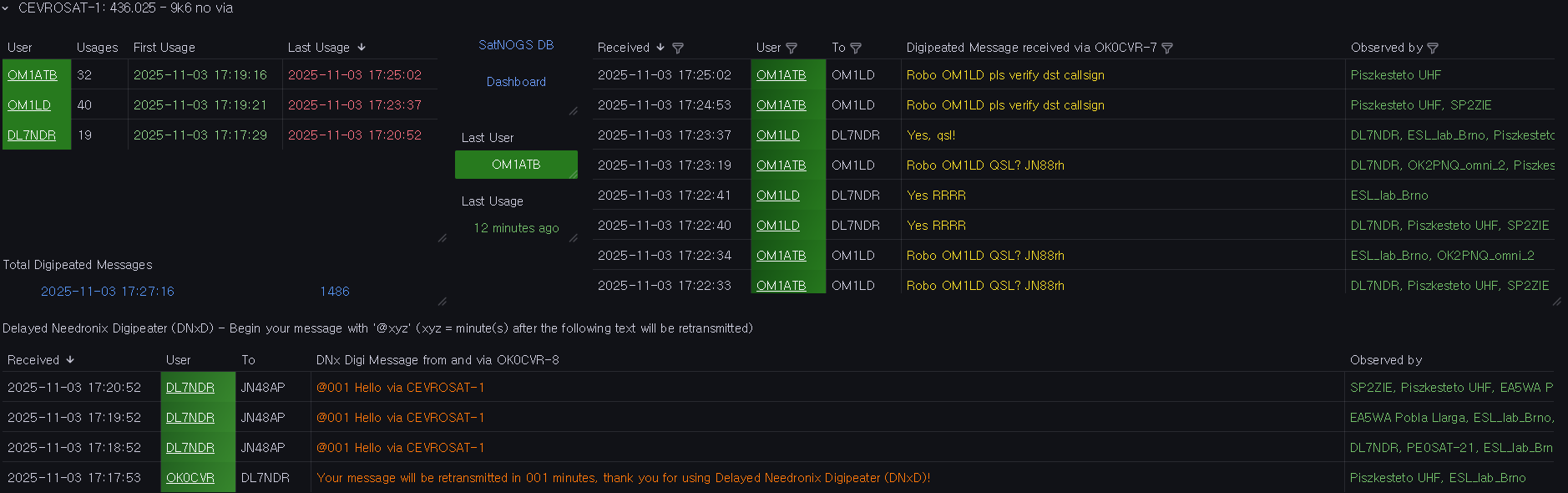
OK0CVR-8 To DL7NDR [15:58:52]
Your message will be retransmitted in 001 minutes, thank you for using Delayed Needronix Digipeater (DNxD)!
I’ve only seen the retransmission packet on the waterfall but it was too weak to be decoded (at 10° elevation).
However, CEVROSAT-1 seems to hear much better than GRBAlpha!
I also had some 9k6 endorosat frames but my first guess a false positive.
Lets try to create an IQ recording and go from there, listening to the audio it could even be 2FSK.
btw for everyone that make observation of cevrosat, but no data decoded by satnogs client, maybe you can try manual using direwolf. below is example of my observation, that failed autodecode by satnogs client but success decoded manually:
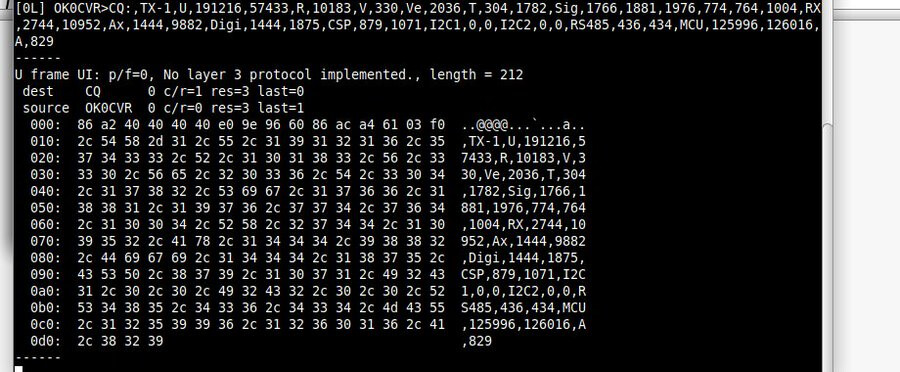
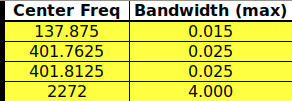
Indeed, there are 3 signals on 400.500 MHz. Two ~40 kHz wide signals and a narrow one that can be demodulated with UZ7HO’s GASPACS SoundModem @ 9600 bd . Replay of recorded IQ on November 2, at ~21:00 UTC.
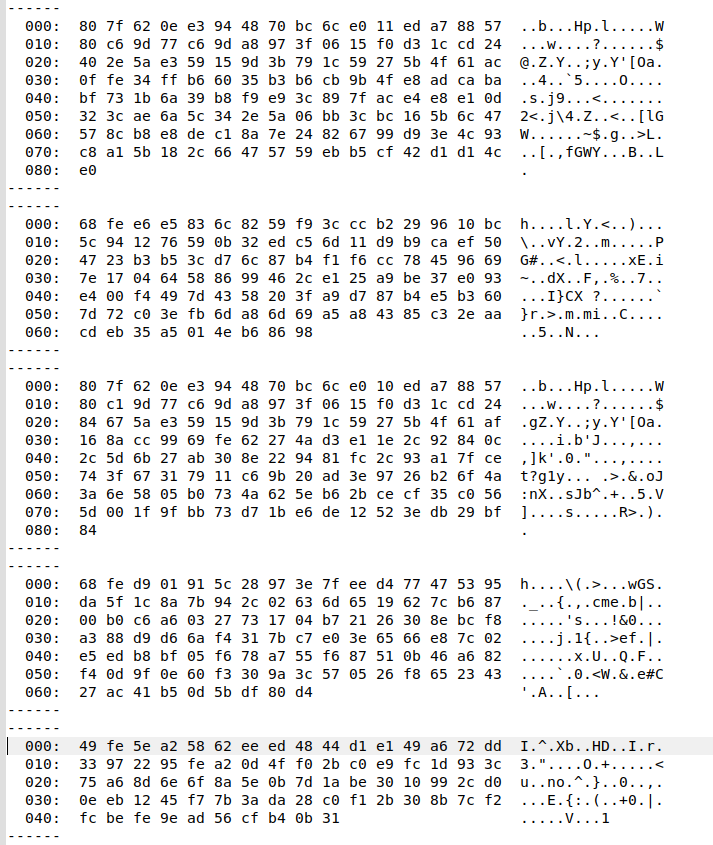
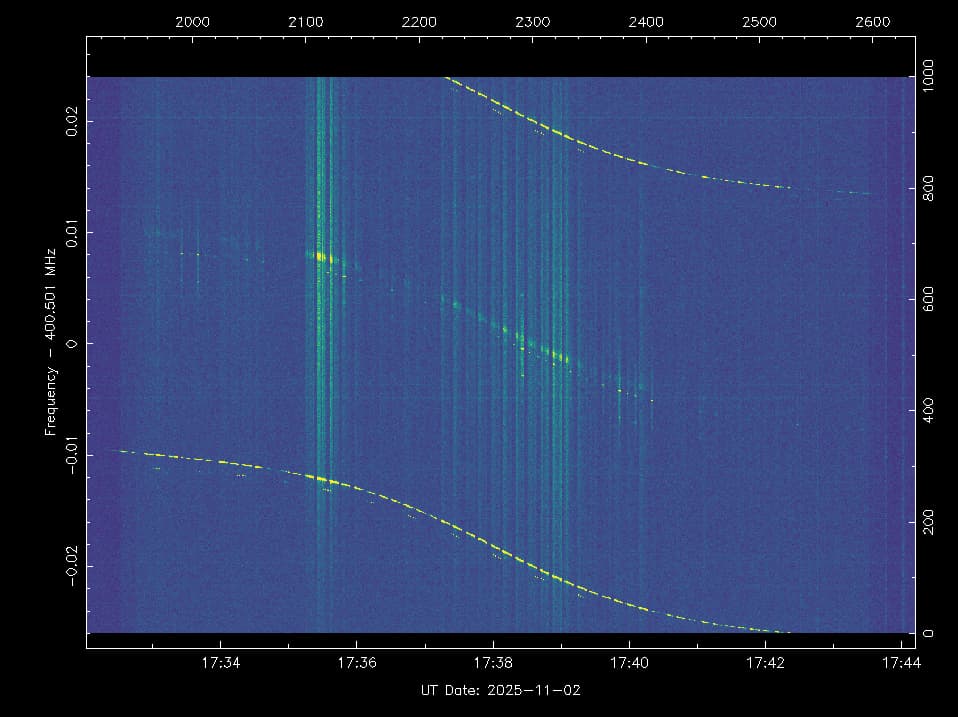
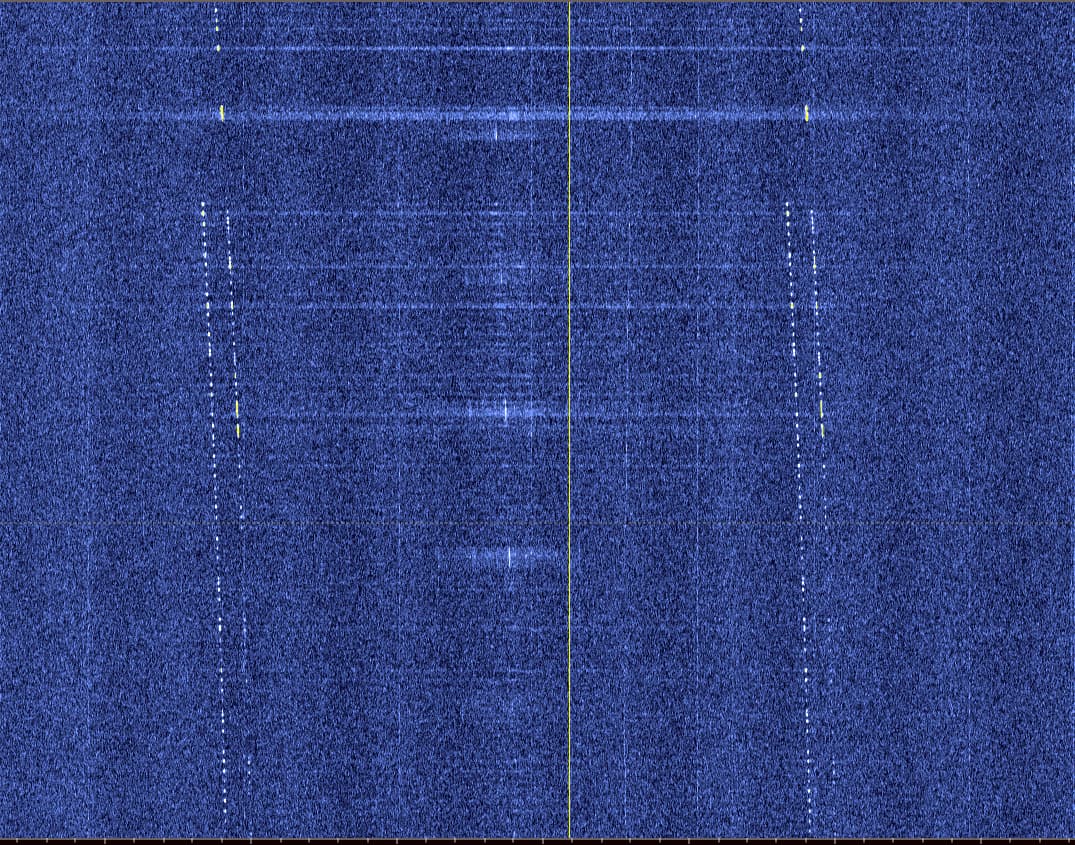
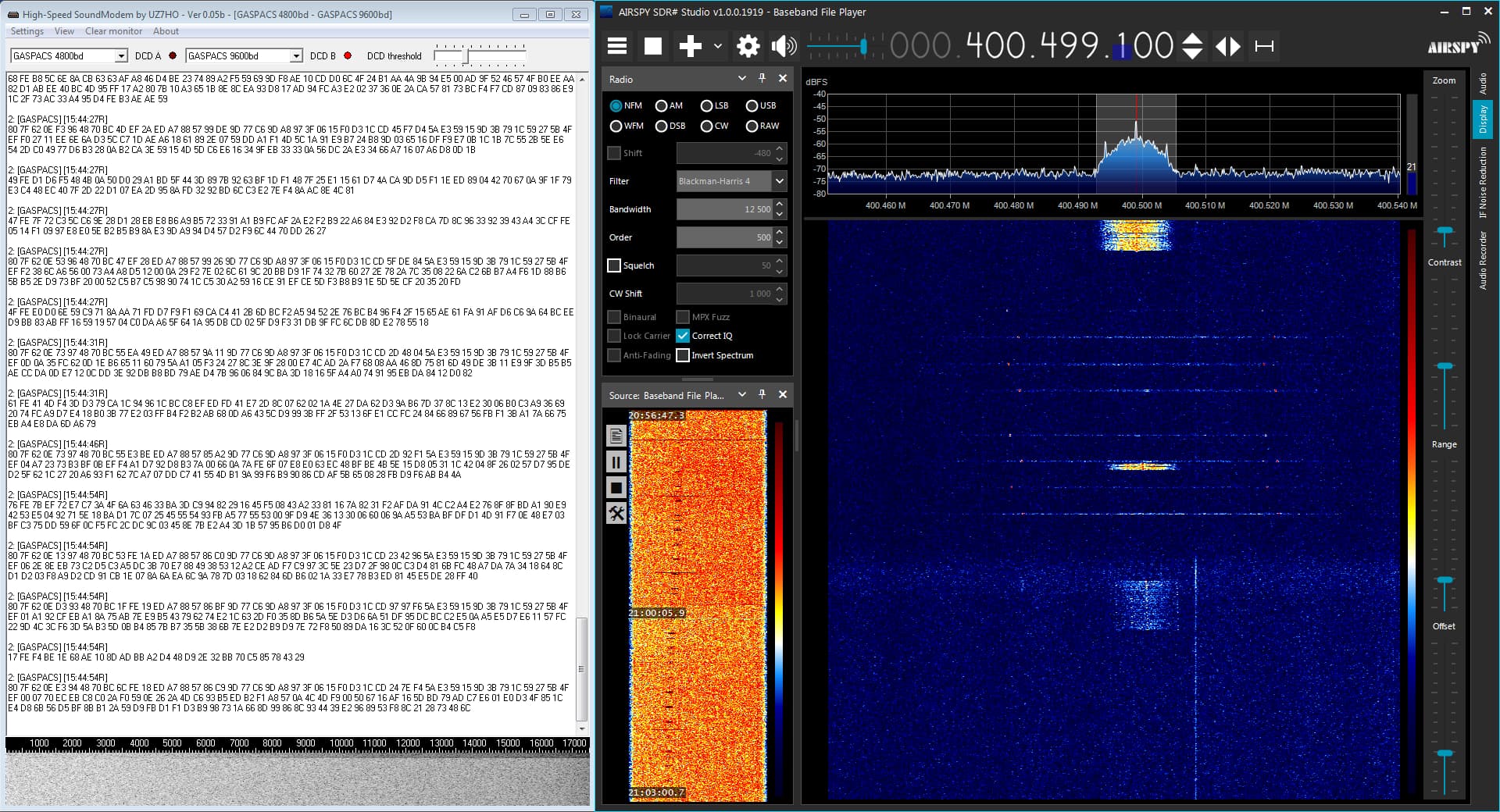
 . Replay of recorded IQ on November 2, at ~21:00 UTC.