UMKA-1 is my favourite cubesat, I have received and decoded many packets/transmissions from it. Being inspired and interested in controlling a sat as well I made a game where you are tasked to recover a satellite in space.
I wanted to learn about sky math and signal processing and this is what came out of it. I think it’s a fun way to get some excitement in sats and helps deepening the understanding of how the tools fit together. Maybe ? Anyway
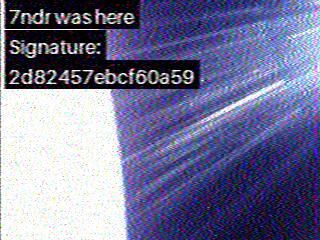
You cannot do much with it now, but there is a way to instruct it to transmit an sstv image with your message of the day from the ‘simulated’ space. I’m not quite sure things really work that way in the uplink, but based on what I found… it might be.
If there is interest I can add more experiments/tools to fool around with in its own little world.
I see in the logs that somebody was trying to talk to it the other day, but he sent packets with invalid hmac and sometimes too short payloads is that you?
To answer your question. It’s supposed to be 1 telemetry packet every 30 seconds. If i just listen to the radio I can clearly hear that when it’s overhead even at low passes.
But in your screenshot I see only one packet every minute and the time between them should be equal… that suggests something is different in your pipeline than in mine. How do you get the audio? And what is the tool you are using to analyze?
I’ve noticed afterward that I forgot to update the HMAC after changing the sequence number for the motd, and I completly forgot the HMAC for sstv.
The screenshots should only show some kind of squelch that opens roughly every second for about 0.4 seconds. So only four telemetry packets of a 15 minutes pass made it at least partially into the open squelch. Unfortunately, none of them was decodeable.
The audio is outputted like all other audio from my browser and the screenshot comes from ocenaudio where I record the stream while having constantly listen the modem to it.
Sounds you already got half of it, if you have the sequence number. Could you change the motd?
I dont understand what you are saying about the squelch. The audio is basically white noise except for the bursts when the telemetry is transmitted (not talking about sstv now), so a well set squelch should be normally closed and open every 30 seconds for a short period of time. Not every second for 0.4 seconds. ?
I increased the output power of the satellite’s transmitter to 0.15W from 0.1W, it should improve those low elevation passes.
If you manage to decrypt a telemetry, pass it here, like it was a real satellite and I wish you can post your personal SSTV image as well soon!
Guess there is no squelch implemented, but at least it appears so.
It obviously has something to do with the buffering. Using another browser, I had 4 seconds playing, then 10 seconds buffering.
However today it was most of the time a constant stream of white noise and I was able todecode 10 packets, the last at - 3° elevation when the upload already said “out of range”.
000: 8e a4 9e aa 9c 88 00 90 82 6e 8c 98 a4 01 03 f0 …n…
010: 54 4c XX XX XX XX 00 00 00 00 68 7f db 3f 00 00 TL…J…h…?..
020: b7 92 00 00 01 35 04 01 0d 25 29 23 62 23 f9 00 …5…%)#b#…
030: 0e 01 00 00 83 00 c9 26 44 6f 6e 27 74 20 66 6f …&Don’t fo
040: 72 67 65 74 20 74 6f 20 77 61 76 65 20 77 68 65 rget to wave whe
050: 6e 20 49 20 70 61 73 73 20 6f 76 65 72 2e n I pass over.
Although I’ve uploaded the motd multiple times, it’s still the initial sequence number (XX XX XX XX).
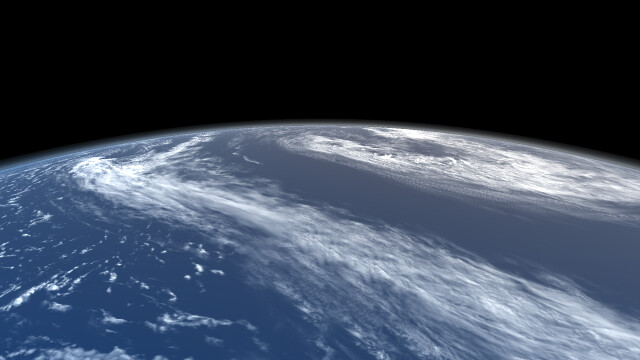
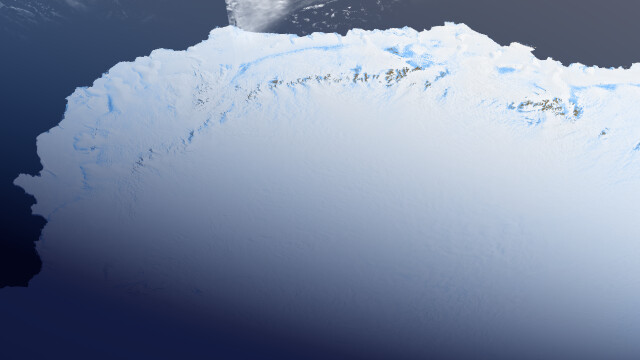
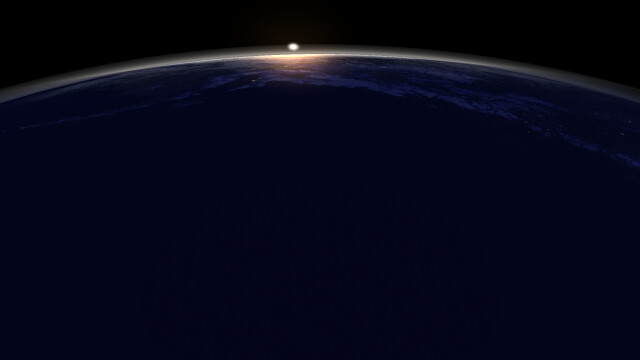
Our engineers started to understand the camera protocol of the manual, so you will be able to take scheduled pictures from space within weeks. (Depending on my freetime.)
I’m working on a renderer that aims to make realistic looking pictures of Earth from various angles at 880km altitude. (Please tell me if this is pink, I’m colorblind…)
if connected to EchoFlare, one would be able to create these screenshots on his/her own.
I also think about making EchoFlare more user friendly i.e. a click-click done interface instead of the low level radio stuff, so that it’s more fun for the community… I dont really know where this thing will get us.
 ? Anyway


 and I wish you can post your personal SSTV image as well soon!