437.850 MHz (1k2 AFSK AX.25). When telemetry is not being actively transmitted, the UHF digipeater remains enabled for amateur use. Same active call request as like VHF Digipeater.
VHF APRS Digipeater:
Downlink Frequency: 145.825 MHz
Protocol: AX.25
Data Rate: 1200 bps AFSK
Satellite Call Sign:BN0UTC
Supported Paths:ARISS, WIDE2-1
Digipeater Logic: * Responsive to both its unique call sign (BN0UTC) and the generic ARISS alias.
Config:PATH1=ARISS,1; PATH2=WIDE2,1.
The launch via Space One (KAIROS-3) is currently on standby within the window ending March 25, 2026. Official launch date TBD - Announced 48h prior.
To provide a comprehensive view of our mission involving PARUS-6U1, LILIUM-4, and NUTSAT-3, here is how we are integrating these assets into a unified educational and technical ecosystem:
1. The ‘Constellation’ Relay Concept
Simultaneous Launch & Drift: PARUS-6U1 (BN0TTA) and LILIUM-4 (BN0YCA) will launch together on SpaceX Transporter-16. Initially, they will respond simultaneously to the same ARISS path triggers. As they naturally drift apart, they will form a sequential APRS relay chain.
Heterogeneous Integration: NUTSAT-3 (BN0UTC), launching via Space One’s KAIROS-3, adds a different orbital plane (Mar 1st, 2026 0200 UTC) . When these satellites are within cross-link range, they create a robust, inter-satellite relay network that maximizes the global footprint.
2. Solving the ‘Educational Bottleneck’
The 2-Hour Classroom Window: Our goal is to ensure that within a standard 2-hour school session, students have multiple ‘live’ satellite passes. A single satellite is not enough; a coordinated constellation provides the pass frequency needed to keep students engaged and excited.
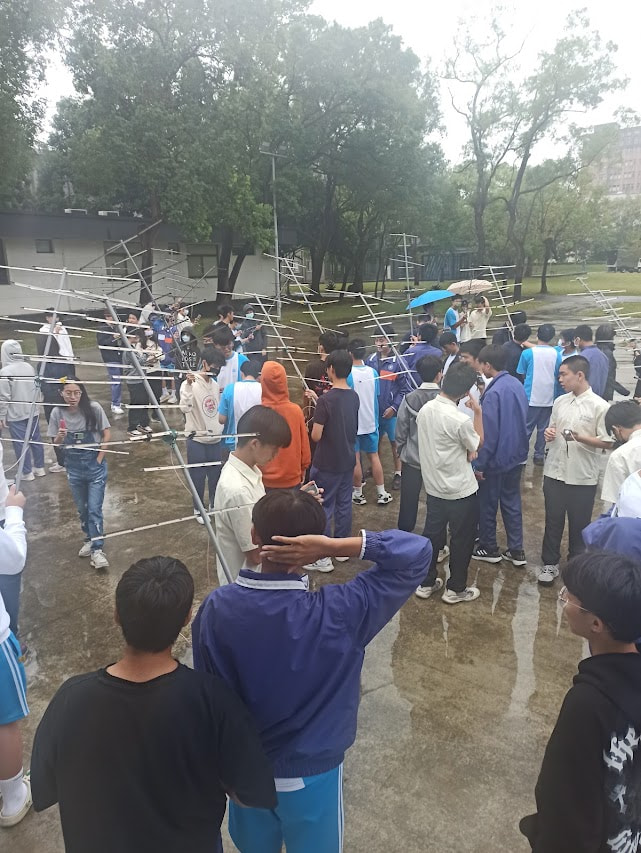
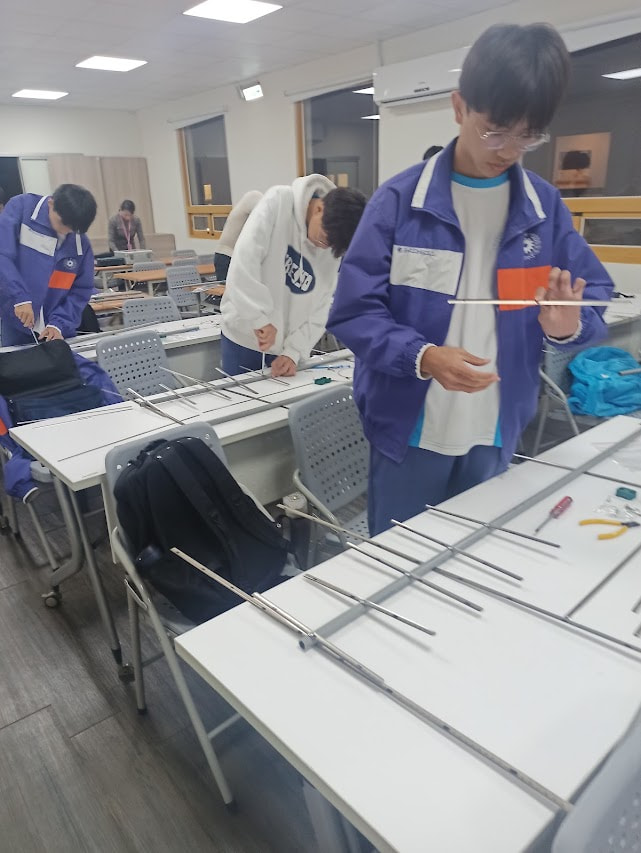
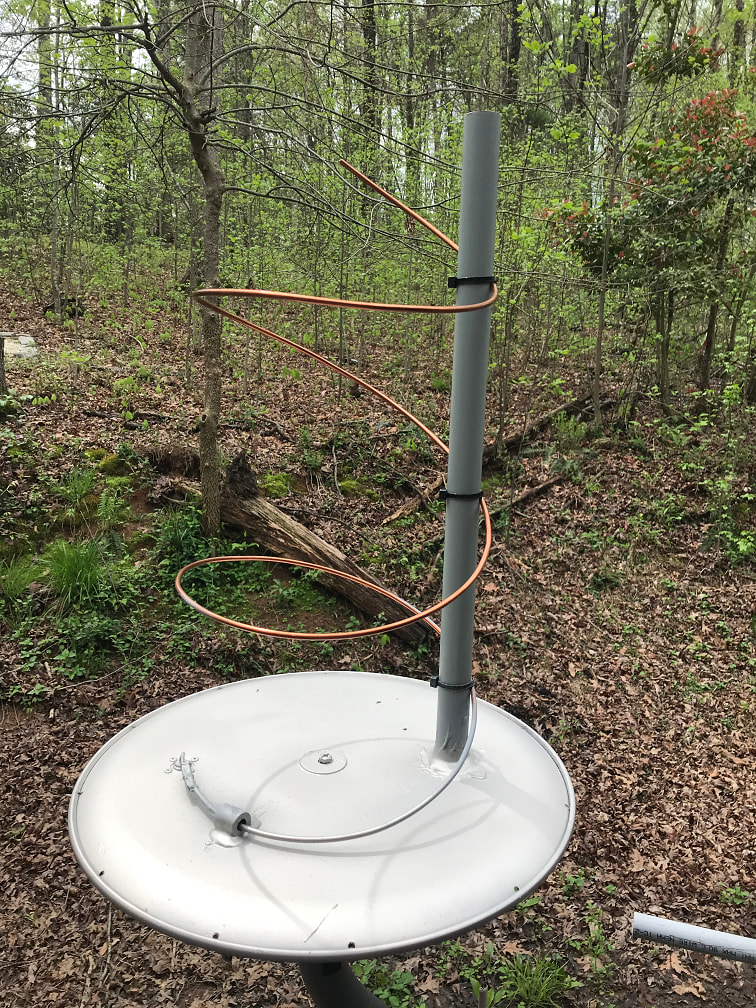
Accessible STEM: We’ve designed these payloads to work with simple, DIY Yagi antennas. This allows high school and university students to interact with space technology using low-cost, accessible hardware.
3. A Global Space-IoT Laboratory
Standardized Architecture: We view this as a broad application for Space IoT. By using identical, flight-proven APRS payloads across different missions, we are building a reliable backbone for global data relay.
Open Invitation: We encourage other amateur and university teams to adopt this ‘Plug-and-Play’ communication standard. When we all use compatible modules, we aren’t just launching individual satellites—we are building a shared, global infrastructure for education and IoT research.
Our mission is to prove that through collaboration and standardized technology, we can make space an interactive classroom for everyone.
Thank you for the clarification! You are right that IoT usually brings LoRa/LoRaWAN to mind. However, our approach is focused on educational accessibility.
For our PocketQube missions, we’ve designed the APRS interface to act like a simple IoT Gateway for students. By simply sending a command like AT+SENSOR=xxxxx(for Satellite(Telemetry) and G/S(Command) to our module via a UART interface on an Arduino or Raspberry Pi, the satellite encapsulates the data and transmits it via standard AFSK 1200bps APRS.
Our goal is to keep the barrier low for students, using traditional amateur modulations that most classroom ground stations can receive.
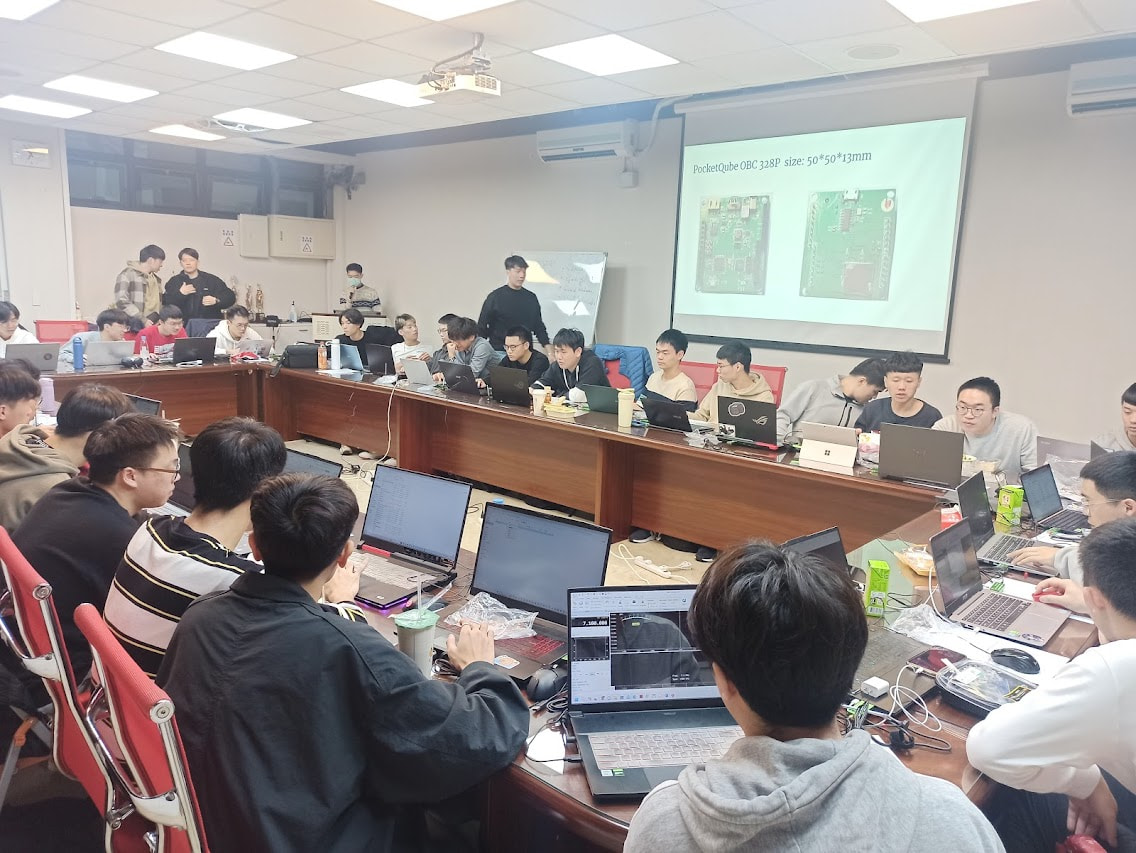
And the most interesting part? The students have to design their own decoders and write the Arduino/RasPi code to communicate with our PocketQube modules. Successfully doing that? That’s 3 credits toward their degree! Haha.
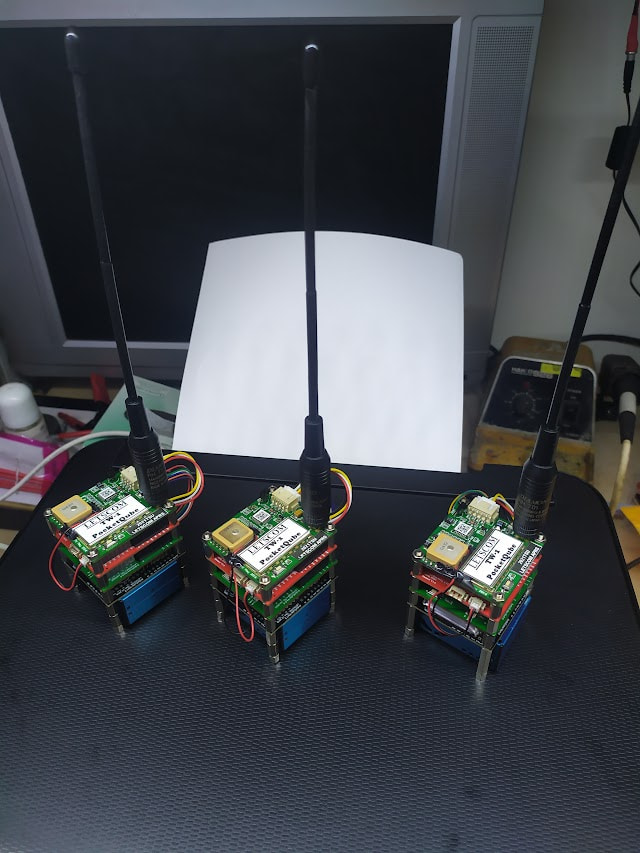
I’ve attached some photos of our PocketQube hardware to show the scale and the educational modules we are using for this program.
To make this even more interactive, I have developed a new OpenWebRX-based educational system. It allows students or users (both in my class and anywhere else) to use their computers to remotely access our ground station and decode live satellite/others signals passing over Taipei in real-time. They don’t need their own SDR hardware to start learning how to decode space data!
Very exciting, I tried a couple times to multi hop APRS between satellites (IO-86 and ISS) but no success, probably due to IO-86’s digipeater that’s hard to reach/digi.
Yes, a double-hop is very difficult. Probably the hardest requirement is being in a position where the FIRST satellite’s digipeat does NOT get heard by an iGate. You see, once that first digipeat is uploaded to APRS-IS, any secondary digipeats will be dropped as duplicates.
I’d guess that over the years, there have been a large number of instances where a nearby sat heard the digipeat from some other satellite with a valid path still active (i.e., original packet uplink ‘ARISS,ARISS’ gets digipeated by the ISS as ‘RS0ISS*,ARISS’… so the second satellite sees a valid PATH {the remaining ‘ARISS’} and digipeats it). But that’s all for nothing if the first digipeat was heard by an iGate. In some places there are so many iGates that very little goes un-heard. But, keep trying and one day you’ll get an alignment that works! (for goodness sake, if you run an iGate be sure to power it off when trying for a double-hop!!)
I wouldn’t make a success depend on APRS-IS alone but rather on SatNOGS uploads, so you can see the double-hop on both satellites’s dashboards.
And of course from what you’ve received for yourself.