This works without any modifications and yields decent observation results in terms of both the waterfall and generation of data frames for most satellites when compared to a RTL-SDR v3 blog that was in place for months prior to the Nooelec SMArt.
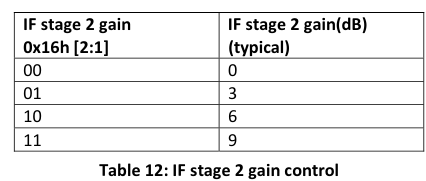
Why are there two IF2 parameters listed in the SatNOGS example, is it a typo? The Nooelec spec sheet show the possible setting for IF2 as 0,3,6,9 (not 2)
I’ve also tried changing the parameters to all 6 IF settings but do not see any difference but will keep messing with these.
I have noticed some satellites signals are now very weak and I can barely decode any frames from them any longer (FALCONSAT-3, BOBCAT-1 and RAMSAT-1 for example) when compared to using a RTL-SDR v3 blog for months with the same system and decoding tons of frames in single passes. Hence why I am trying to tweak the Nooelec IF gain settings.
Any insights would be greatly appreciated. Thanks.
As for optimizing the E4000 gains… that’s a complex problem. I suspect you would be best off radiating a weak signal somewhere in the vicinity of your receive system, and tweaking the gains to adjust for best SNR, while also avoiding IMD products.
my satnogs station error when using this setting, the device used is nesdr smart-xtr. maybe you can show a screenshot of the settings for the gain. very grateful for the help
Seems to work okay for me but I really have not spent much time adjusting the settings to much. More details on the possible settings for each IF stage here on pages 36-37.