I’m Skirk from Sri Lanka and I recently joined the Libre Space community. I’m an aspiring Rocket Propulsion Engineer.
I’m open to contributing in any way I can whether it’s documentation, research, or beginner level technical tasks. I’m here to learn, collaborate, and grow with the Libre Space community.
Getting reactivated in ham radio and have always been interested in satellites. Both my sons build satellites for RocketLab. Looks like the network could use more mid-pacific options.
hello everybody, halo semua!
warm greetings from indonesia
I just installed and ran this satnogs 5 days ago. I hope to learn a lot of knowledge, experiences, and friendships in this community. If you’re interested, please feel free to visit my groundstation:
we are Jan (14) and Daniel (49) from southern Germany. We already received NOAA images with a V-dipol and a Raspberry Pi. As the NOAA are discontinued, we are looking for a new challenge for our hardware setup. We just started to build @surligas QFH to set up a satnogs groundstation. I have 30 years of experience in internet infrastructure operations. We are really curios how good it will work.
My name is Kana, and I’m a hardware engineer from Japan. I design printed circuit boards that integrate FPGAs and DSPs for digital signal processing systems.
I’ve been developing hardware for radar signal processing, focusing on FPGA implementation, data transfer architecture, and real-time performance optimization.
I joined this community because I want to be involved in creating hardware related to space and learn from open-source space projects.
Hi, I am Rajyalakshmi
I am working on a satellite project in communication subsystem which uses UHF Amateur band for TTC, Would like to seek support for downlink/uplink for our satellite, Could someone help me how to connect and where all established stations present globally and kind of activities done at the stations, as I am new into this community,
Then I suggest you open another thread here in the forum and give us more details on the structure of the transmitted frames/data. This way we can help you created a description of it in katai.io struct which we use to generate decoders for the data.
Once we can decode the frames, we (you and us) can create dashboard for your mission in the dashboards site.
Welcome again and we are here to help you and support you integrate your mission in SatNOGS.
I came from France, near Paris. I’m a junior engineer and space enthusiast. I recognize a profound purpose in contributing to the space industry, and LSF is an inspiring start for my learning journey and my commitment to a greater mission.
Thank you very much for your valuable inputs and detailed information.
Your guidance is highly appreciated and encouraging as we continue to refine our satellite parameters.
Before we create another thread, I would like to kindly request your help in understanding some further aspects related to SatNOGS operations:
1.What is the typical latency from satellite pass to data reception at the operator? How long does it usually take to upload the observed frames on the Dashboard? Also, how is the accuracy of the received telemetry determined?
2.Typically, how many frames are received during one satellite pass? For example, if the satellite sends 400 frames during an 8-minute pass, can SatNOGS reliably receive all of them?
3.What are the average access times and observation window lengths per satellite pass?
4.What is the uptime availability of SatNOGS ground stations?
5.Does the satellite operator request particular ground stations for downlink each time, or does SatNOGS automatically direct the suitable ground stations based on the operator’s request?
6.In case telecommand provisions are not available, how can the satellite start sending telemetry?
7.Up to what level is the telemetry decoded—is it at the frame level, packet level, or payload data level?
Your assistance in helping us clarify these points will be invaluable for our mission planning and integration into SatNOGS.
Thank you once again for your continued support and guidance!
Currently is limited on how frequently the station uploads data from observation, the default and what most of the stations use is 2 min. On the other hand we are planning and kind of working to bring this down, by performing streaming, to at most a couple of seconds after reception, but this may take some time until is implemented.
It’s difficult to give a correct answer to this as it depends on each station setup, the pass (elevation, if it is in the FOV of the station etc), the power and the parameters of the transmission and other factors. So, my answer could be from 0 to all of them but I will say most of them if the parameters are ideal.
However I would like to challenge you to think SatNOGS as Network and not as individual stations, for example a pass over Europe could be tracked from multiple stations that all together will receive all the frames and some of them maybe multiple times.
One more comment that may help you, it is very useful to use an id or a counter when you send a frame, this way you are able to find easily what frames have been received, put them in order and find the missing ones.
Per satellite pass depends on the altitude of the satellite, for a LEO the average pass is around 9-10min (from zero elevation to max to zero), however I would calculate 2-3min less (6-8min) to have the satellite at least at 10 degrees of elevation.
Now if you think SatNOGS as a Network this can be extend to more minutes depending on the coverage of the Network.
To be honest I haven’t checked this but we keep logs that you can see in each station page. My impression would be something like 95% in average but it depends a lot on the area and the station. If you see all the station as one Network, if I’m not forgetting any incidence, I think it has uptime 100% as all the time most of the stations are online. Even in some cases that the Network site had to be off for some time, the stations still functioned and performed observations and uploaded the results after the Network site is back online.
Scheduling in SatNOGS currently is done manually or semi-manually with some scripts by station owners. If there is a request by a satellite mission we try to support it as best as we can.
Saying the above, we encourage satellite missions to join the Network with a station that will give them permission to schedule observations on other stations and of course by supporting fair use and avoid any abuse of the Network.
One usual option is the satellite to beacon telemetry frames with the basic telemetry (and the advanced could be sent only after a command). Another option is to schedule on the satellite software by a telecommand when and/or where and/or for how long the transmission will be performed.
One note on the beacon, in case of LEO and in order to be useful for further analysis (identification of the satellite, generating orbital data etc), it should have an interval of 2min or less. This will help to have at least 3 beacons per pass that can be used for the analysis.
Usually it happens in the frame level, however there are cases of contributors that used multiple frames to decode payload data, like images.
Thank you very much, I sincerely appreciate your support! Will review these and evaluate their applicability for our mission and coordinate with the community for next steps.
I’m Dave KC3CQJ in Silver Spring, Md. I’m the president of a STEM non-profit group called SilverSat, which is a team of middle- and high-school students in our area, launching our first CubeSat (also called SilverSat) through the NASA CubeSat Launch Initiative. SilverSat is currently on the ISS, and will deploy next week. We are set to deploy Dec 2 at 8:22 UTC.
 and I recently joined the Libre Space community. I’m an aspiring Rocket Propulsion Engineer.
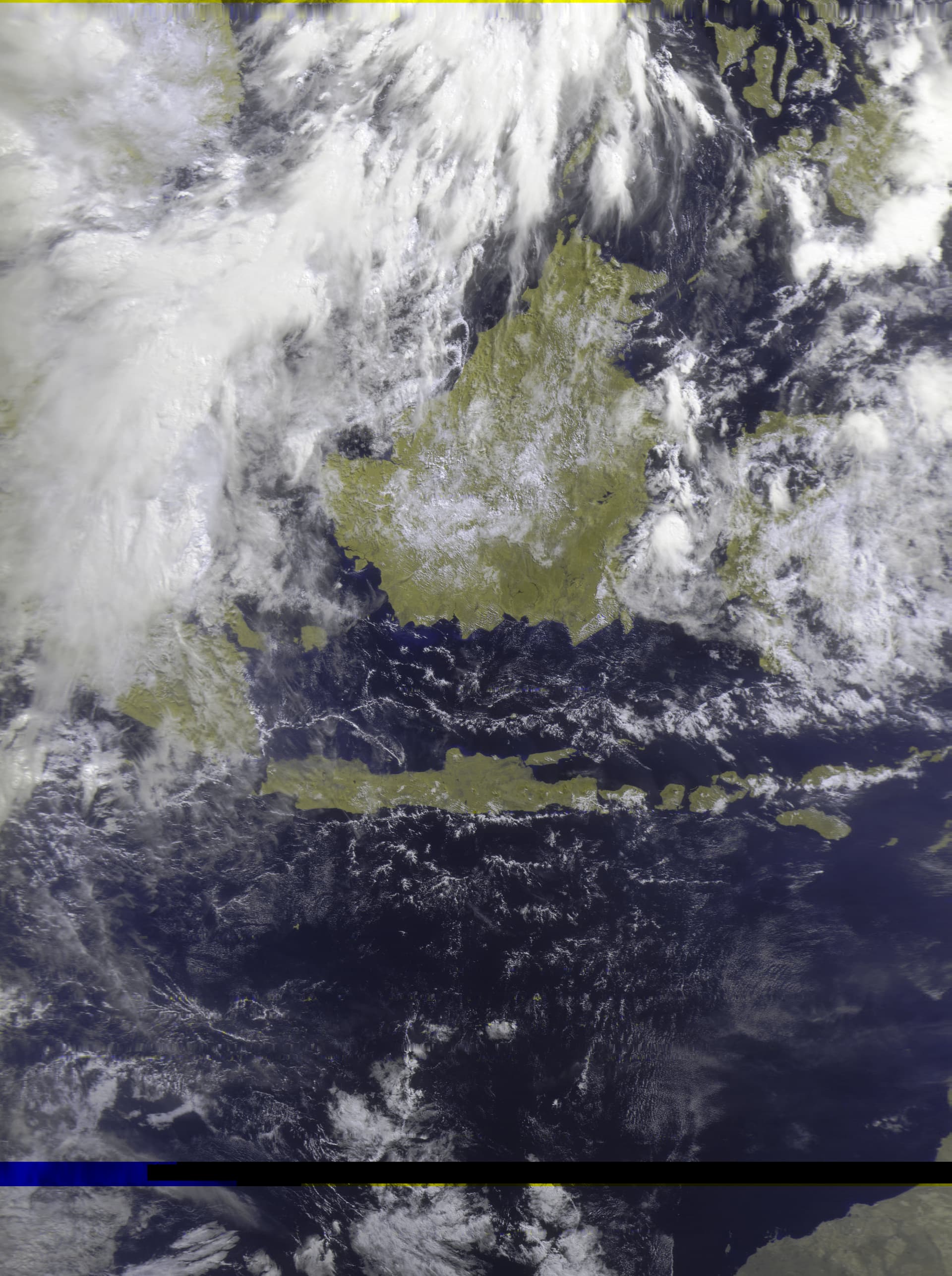
 More father then son sometimes but he is onboarded