A Mexican team launched two THUMBSAT picosatellites at the end of August; however, it appears that tracking and follow-up monitoring of these small spacecraft were inadvertently neglected. According to the provided webpage link, initial deployment details and mission objectives were documented, yet subsequent telemetry collection and orbital monitoring seem to have been limited or unexpectedly discontinued. This lapse in sustained observation complicates efforts to assess the satellites’ operational status, lifetime, and contribution to scientific or educational objectives, and it underscores the importance of robust post-launch tracking protocols and contingency plans for small-satellite missions: https://www.thumbsat.com
1 Like
The website shows a blank page to me.
Following up on this, I am wondering if anyone in the satnogs community attempted to task on the thumbsats? Esp given it appears they were beaconing on UHF, which many of you receive.
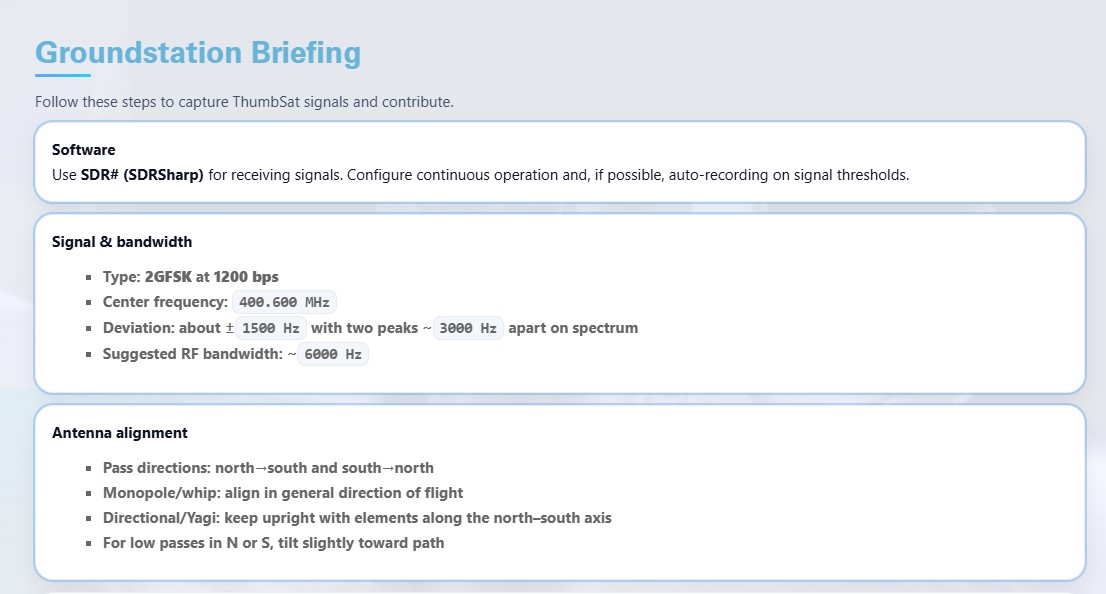
ITU space explores shows 400.600 MHz as center frequency for Thumbsat (-1 in this case)
Did we notice anything on that frequency not matching known satellites. ?
Edit: I started IQ recording on 400.6 MHz for upcoming 18 hours but I notice no Norad ID shows up for the name Thumbsat ?
2 Likes
Jose Torres his mail adres @mxspace.mx can not be reached
1 Like
Please share more information, launch information, frequencies used etc
This will make it possible to check observations to see if these satellites are active.
Jan | PE0SAT
This is what I could find using Gunter Space Pages and celestrack I will use this info to check when they pass Europe to see if we have unknown activity on UHF.

Cospar ID 2025-180
OBJECT A
1 65259U 25180A   25254.38681646  .00009579  00000+0  55260-3 0  9993
2 65259  97.4935  20.5095 0015004 202.4983 157.5592 15.12470895  3497
OBJECT B
1 65260U 25180B   25254.39129348  .00003386  00000+0  20085-3 0  9999
2 65260  97.4949  20.5068 0014591 198.8692 161.2000 15.11935818  3484
OBJECT C
1 65261U 25180C   25258.29592458  .00008009  00000+0  46902-3 0  9992
2 65261  97.4938  24.3338 0015326 187.6984 172.4014 15.11980703  4070
OBJECT D
1 65262U 25180D   25254.39108428  .00004276  00000+0  25271-3 0  9998
2 65262  97.4952  20.5079 0014542 196.3521 163.7242 15.11929455  3487
OBJECT E
1 65263U 25180E   25254.38691161  .00002869  00000+0  16930-3 0  9997
2 65263  97.4939  20.5087 0013510 192.3044 167.7859 15.12261620  3484
ZK-1A R/B
1 65264U 25180F   25258.09286299  .00123942  64074-5  59859-3 0  9992
2 65264  97.5772  26.3379 0190904 291.5617  66.5389 15.60596839  4166
Object A and E are close and B C and D
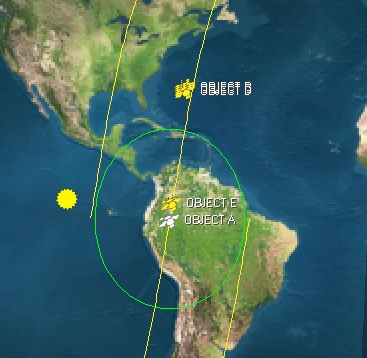
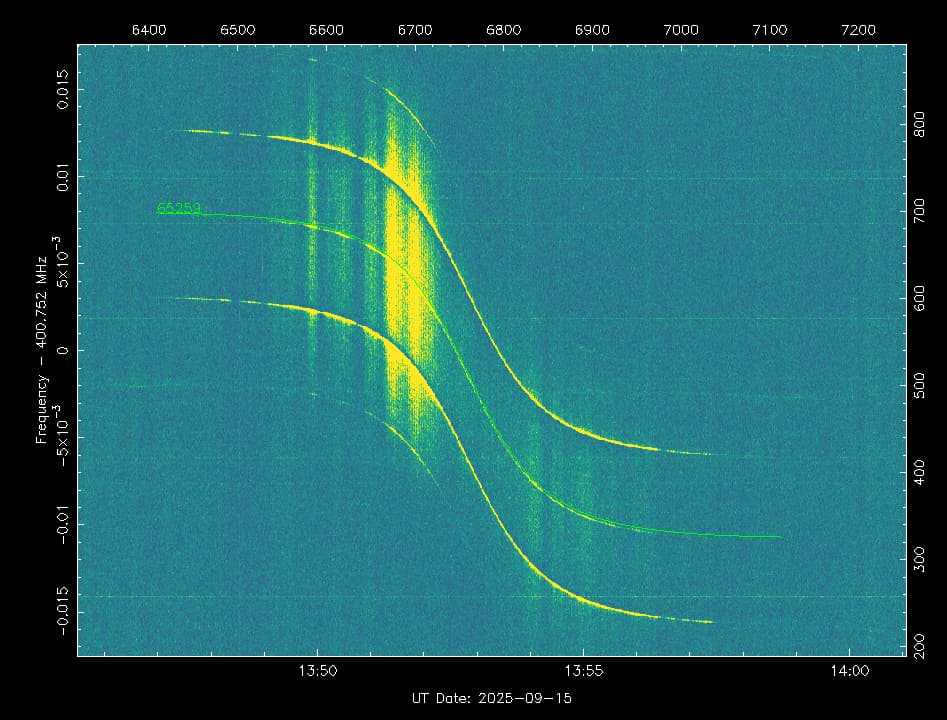
At least one of the satellites in this launch is active, no idea what satellite this is.
Jan | PE0SAT
3 Likes
I reviewed the waterfall of 18 hours of recording 400.600 with 240 kHz bandwidth. No signal found on that frequency.
Just for info I attached the “data file analyser” output from SDR Console v3.4 from this IQ recording, when zoomed to 100 percent you get an idea what passes in this small part of the 402 MHz satellite spectrum.
I have kept the IQ recording if anyone notices a signal of interest.

2 Likes
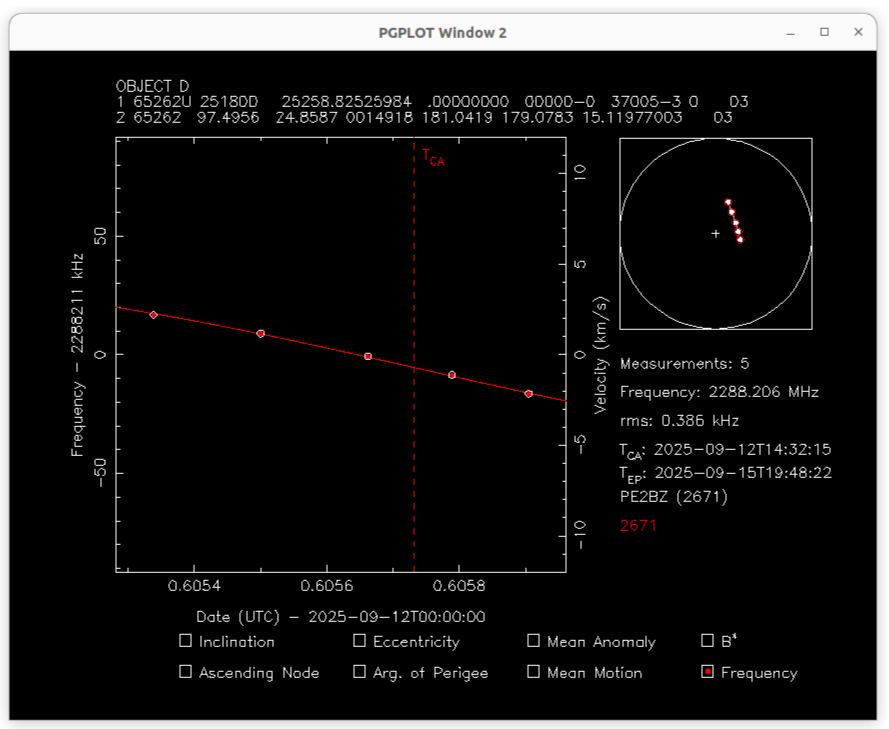
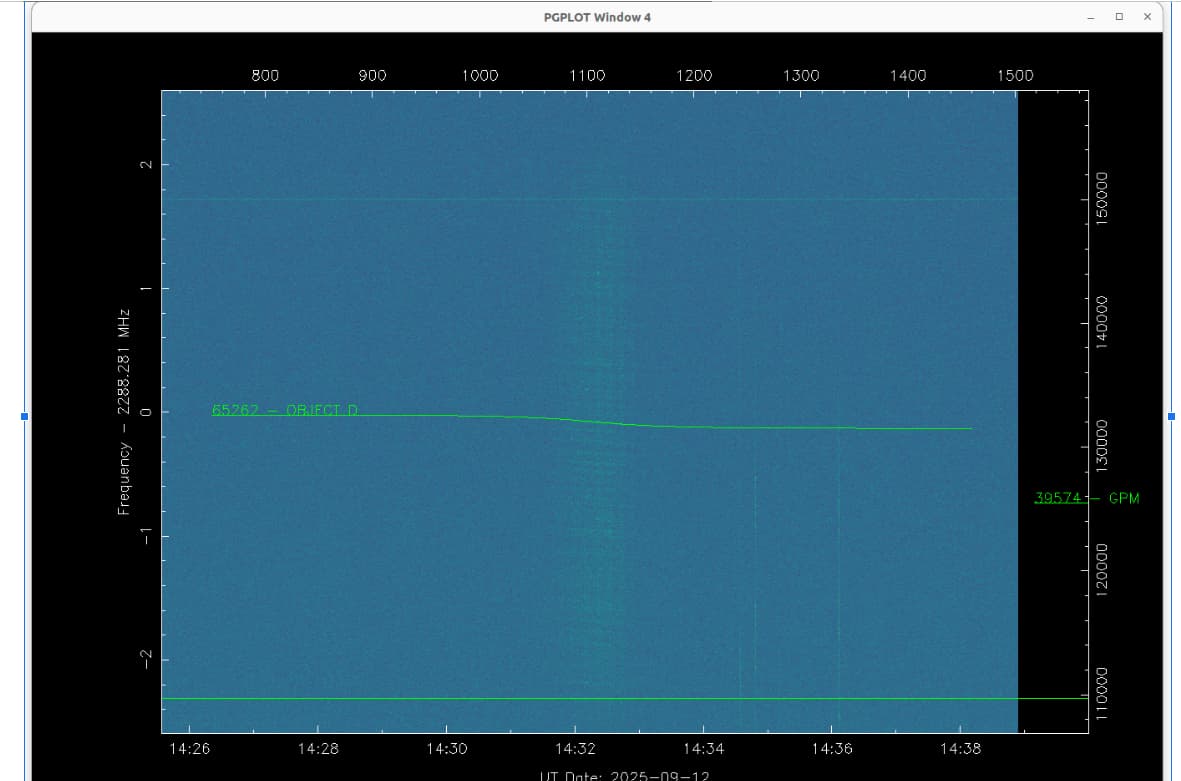
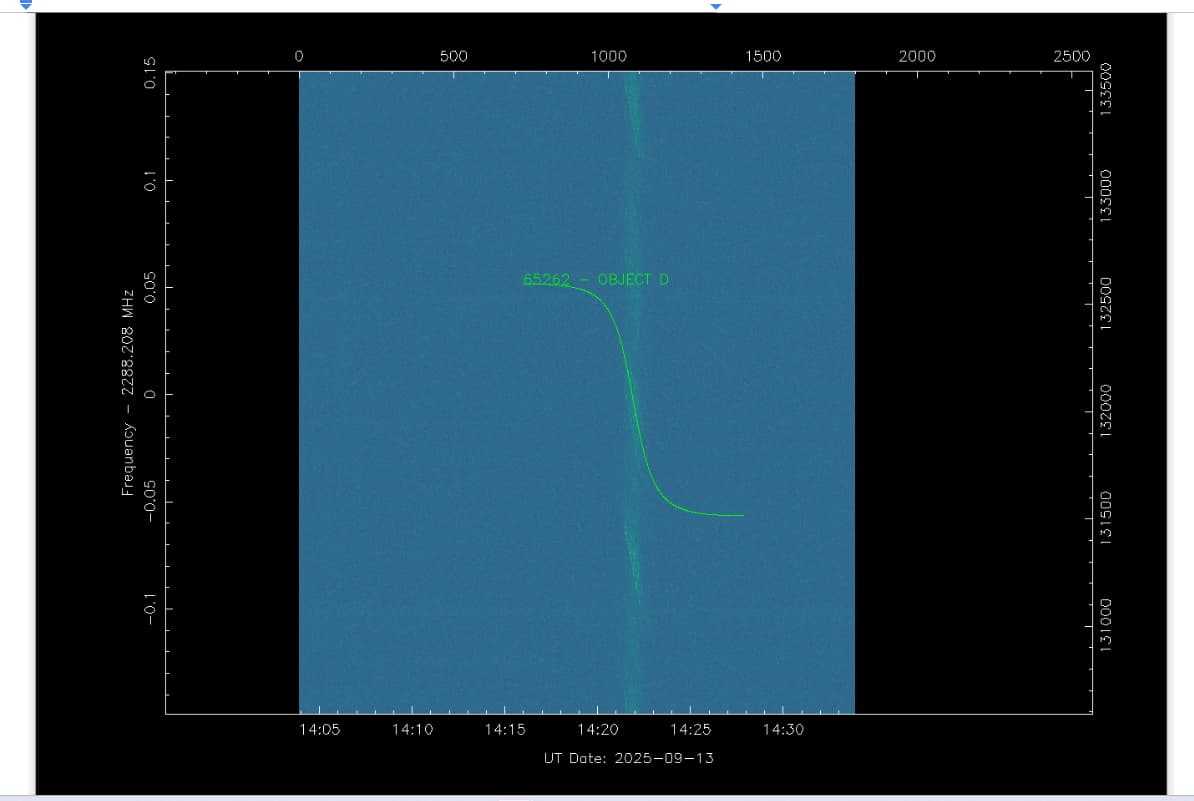
62562 Object D appears to be transmitting on S-band, 2288.200 MHz so that would not be one of the Thumbsat Pico satellites
2 Likes
Didn’t these have a super low power budget ? wide and strong signals on S-band sounds a bit implausible, but maybe I have missed something.
There where 6 objects in that launch and you might have overlooked the word “not” 
I don’t know, this signal should show some doppler curve if you where not running this on an actual satellite with doppler compensation ?
1 Like
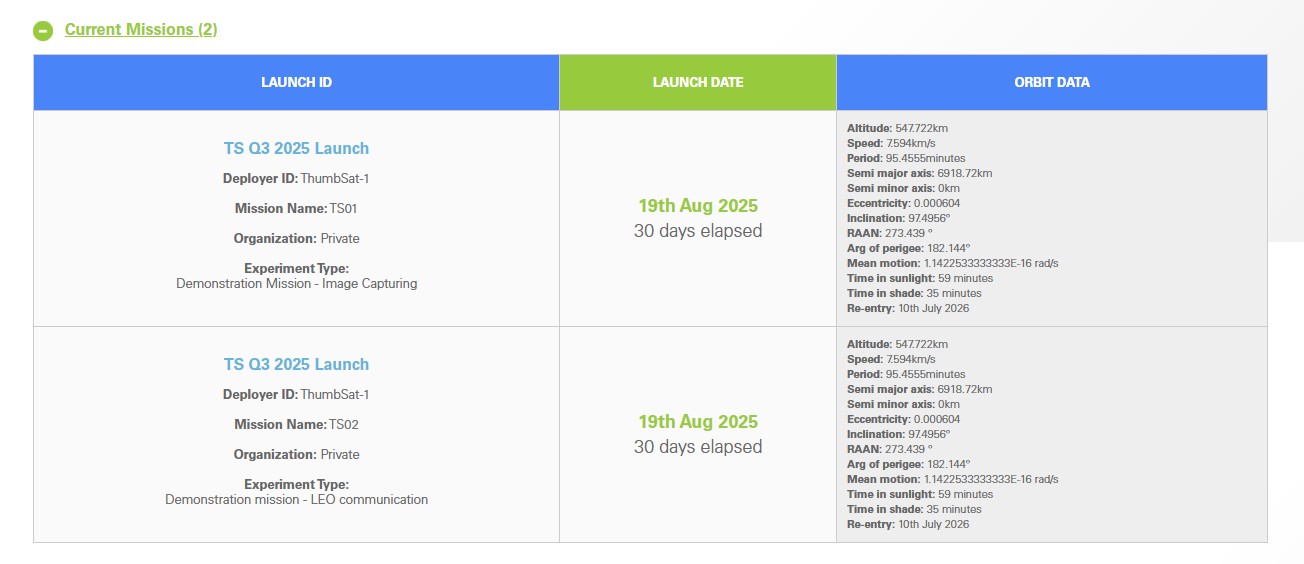
24 hrs of iq recording shown in sdrconsole data file analyser, not a single signal on the ITU listed 400.600 MHz for the Thumbsat(s)
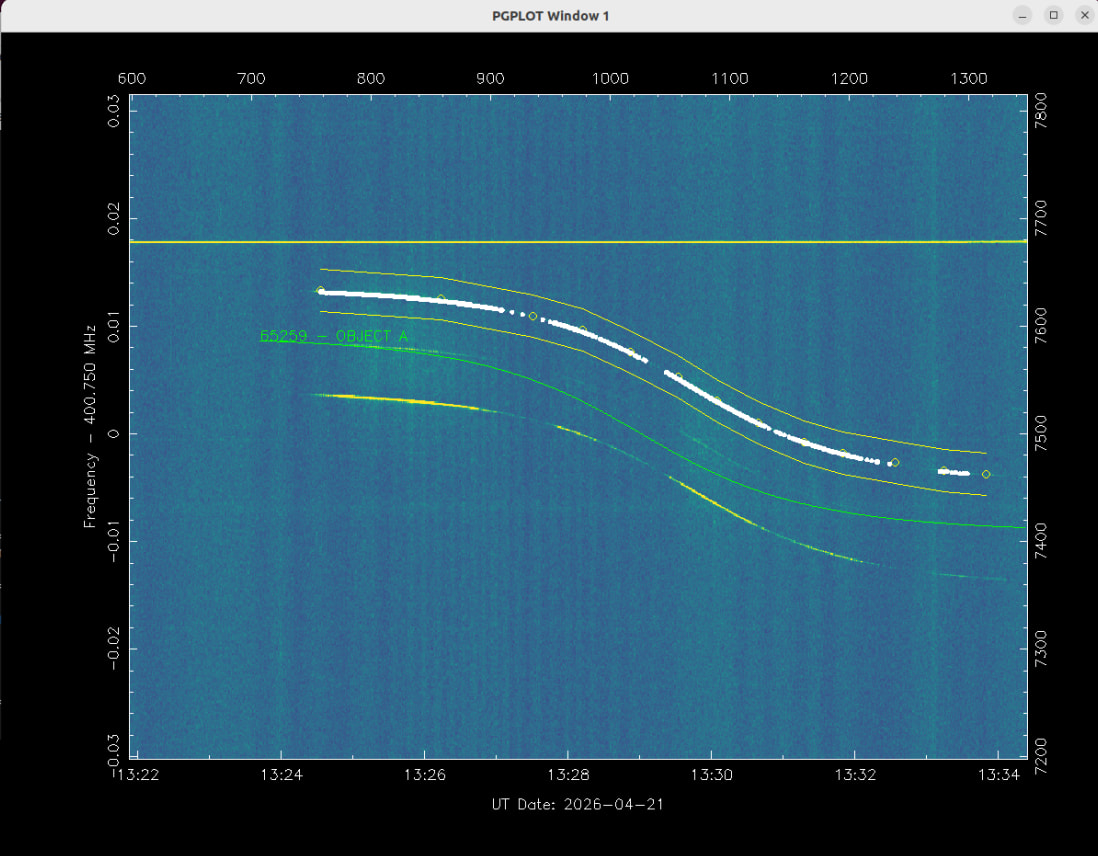
65259, named as Rocket Body on N2YO.com has TLE which is currently 13 days old. Which shows in strf.
1 Like