Any news about LilacSat-3 which was launched on July 22, with Gravity-1 Y4 carrier rocket, along with other eight satellites?
3 Likes
Lets asked them, there was no info on the IARU page.
Jan | PE0SAT
According to china-in-space.com the satellites on the launch are:
- Tianyi-49
- Xiguang-2-01
- LilacSat-3
- Dongpo-13
- Dongpo-14
- Dongpo-17
- Dongpo-18
- Dongpo-19
- Dongpo-20
I haven’t found information about frequencies yet.
2 Likes
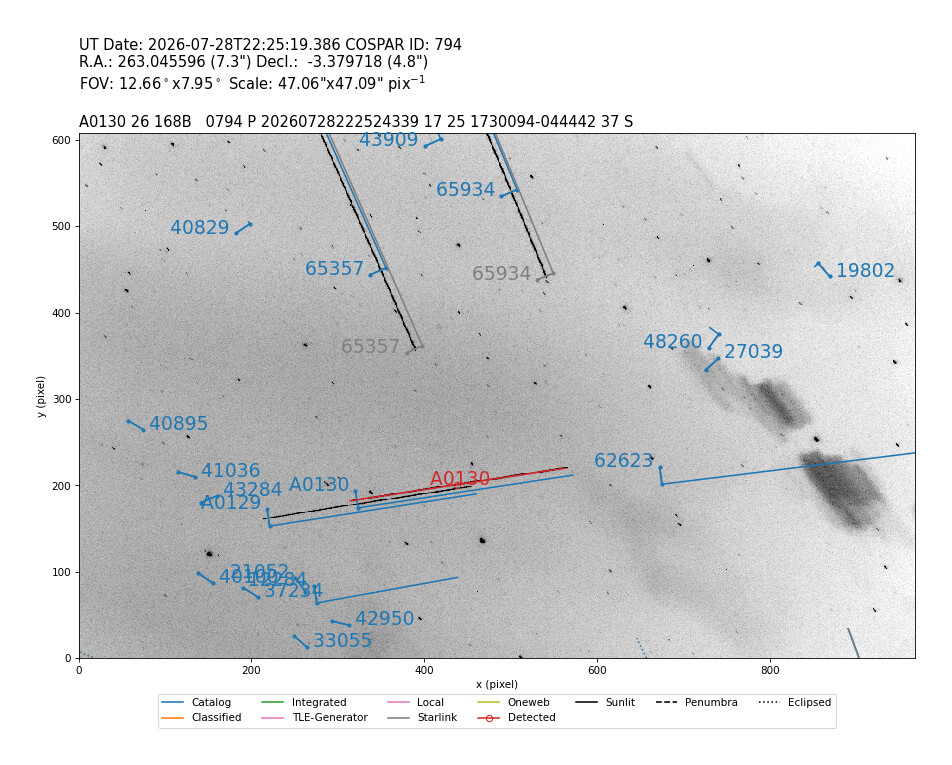
For this launch there are TLE based on cospar 2026-168, lets have a look if we can find some signals.
0 OBJECT A
1 A0129U 26168A   26211.25181589  .00005678  00000-0  35999-3 0  9990
2 A0129  97.5393 292.8440 0017142 306.0992  53.8649 15.09198305  1235
0 OBJECT B
1 A0130U 26168B   26211.25175258  .00005797  00000-0  36733-3 0  9997
2 A0130  97.5389 292.8436 0017230 306.1132  53.8502 15.09211274  1231
0 OBJECT C
1 A0131U 26168C   26210.19034418  .00003597  00000-0  22880-3 0  9996
2 A0131  97.5404 291.8030 0018244 307.7695  52.1881 15.09306781  1078
0 OBJECT D
1 A0132U 26168D   26211.18448992  .00008845  00000-0  55485-3 0  9991
2 A0132  97.5388 292.7795 0018215 304.7763  55.1751 15.09412200  1229
0 OBJECT E
1 A0133U 26168E   26210.19010348  .00003099  00000-0  19746-3 0  9998
2 A0133  97.5405 291.8033 0018378 308.7630  51.1956 15.09355684  1070
0 OBJECT F
1 A0134U 26168F   26211.25062931  .00003798  00000-0  24076-3 0  9990
2 A0134  97.5448 292.8510 0018226 306.5756  53.3795 15.09402168  1239
0 OBJECT G
1 A0135U 26168G   26210.18926644  .00003798  00000-0  23976-3 0  9990
2 A0135  97.5352 291.7996 0018875 310.9344  49.0251 15.09538797  1071
0 OBJECT H
1 A0136U 26168H   26210.18878342  .00003832  00000-0  24121-3 0  9994
2 A0136  97.5408 291.8053 0019026 313.4733  46.4913 15.09642696  1078
0 OBJECT J
1 A0137U 26168J   26210.18822333  .00006652  00000-0  41399-3 0  9993
2 A0137  97.5405 291.8056 0019457 314.1293  45.8335 15.09779638  1052
Jan | PE0SAT
3 Likes
No signals on 400 - 404 nor 434 - 438 MHz on 30-07-2026 11:00 UTC when passing.
Jan | PE0SAT
4 Likes
Going to be tough unless we get some info from someone with knowledge.
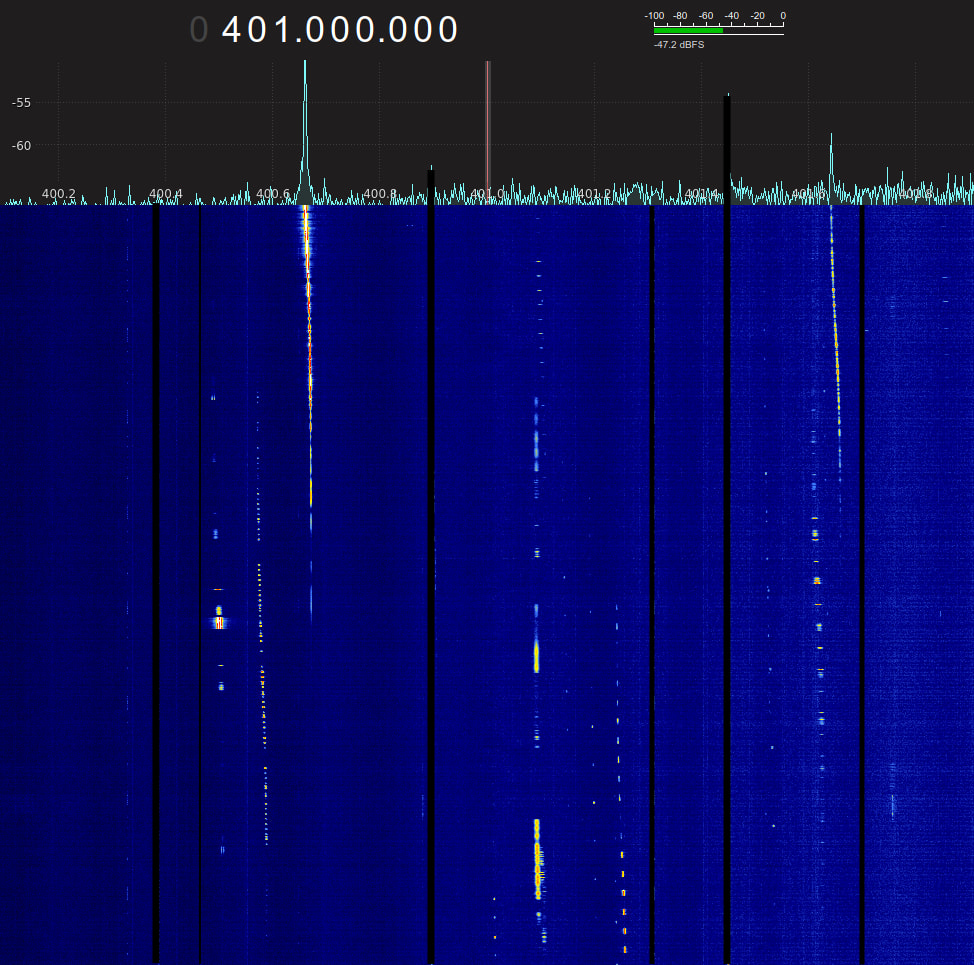
As Jan mentioned, the commercial 400 MHz band is one of the most likely places to find something. Last night’s pass over the Eastern U.S. found no shortage of possible signals, but so would any 10-minute period in that part of the spectrum. Going forward I’ll zoom in to smaller sections so that the signals can be investigated in more detail.
In a few days when my passes cycle around to higher elevation, I’ll start checking S-Band as well.
3 Likes
I don’t think we need to keep searching for LILACSAT-3 signals in the 435–438 MHz band — this is not an amateur satellite.
According to data from Chinese social media, LilacSat-3 has already downlinked videos and some images.
The only reason this could become evident so quickly is that they must be using a better frequency for data transmission.
2 Likes