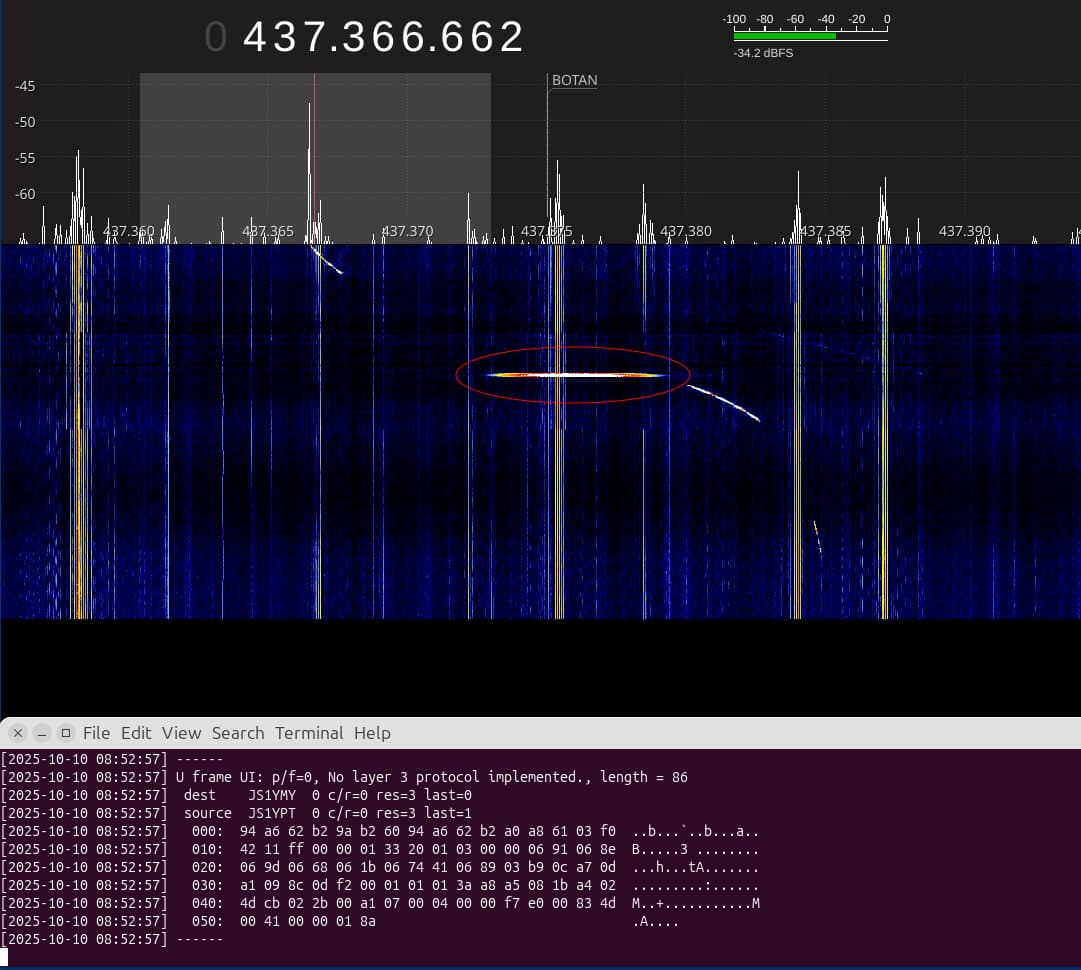
CW & 4k8 GMSK very strong from BOTAN 1252utc over the Eastern U.S. Nothing heard from the other sats. (lots of noise here in that freq range)
3 Likes
If you are talking about the VHF one, I guess that moving away from ISS will help a lot. Let’s see 
 from this observation: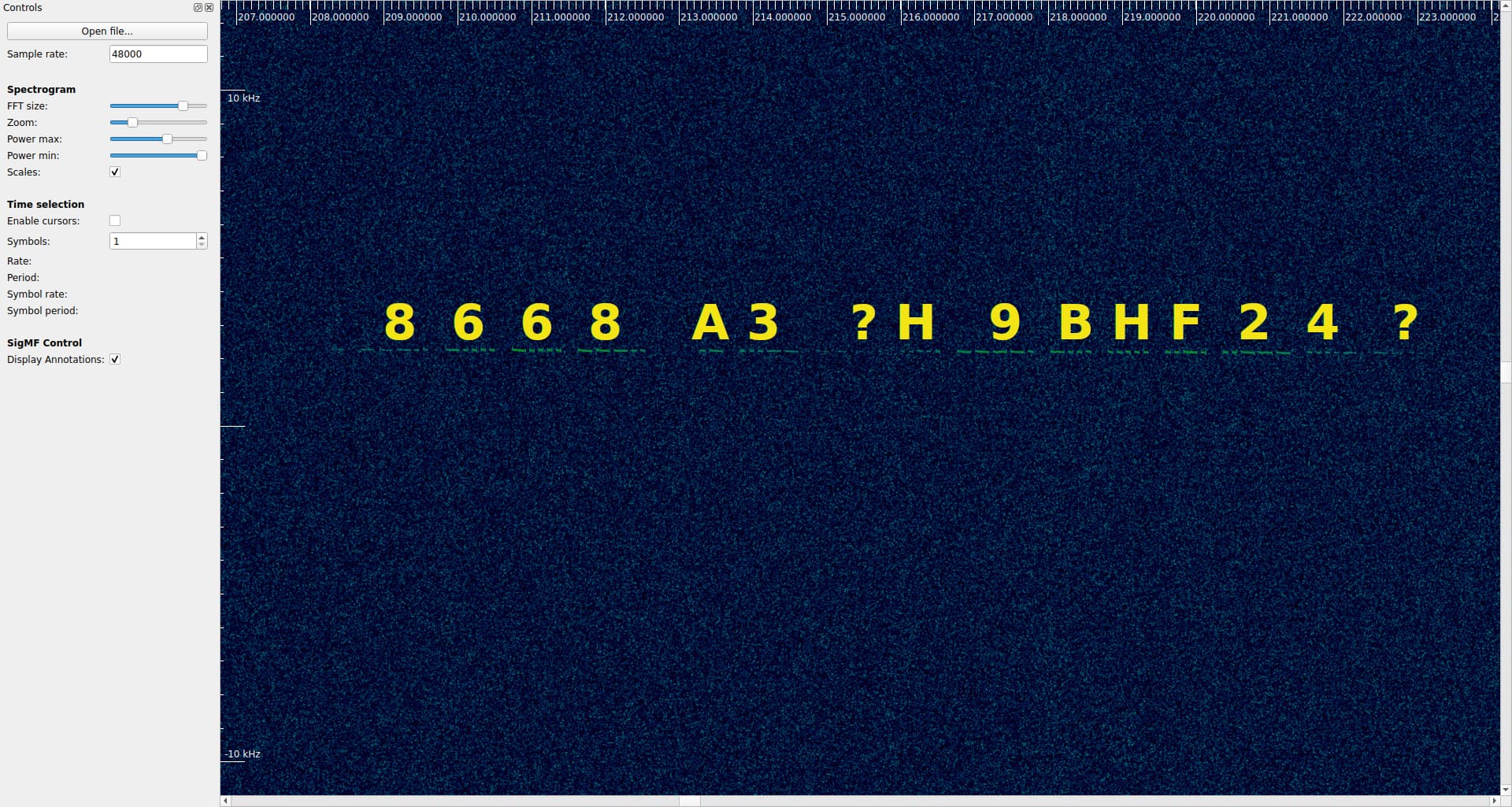
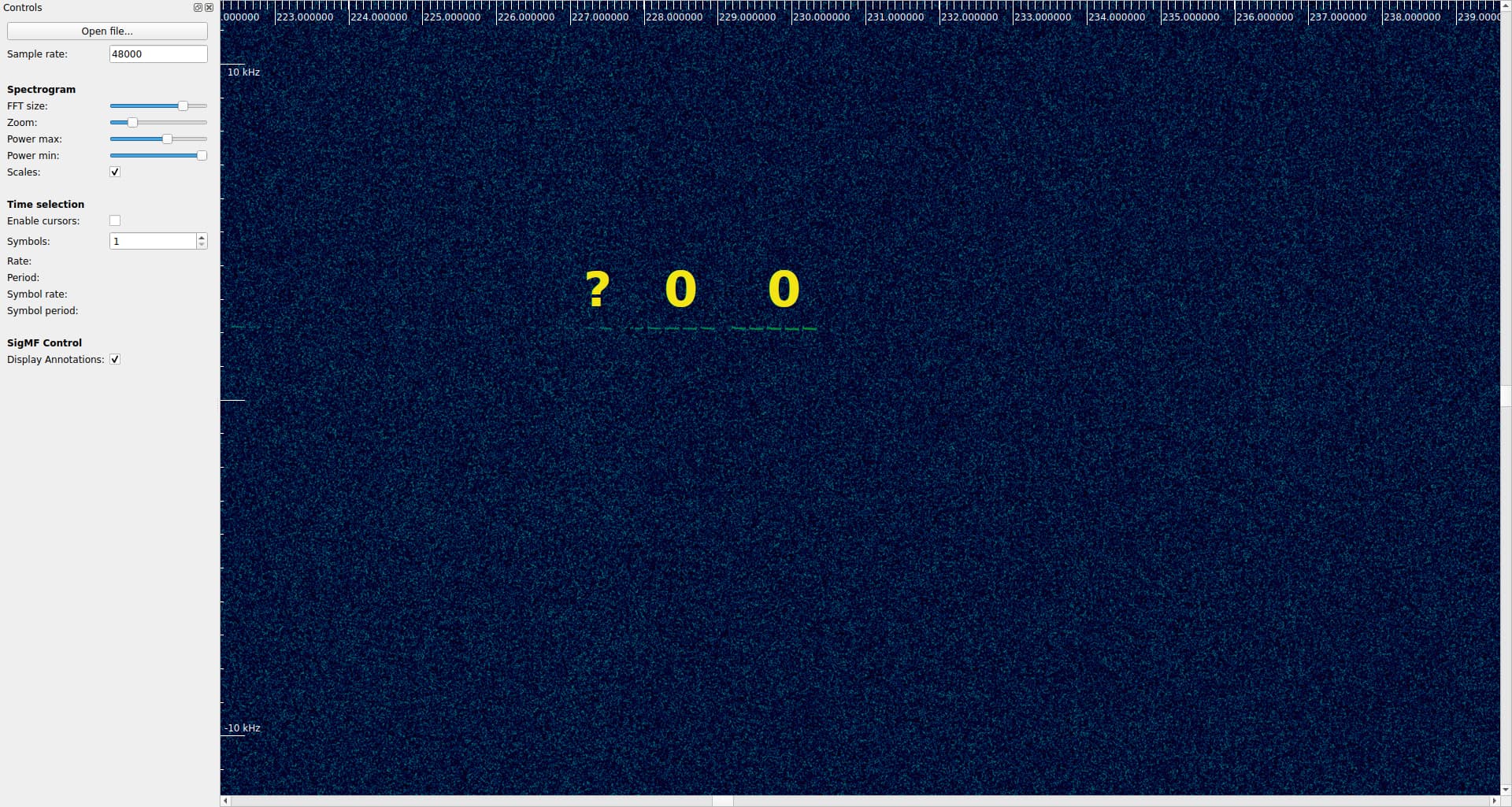
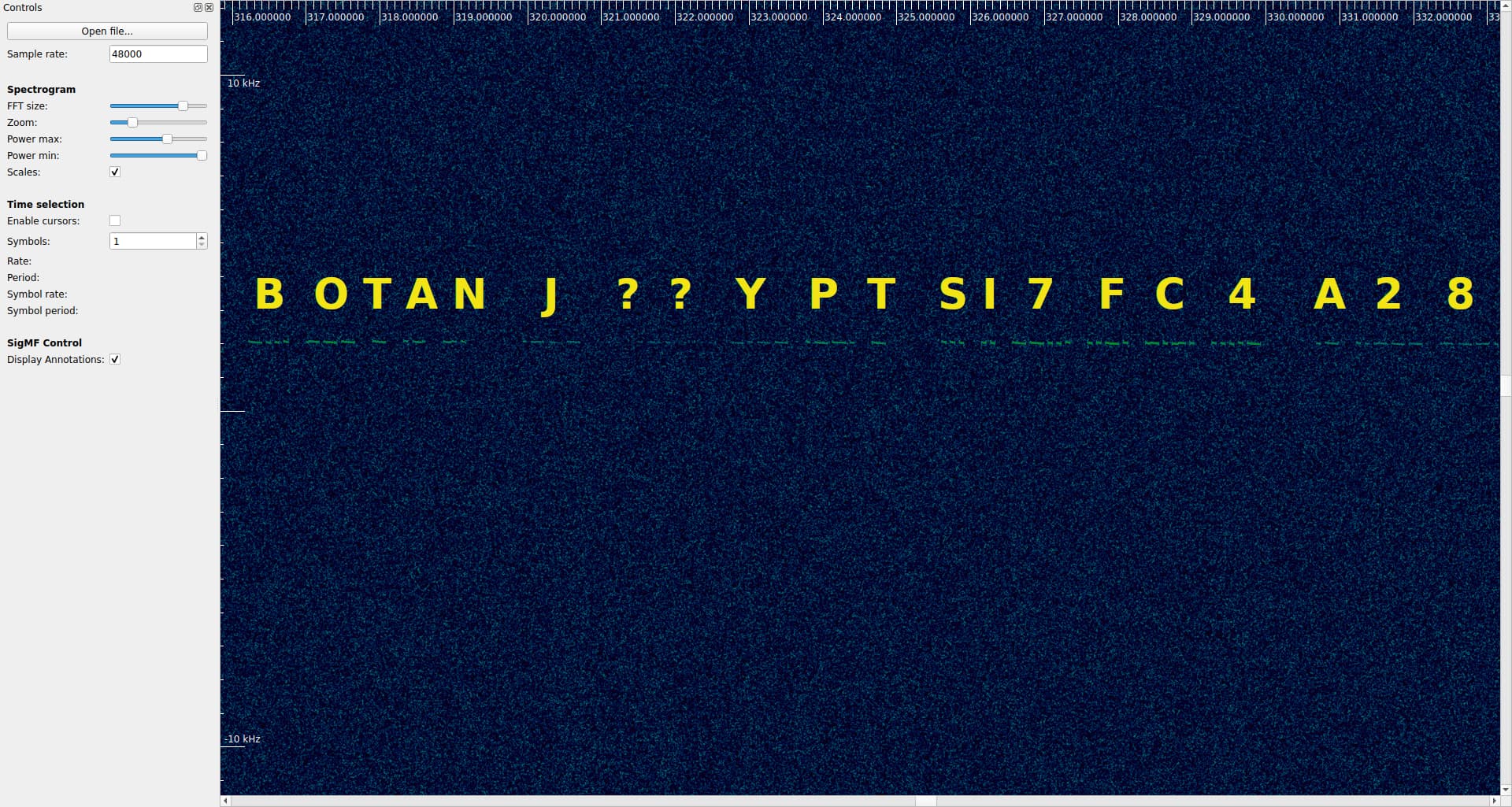
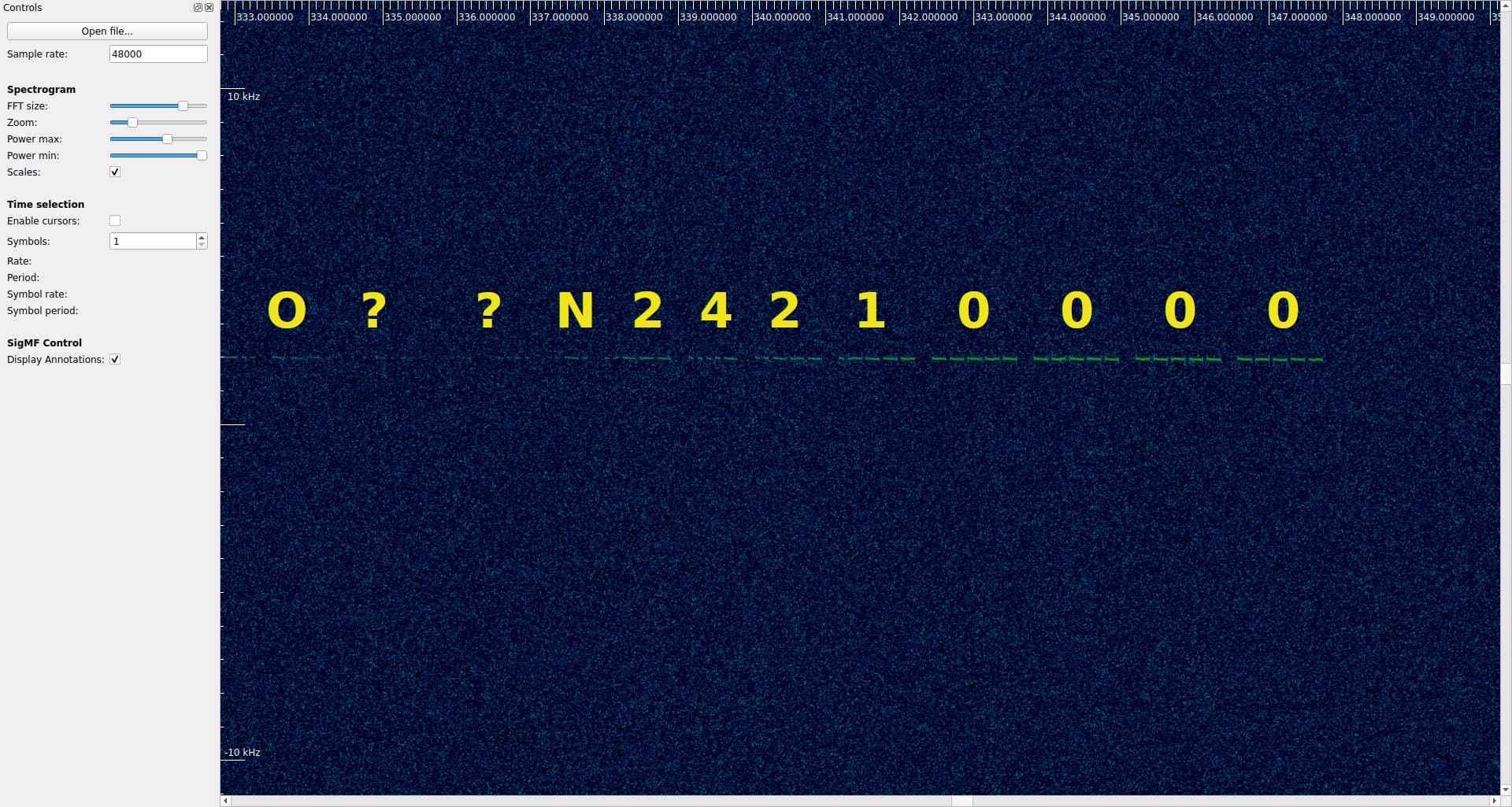
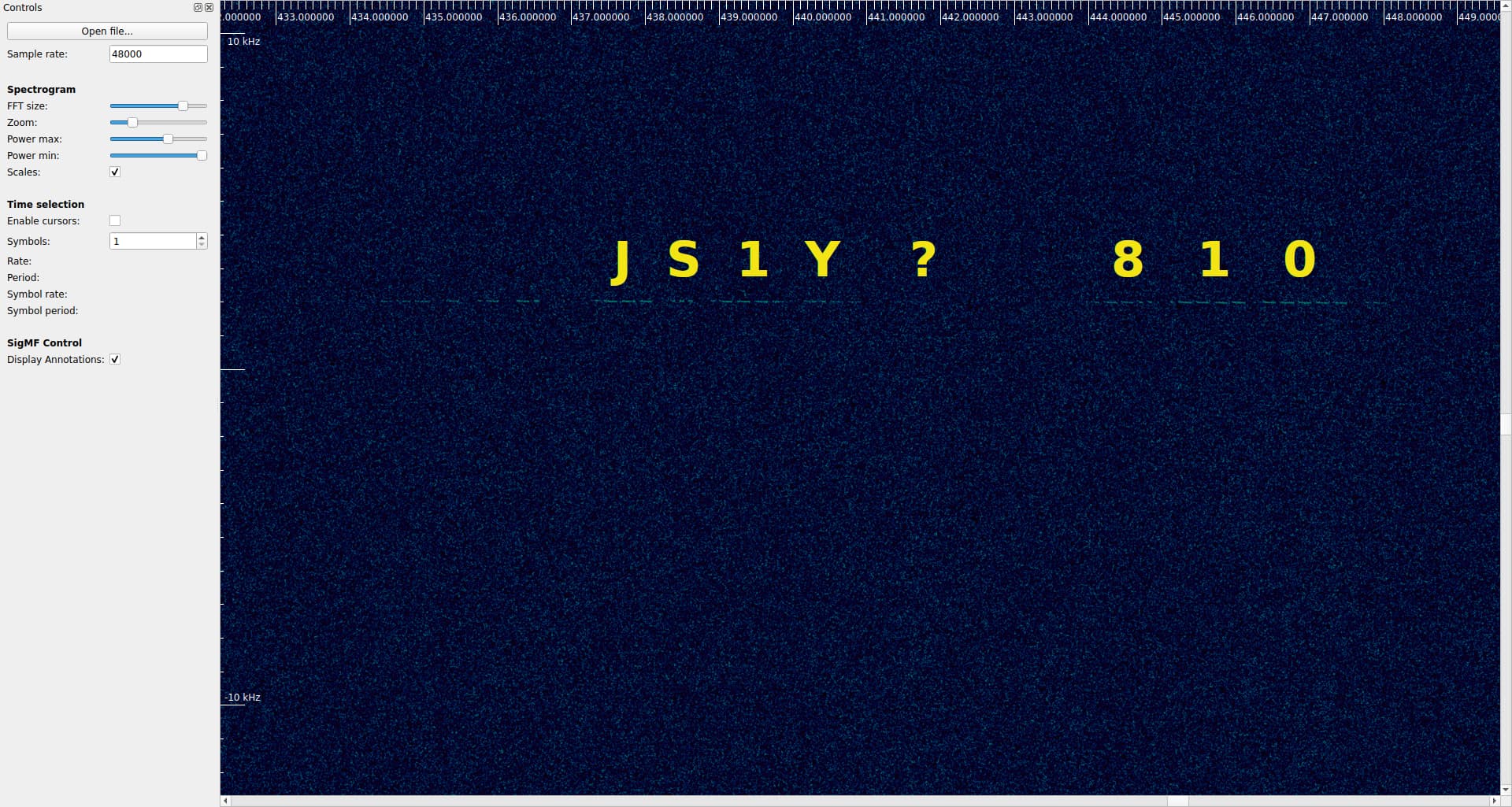
not yet. but i hear the cw code sound
based on this observation, but i record the raw file manually using another sdr and another antenna
e-kagaku-1
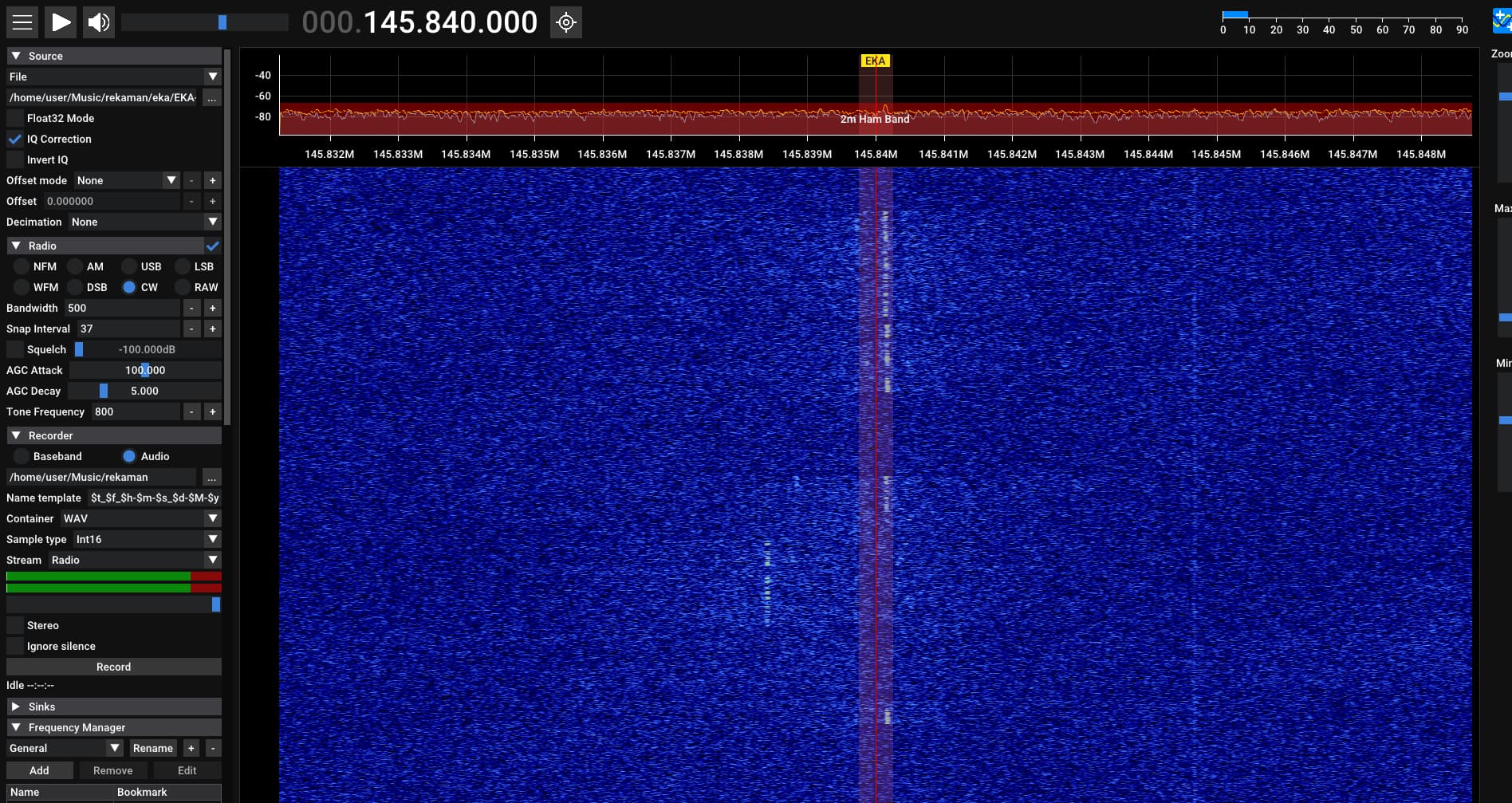
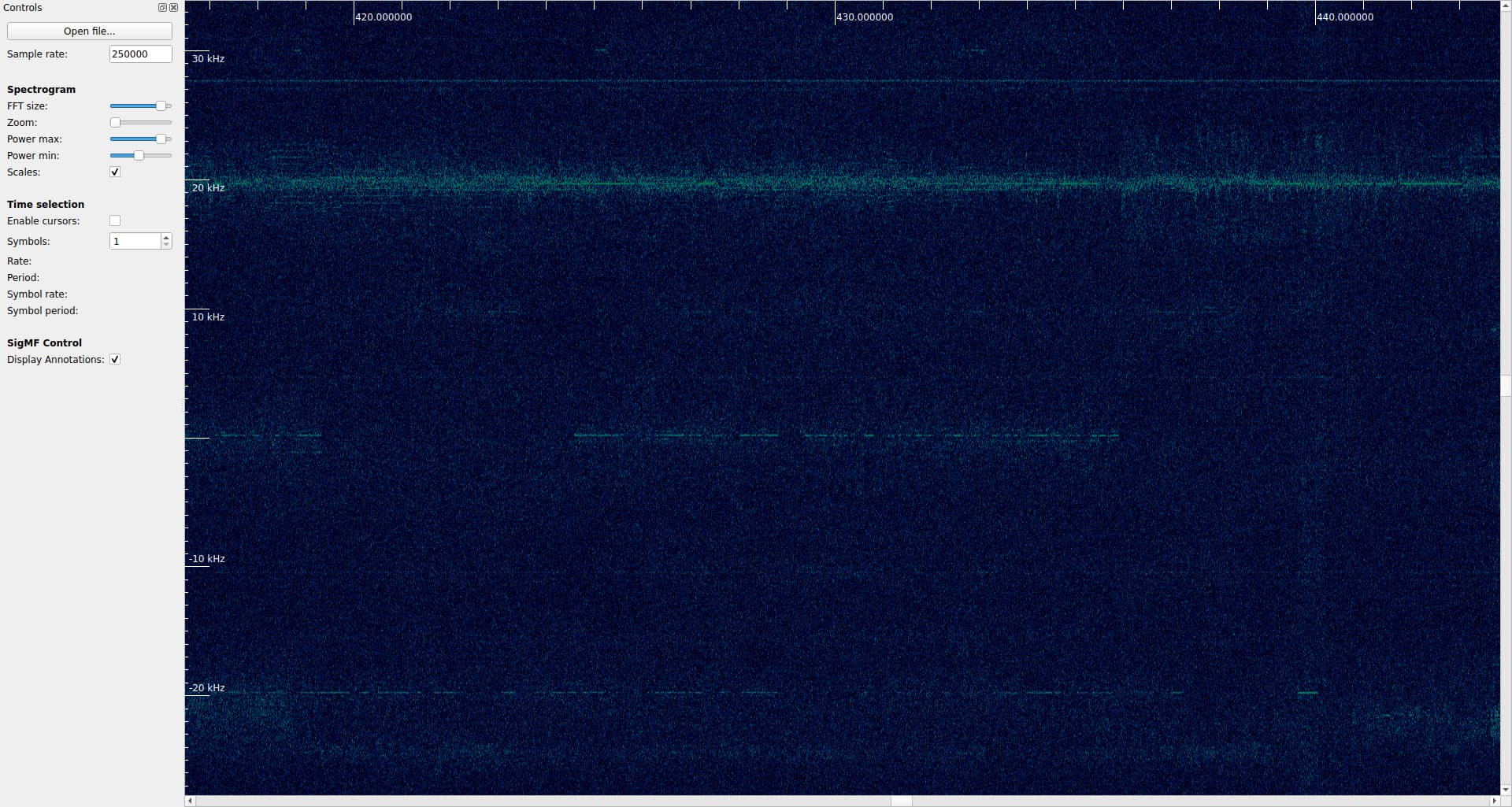
you can download my short version of raw iq file here. i record using sdrpp, with sample rate 250k, sample type Int16. i get the cw signal around 10:25:05 UTC - October 10, 2025.
below is the picture of signal using inspectrum. faint image
first beacon
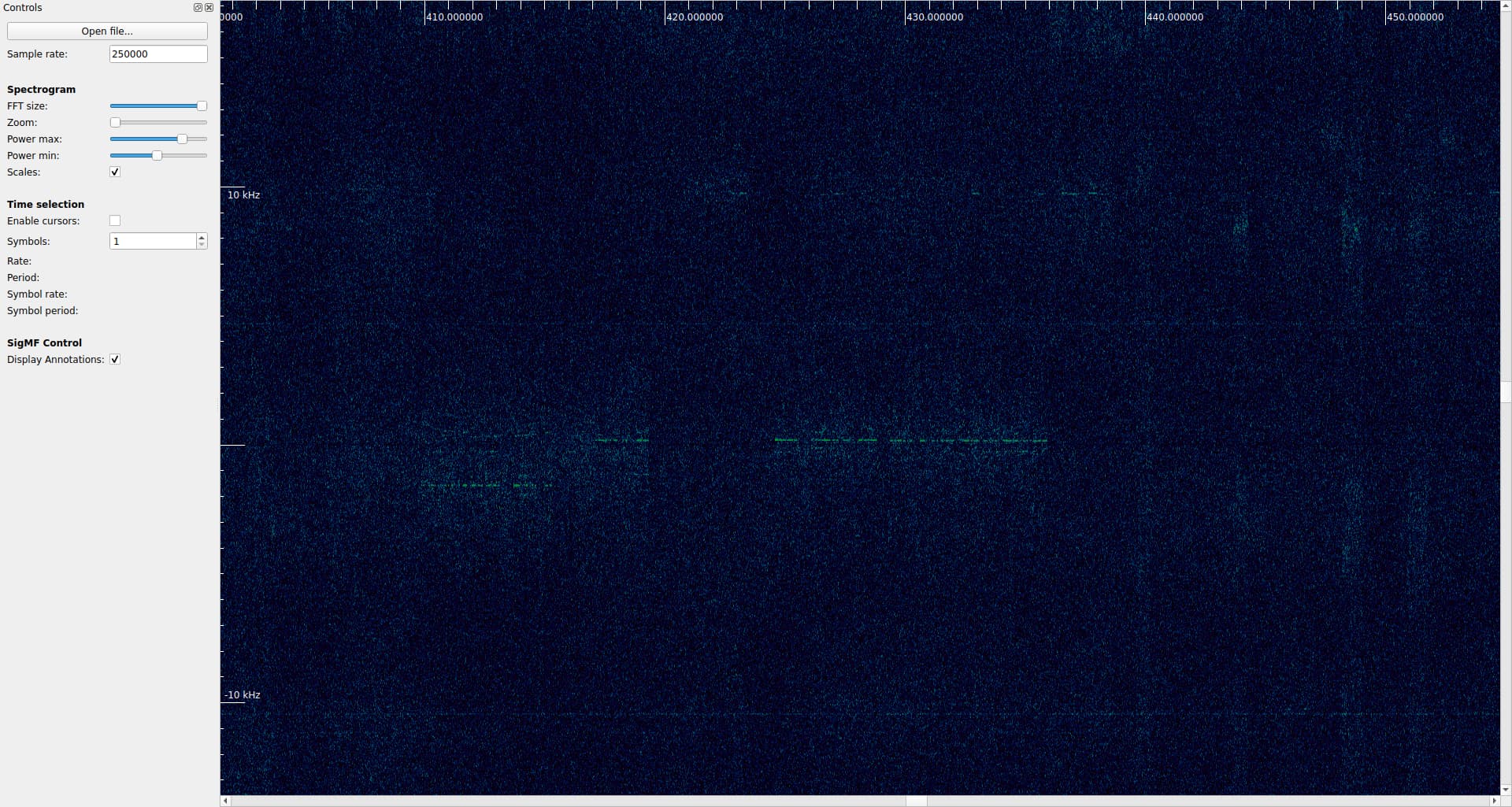
second beacon
to make the sound of cw more clear, i set using LSB for first beacon, and set CW with bandwith 500hz for second beacon:
maybe @forestwaterfall can confirm the cw?
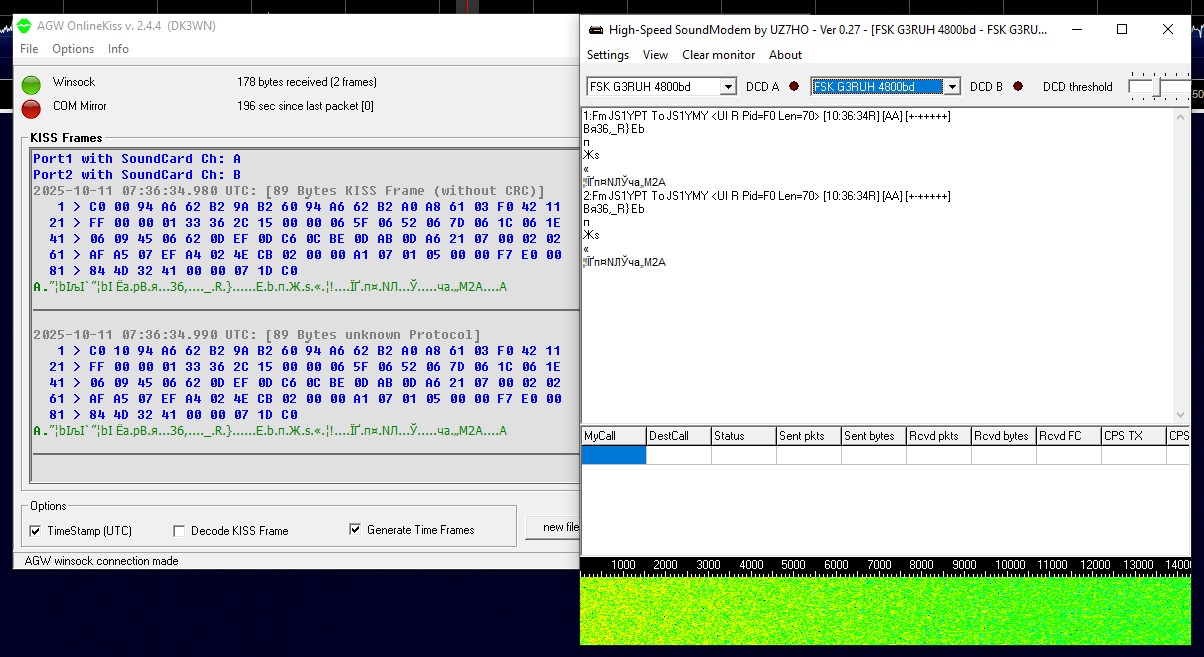
2025-10-11T07:32:03 BOTAN JS1YPT SI8829 a57eaf6725210408

Between the beacons from BOTAN, I’ve listened to e-kagaku-1 but received no signals.
Perhaps it’s because of the long interval of 30 minutes.
4 Likes
The interval of e-kagaku-1 beacon is not 30min.
30 sec is correct.
(We had a mistake on our website and now we corrected it. Sorry for confusion)
3 Likes
you have sample of beacon?
TLE calculated by @PE0SAT for BOTAN:
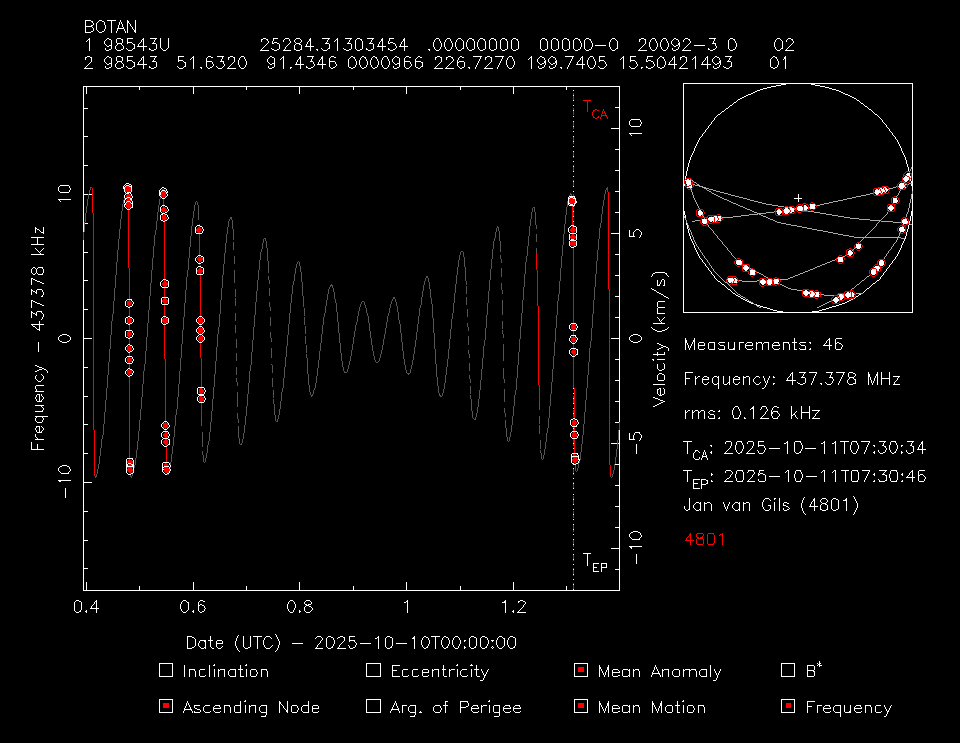
BOTAN
1 98543U          25284.31303454  .00000000  00000-0  20092-3 0    02
2 98543  51.6320  91.4346 0000966 226.7270 199.7405 15.50421493    01
We are going to use the same TLE for the other two satellites as they will be better than the ISS one that is used now, so we have:
e-kagaku-1
1 98534U          25284.31303454  .00000000  00000-0  20092-3 0    02
2 98534  51.6320  91.4346 0000966 226.7270 199.7405 15.50421493    01
YOTSUBA-KULOVER
1 98535U          25284.31303454  .00000000  00000-0  20092-3 0    03
2 98535  51.6320  91.4346 0000966 226.7270 199.7405 15.50421493    02
5 Likes
Using this mornings pass to improve the TLE.
I am interested to see if the TLE is also useful on other continents
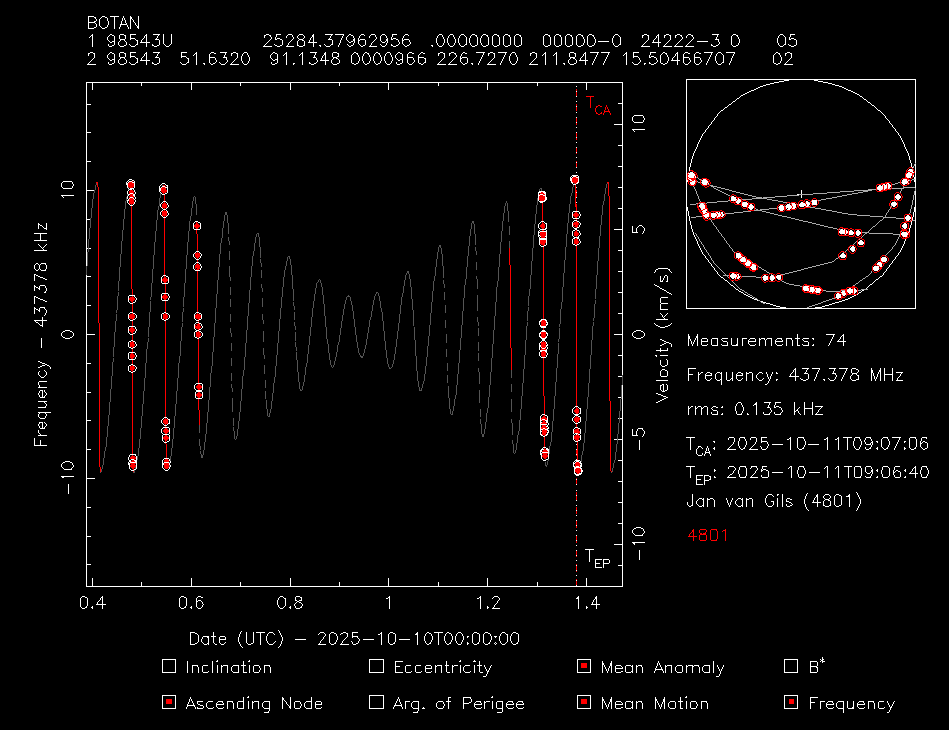
BOTAN
1 98543U          25284.37962956  .00000000  00000-0  24222-3 0    05
2 98543  51.6320  91.1348 0000966 226.7270 211.8477 15.50466707    02
# 20251010.48-20251011.38, 74 measurements, 0.135 kHz rms
Jan | PE0SAT
4 Likes
e-kagu faint signal detected, around 380 - 420 s
updated : after inspect the iq file using inspectrum, and playing the iq file to check the waterfall using sdrpp nothing found that look like cw signal.
1 Like
Even though in the database is the new TLE, the observation was performed with the old one, which appers to be drifted away from reality. Is the TLE taken at the time the observation is scheduled?
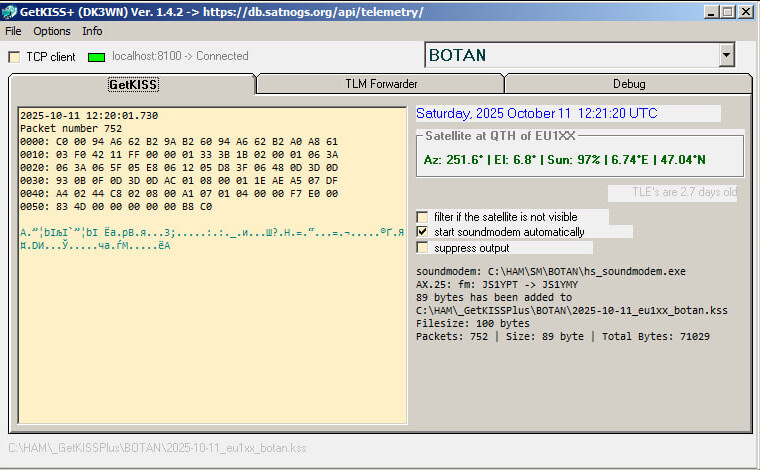
I also get these signals. They are at least 15KHz low and dont look like CW, more something FSK, so I am not sure about the source of these signals.
This file is sample of e-kagaku-1 beacon.
2 Likes
yes. i must delete the obs scheduled by fredy first and resubmit again for new tle take effect.
1 Like
Thank you for the recording, but I’m not able to decode anything and it doesn’t sound like any modulation I’m familiar with.
Was that recorded as FM or USB? Are you able to record directly from your receiver instead of from the speaker?
And regarding the audio output from your speaker, is that being clamped around 3 kHz as most voice output would be?
Thanks!
i try to reapply your observation with new tle using ikhnos. the redline is the path for new tle should be. note: @fredy correct me if i’m wrong. thx..
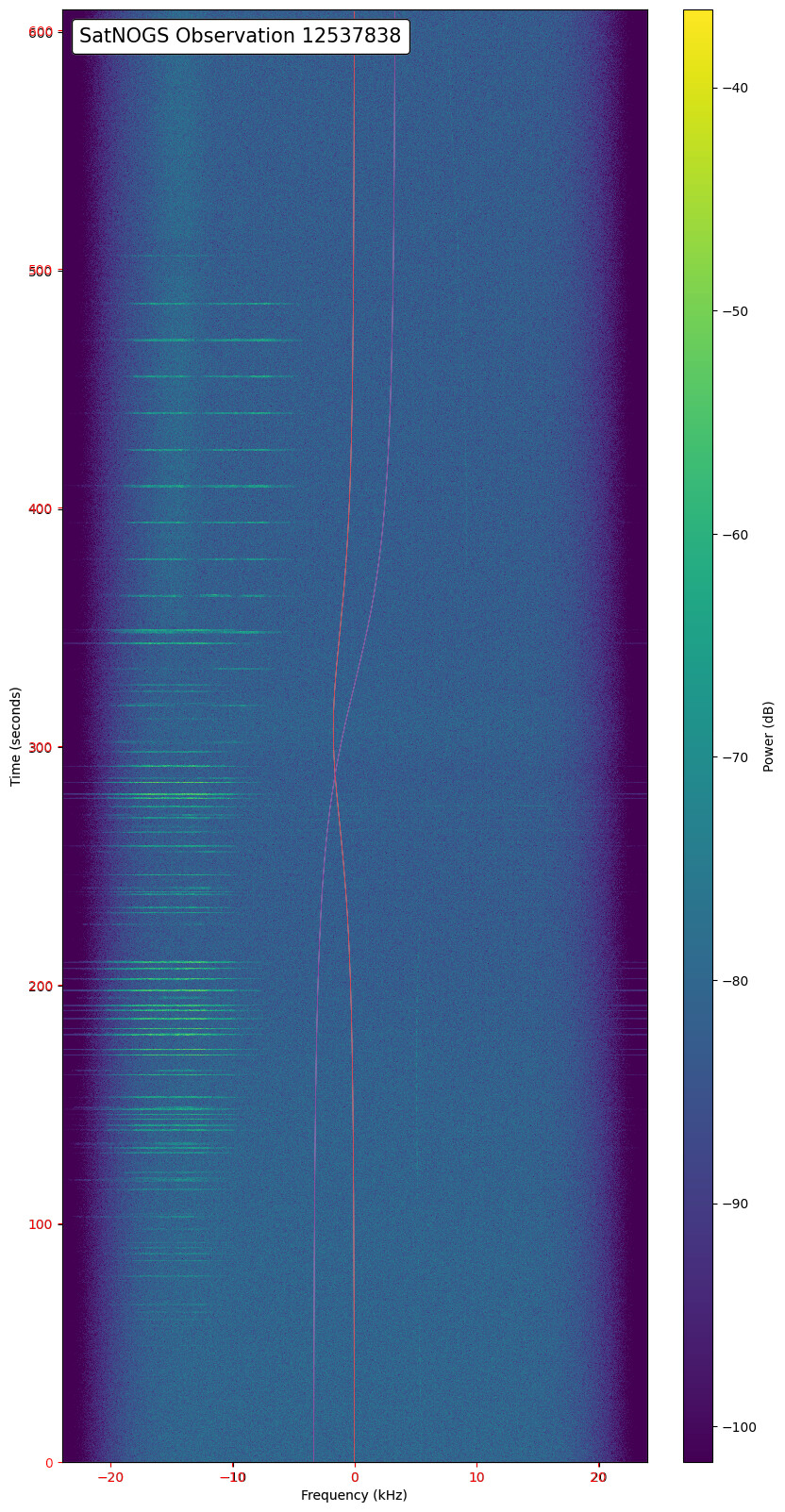
I am in doubt, changing TLE applies a constant frequency shift over time - but we’ll see …