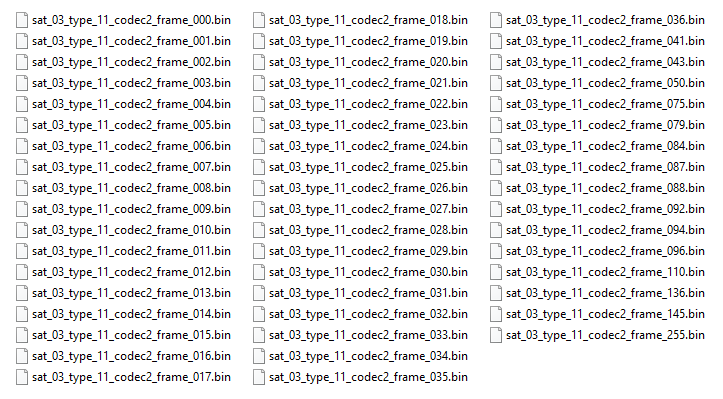
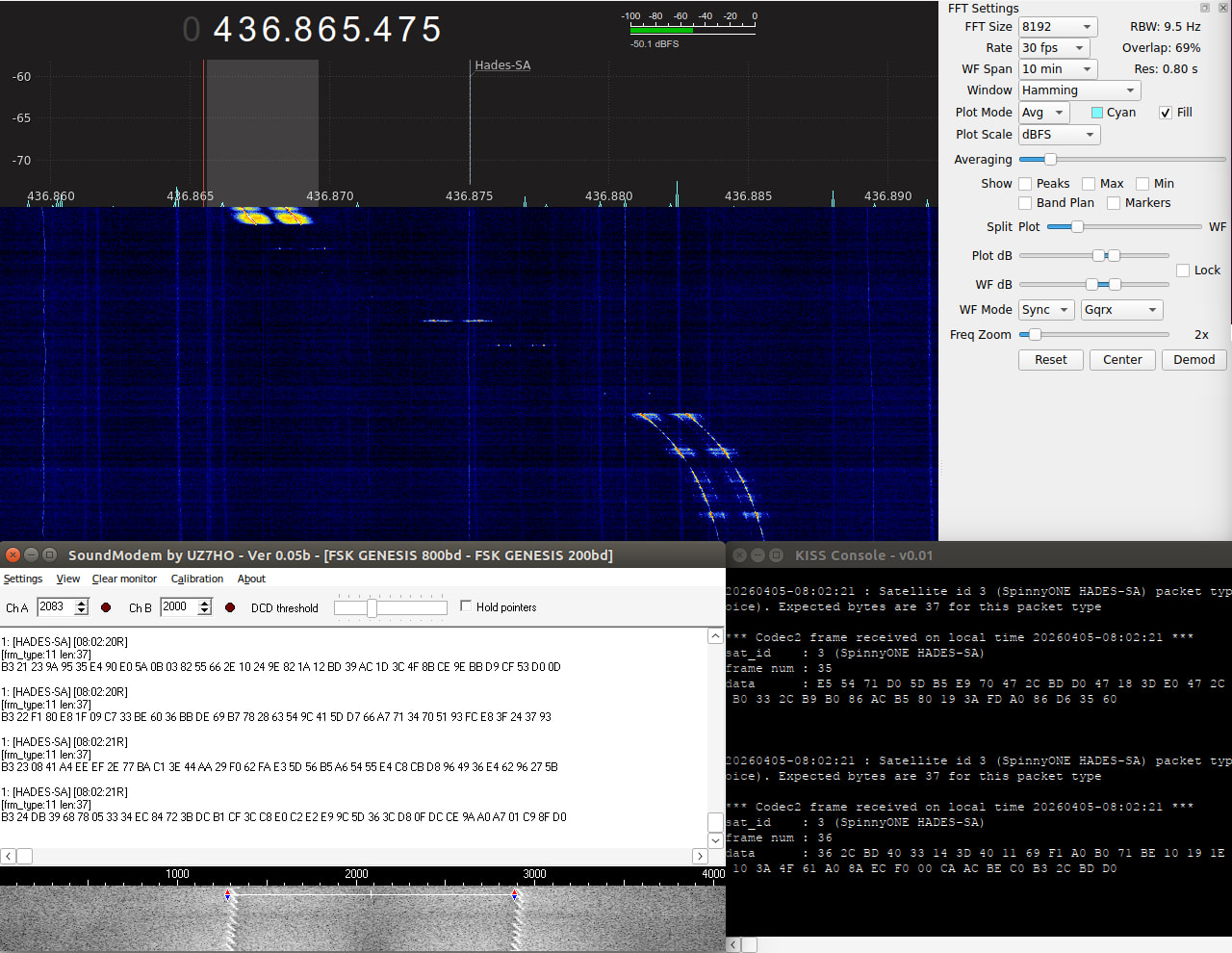
0802utc on 5-Apr-2026… another excellent Hades-SA pass. The downlink unfortunately took a break when the spacecraft was closest to me, but at the beginning and near the end, I got excellent decodes. Almost all turned out to be Codec2, which resulted in a nice clean audio file!
3 Likes
Hi Mélaine,
It was me who suggested to invalidate the mode SSDV transmitter.
It is correct that HADES-SA transmits FSK, but since the mostly used UZ7HO modem needs to be fed with an SSB (USB) demodulated signal for all transmissions from HADES-SA, I’ve thought it would be a good idea to only have one SatNOGS transmitter.
What is your mentioned “specific decoder”?
And yes of course, you can suggest to re-enable it just by editing the transmitter and switchting the status to active.
73
Daniel
2 Likes
Thanks for uploading the audio scott . please send a mail with your attached wav file to satcontrol@amsat-ea.org
they will be pleased with it.
happy that the all the hades-sa utilities work fine now .73 nico
1 Like
It happened several times to me, especially during high elevation passes! 
2 Likes
Thank you all from the community for the quick help
Hello Daniel,
OK, I understand better now why. I saw the use of SSB to pair the signal in order to improve frame decoding.
For my part, it’s to test a development attempt to implement an SSDV decoder in gr-satnogs (in my heavily modified version), so like you, I need to identify and route the signal 
It’s a shame that we’re currently limited in the transmitter definitions. I would have liked to see an FSK mode / SSDV framing / 800 deviation… a bit like the satyaml of gr-satellites. For SSTV, it’s also annoying, because there’s only SSTV and there are many sub-modes: PD120, M1, M2, and especially Robot 36.
Anyway, thanks for the feedback, I’ve reactivated the transmitter with an SSDV mode…
73’s F4TNK Mélaine
2 Likes
hi friend, i have already tried your transmitter ssdv yesterday. and its have better audio compare with other transmitter mode. at least i can hear the tone sound in this obs and this
but the audio still cannot decode by soundmodem.
fyi on matrix satnogs-dev chat, the team still develop new flowgraph so at least it can produce a good audio record that possible to decode by soundmodem.
2 Likes
To avoid any future confusion I’ve changed it back to FSK to show the truth and also I’ve approved the entry for SSDV.
Let me describe the status in Network when each transmitter is used:
- SSDV: satnogs-client runs the fm flowgraph with 48KHz bandwidth (FM modulation)
- FSK: satnogs-cleint runs the fsk flowgraph with 48KHz bandwidth (FM modulation)
Both don’t produce anything useful right now as they need changes. @sdoukos working on this but if anyone wants to contribute, please join the satnogs-dev channel in matrix.org.
This is something that is in progress, already in db-dev.satnogs.org (and in network-dev.satnogs.org) is implemented a better way to define transmitters that will unlock the demodulation/decoding, similarly to gr-satellites, currently is under testing and waiting for release. The next steps are:
- In DB: Finalize definition of the transmitter schema and start using it
- In SatNOGS Client develop the necessary code to use and pass the transmitter details to the radio components
- In the radio components (gr-satnogs and satnogs-flowgraphs) develop a way to interactively create flowgraphs based on the transmitter details
Given the current resources and priorities, a very rough estimation for complete implementation is by the end of the year, however this partially could be ready earlier. Again if anyone wants to contribute to this direction join us in the development room I linked above.
5 Likes
thank you @fredy . this make it clear. both not work because both use FM modulation.
Exactly! As far as I know and I’m familiar with the radio, there isn’t any flowgraph in the client that performs AM modulation, this is on what @sdoukos is working on.
So whatever modulation is added in DB for HADES-SA:
- Will not show the truth confusing other users of DB (inside and outside the SatNOGS Network)
- Will not be useful for demodulating/decoding the satellite.
1 Like
And to make things more confusing,
The USB (AM) solution seems to be a workaround, it should be possible to use a FSK flow graph because the transmitter is described by the AMSAT-EA team as using FSK at two baud rates: 200 and 800.
If I am correct, this all has its history in RTTY usage and there is also spoken about:
Radioteletype (RTTY) is a digital modulation mode using Frequency Shift Keying (FSK) or Audio FSK (AFSK) to transmit text by shifting between two distinct radio frequencies “Mark” (1) and “Space” (0).
Amateur RTTY usually operates at 45.45 baud with a 170 Hz shift between tones (2125 Hz Mark/2295 Hz Space), using a 5-bit Baudot code.
So my question at the moment, is HADES-SA using the FSK or the AFSK methode?
Maybe someone from the AMSAT-EA team can explain this ones and for all.
Looking at the gr-satellites Yaml file from HADES-ICM, FSK should be an option.
HADES-ICM.yml
name: HADES-ICM
alternative_name:
  - SO-125
norad: 63492
data:
  &tlm Telemetry:
    unknown
transmitters:
  200baud FSK downlink:
    frequency: 436.666e+6
    modulation: FSK
    baudrate: 200
    deviation: 562.5
    framing: HADES-R
    data:
    - *tlm
Jan | PE0SAT
3 Likes
Hello Bali,
The SSDV transmitter in the Satnogs client will be routed to the GNU Radio FM flowgraph, because the dispatcher doesn’t recognize SSDV and defaults to FM…
In my version, the dispatcher is modified to point to the FSK flowgraph, so it should work…normally We’ll have to see about the decoder…
++
73’s F4TNK Mélaine
thank you! its make more clear.
ok not patient to try your FSK flowgraph when its done
1 Like
Thanks for the approval Freddy…I’ve taken note…I love the idea of interactively creating flowgraphs based on the transmitter details 
F4TNK Mélaine
2 Likes
HADES-SA. 214-223 photo. Something bigger is going to show up - a small summary of this weekend attemtps
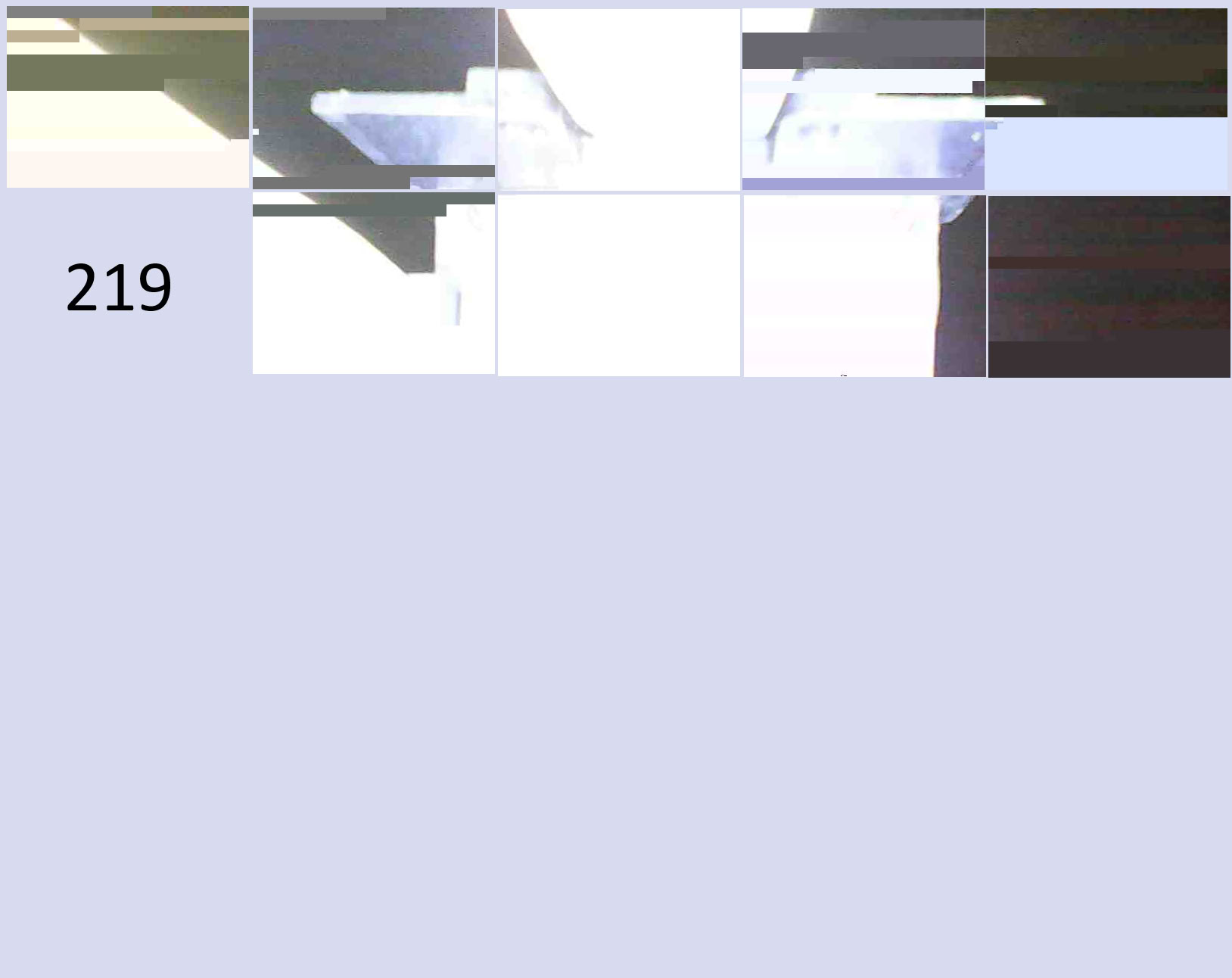
As for the audio - I every time got packets 0 to 36, and once 221 so I suupose it will be a long story)
7 Likes
wow. clever way, to send big image. sending it as puzzles. genius!
5 Likes
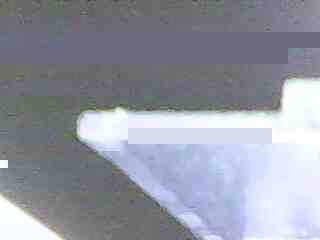
With a donation of Image-215 packets from N6RFM, combined with what I already had produced a fairly complete pic! SO nice to be able to combine decodes without having to do any manual sorting, etc.
7 Likes
 New images are being transmitted !!
I need to improve my setup because I’m having extreme difficulty receiving the signal from this satellite  . A new antenna is in the plans
1 Like