Yesterday, some Chinese media outlets reported that the JAMX01 satellite will be launched on August 25 via the Long March 6C (CZ-6C) rocket into a 500 km Sun-Synchronous Orbit (SSO).
The launch site is the Taiyuan Satellite Launch Center. Below is the frequency coordination for JAMX01: IARU Sat Coordinator
Thank him@BG7ZDQ for providing the relevant information.
This mission currently has two CubeSats (JAMX01/BAYI04) confirmed and awaiting launch, with identical launch times.
As for the orbital elements, we may need to use relevant tools to generate them.
JAMX01 AND BAYI04s SatNOGS DB entry all successful
The BAYI04 satellite inherits the frequency coordination from BAYI03; therefore, its downlink is at 437.443 MHz, BPSK 9k6.
That still doesn’t answer the question on if the IARU coordinated BY70-4 at all. As BY70-4 is not mentioned at all on the IARU website. (Meaning there was no attempt to coordinate it.) This just shows that BG2BHC told AMSAT the same thing your telling us now basically.
Thanks! Due to policy considerations, unfortunately it would not be appropriate for us to release the preliminary TLE directly before deployment.
But I can share some low-precision information that should be enough to build a rough orbit for preparation:
Orbit: approximately 530 × 545 km
Inclination: approximately 97.5°
Separation is expected at around 11:35 local time (UTC+8).
At the time of separation, the spacecraft should be roughly*near the southernmost part of Vietnam.
Passes predicted from this information may be off by several minutes, but hopefully it is enough to build an approximate orbit for initial preparation.
You can use the ASRTU-1 decoder for Harbin MicroSat as well.
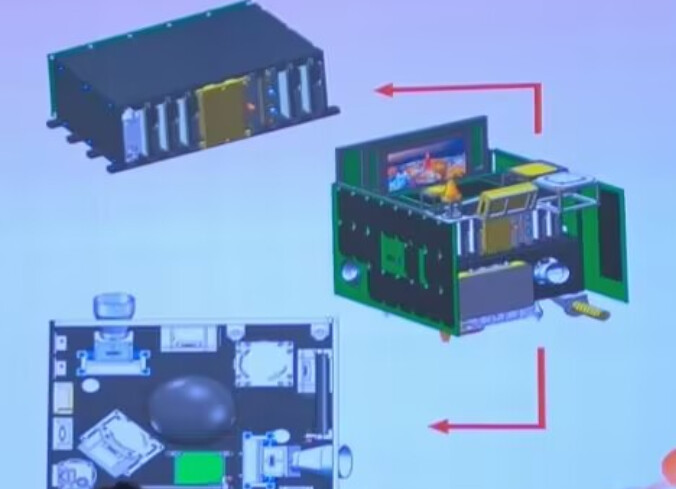
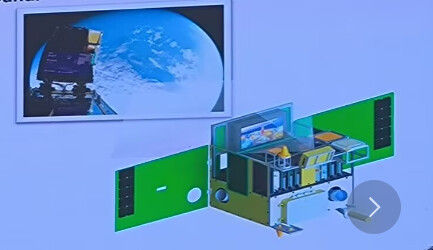
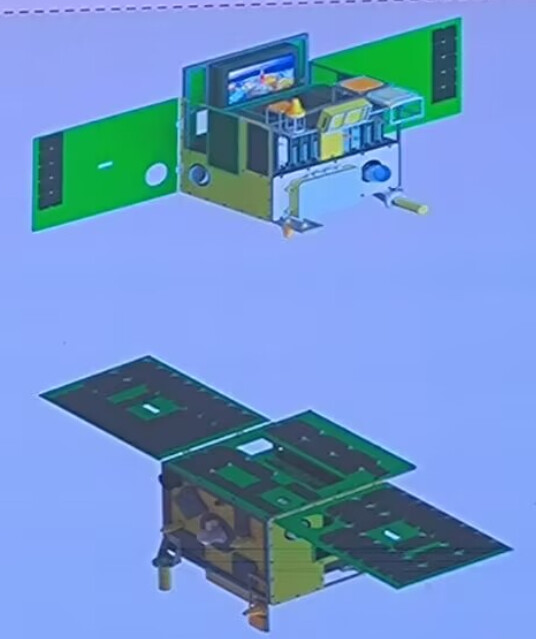
Harbin MicroSat (8104、BY-04、BY70-4、八一04星、8104 Harbin MicroSat、哈尔滨号) is a science education microsatellite developed by the LilacSat Team at Harbin Institute of Technology (HIT).
Drawing on its experience in the development of science education satellites and payloads, including the ASRTU Micro-Satellite, the LilacSat Team designed Harbin MicroSat as a next-generation platform for science education and student participation in space missions.
The satellite has a mass of approximately 18.7 kg and is designed to operate in a 500 ± 25 km Sun-synchronous orbit (SSO), with a planned on-orbit lifetime of one year. It is equipped with deorbit and autonomous collision-avoidance capabilities. Its attitude determination accuracy is ≤0.1° (3σ), pointing accuracy is ≤0.3° (3σ), and attitude stability is ≤0.05°/s (3σ).
The payloads include a high-definition camera, a science education display, a miniature camera, a polarization camera, and a short-message transponder. The high-definition camera provides at least 8 MP resolution and supports 4K video at 30 fps, while the 720p display can be remotely controlled from the ground to display educational content for space imaging activities.
The miniature camera has a 2592 × 1944 pixel sensor with a 90° field of view and supports 1920 × 1080 JPEG and SSDV imagery. SSDV images can be transmitted during ground-station passes with support for packet-loss retransmission.
The polarization camera has a resolution of 4112 × 3008 pixels, four polarization channels, and a spectral range of 400–760 nm. It is intended for polarization remote-sensing observations of the atmosphere and Earth’s surface.
The spacecraft uses X-band and UHF/VHF communications. Its amateur-radio frequency coordination is inherited from the 8103 satellite. The UHF telemetry downlink operates on 437.443 MHz using 9600 bps BPSK and is compatible with the ASRTU telemetry format. The X-band communication system supports data rates of at least 1 Mbps.
Harbin MicroSat is scheduled for launch aboard a CZ-6C launch vehicle on August 25, 2026, at approximately 03:30 UTC (11:30 Beijing Time).
“As a replacement, the satellite is sharing BY70-1’s IARU coordination and ITU API notification.”
BY70-3/8103 also has an IARU coordination for 437.443 MHz:(IARU BY70-3 record)
The same applies to BY70-3/8103 and BY70-4/8104: BY70-4 is sharing BY70-3’s previous coordination.
Was this reuse coordinared with IARU? Would be nice if they published records about reuse that the allowed. Since as of right now there is no document from IARU saying this sat was coordinated.