AST's BlueBird Launches

update: see latest post

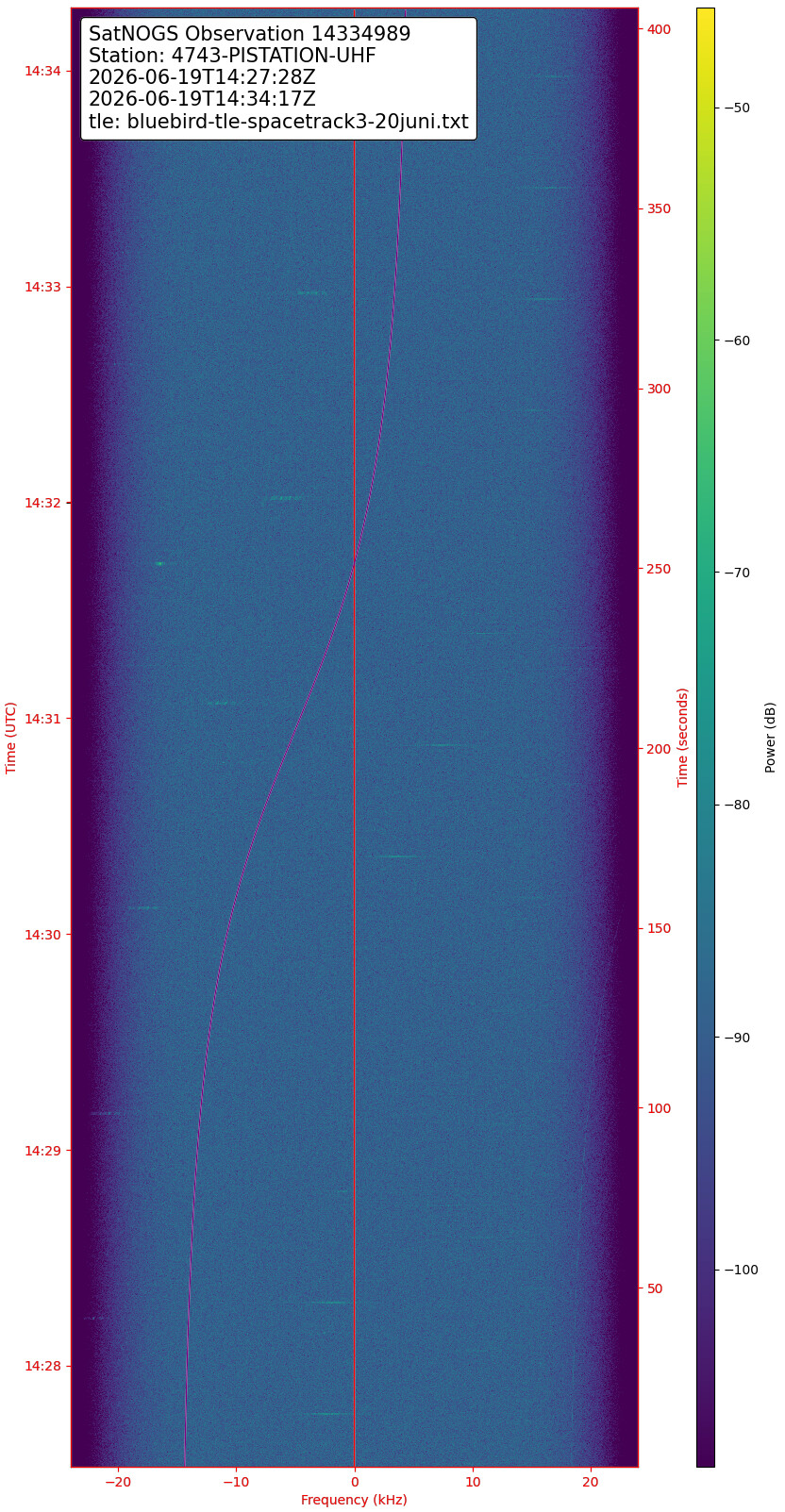
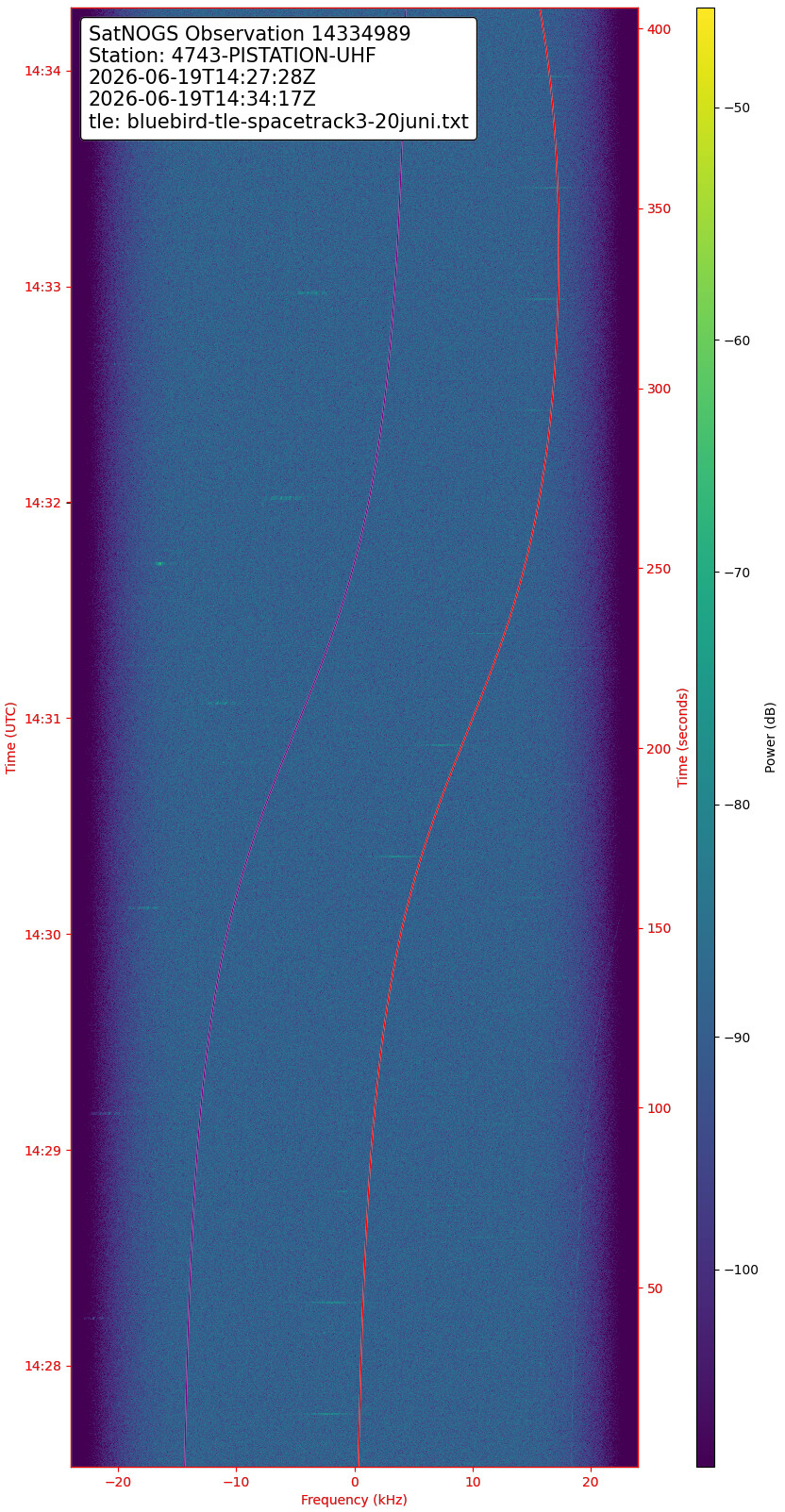
im trying running ikhnos on latest obs, and comparing with 3 latest tle from space-track and my custom tle that i post before (98001)

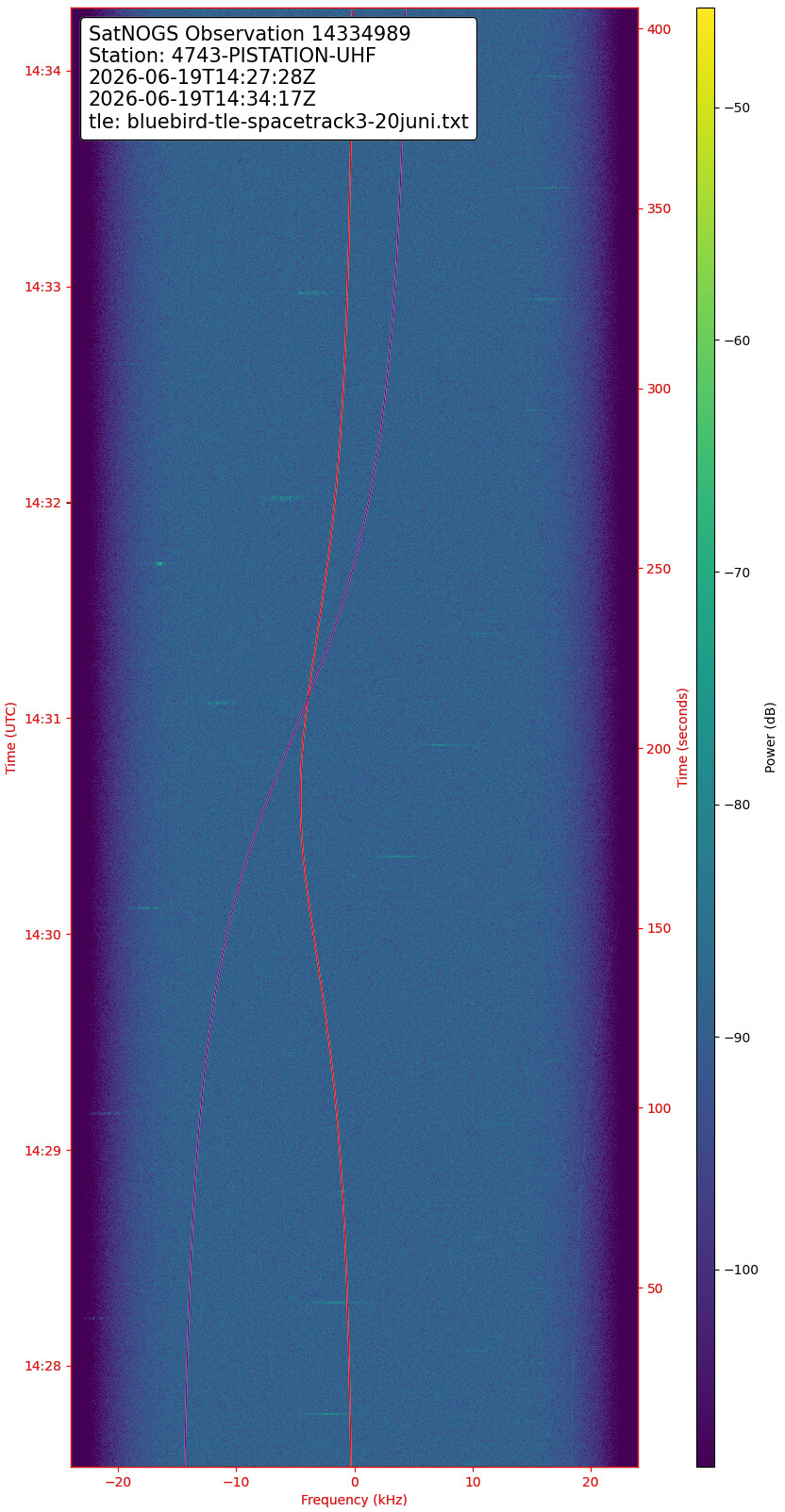
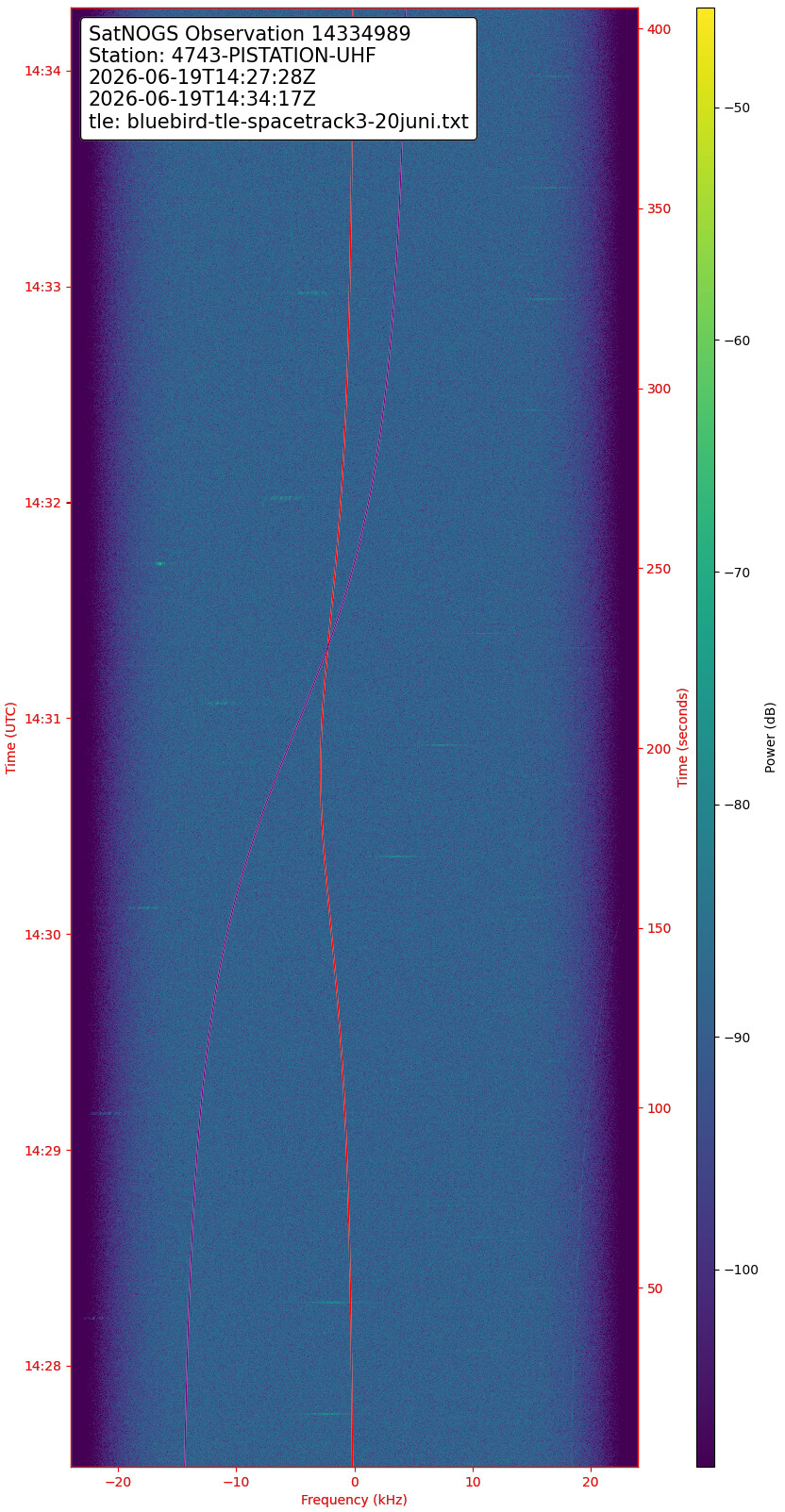
only my tle is match. that make me still wondering, is the tle from space-track accurate and not glitch, and is the signal trace on that obs come from bluebird or another sats. but if see the pattern and wide, im 98% sure that is from bluebird… and 100% until we can decode it..

0 AST BLUEBIRD 8
1 69589U 26139A   26170.71780463  .00000088  00000-0  22001-4 0  9995
2 69589  52.9946 251.0804 0003509 328.8183  31.2599 15.12496262   371
0 AST BLUEBIRD 9
1 69590U 26139B   26170.71753692  .00000000  00000-0  16999-4 0  9994
2 69590  52.9926 251.0769 0003622 340.8245  19.2610 15.12664947   366
0 AST BLUEBIRD 10
1 69591U 26139C   26170.71737024  .00000125  00000-0  24007-4 0  9993
2 69591  52.9949 251.0787 0003441 347.5695  12.5211 15.12771431   364
BlueBird-8
1 98001U          26168.66982889  .00000000  00000-0  50000-4 0    09
2 98001  51.5900 261.1108 0001446   0.0000   2.5104 15.10066935    02

bluebird-tle-spacetrack3-20juni.txt (621 Bytes)

1 Like

Since all those Observations were off-frequency, the resulting audio files become harder to decode. I tried the one that had ~5 packets fairly close to center right at the beginning…

https://network.satnogs.org/observations/14325877/

… but still no luck. The beauty of an I/Q recording is that on replay, you can move the observed signal to the center of your output. Audio isn’t as flexible.

can you try the satyaml grsat on your iq file.

Sorry; don’t have any I/Q recordings from those new sats. I just meant it’s nice that with an I/Q file, you can center the signal for processing.

1 Like

i run again ikhnos and voila.. thats trace signal is from terestrial (purple line). not from sats:

1 Like

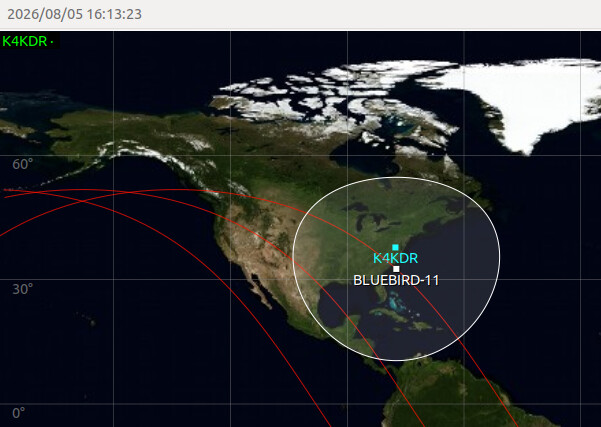
LAUNCH at 0749 UTC of a Falcon 9 from Canaveral with the SpaceMobile Bluebird 11 to 13 satellites

4 Likes

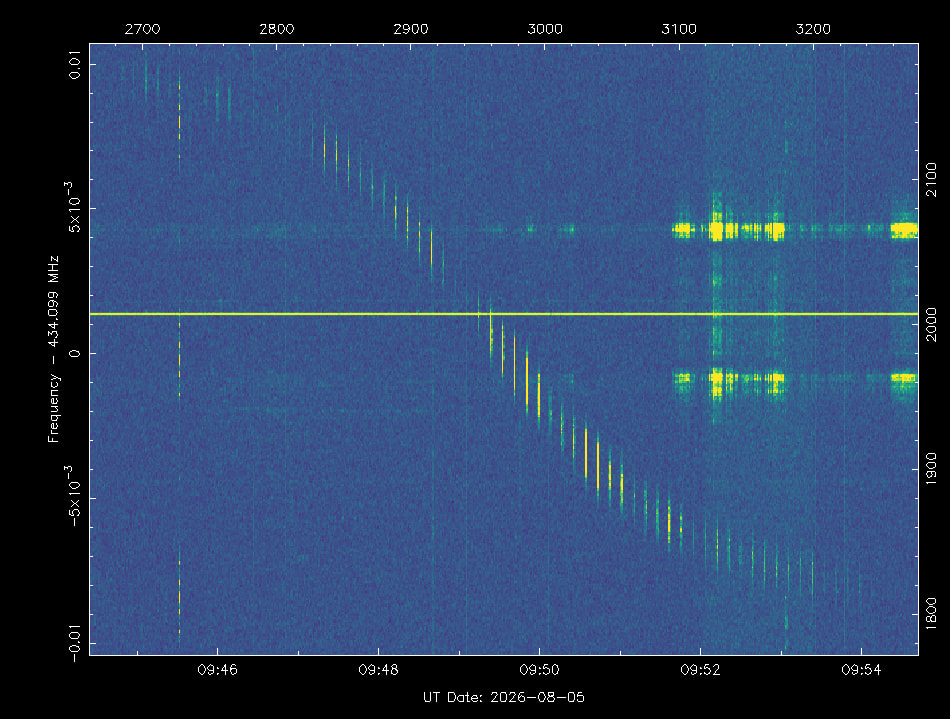
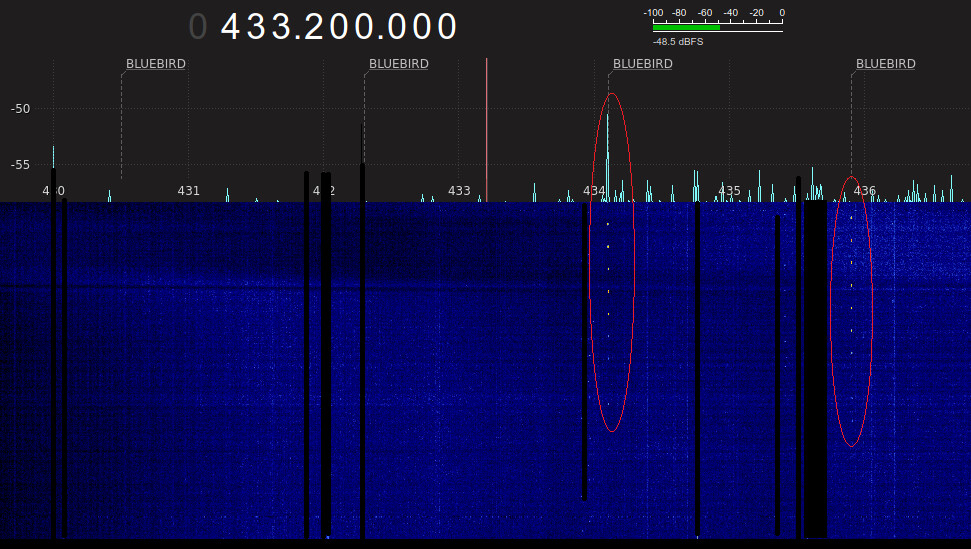
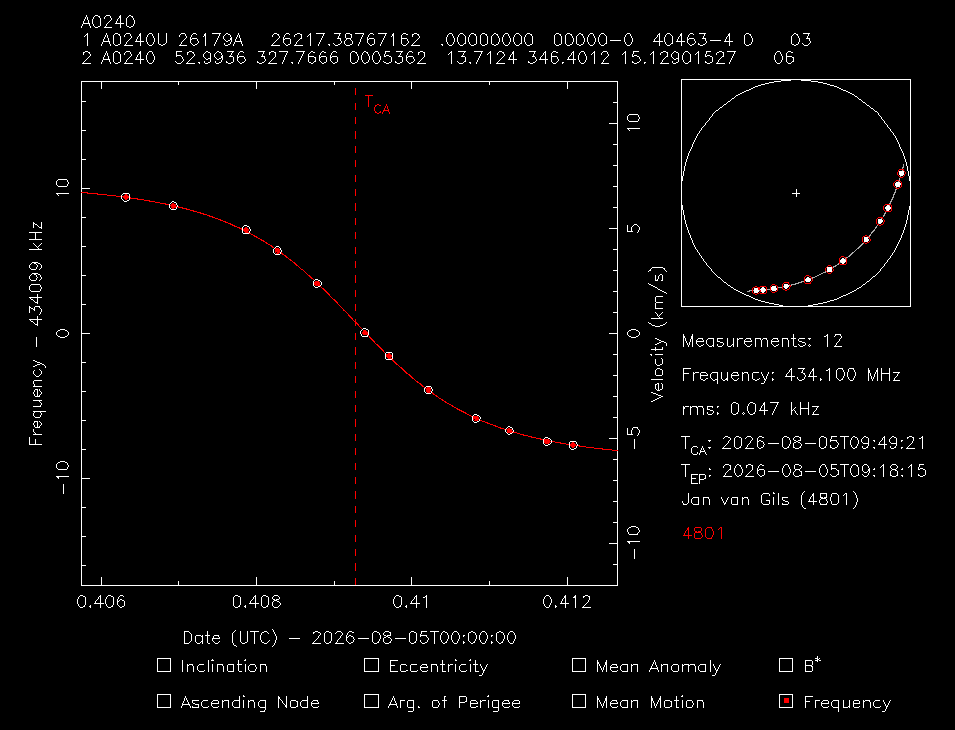
Going over my Doppler recordings, this is a new signal at 434.100 without any GP/TLE info I can’t be certain but based on the frequency and signal, my guess this is one of the new BlueBird satellites.

Jan | PE0SAT

5 Likes

Here are some initial TLE about them by @PE0SAT using the temporary NORAD IDs from DB:

BLUEBIRD-11
1 98251U 26178A   26215.79868481  .00000000  00000-0  16487-3 0    08
2 98251  52.9722  72.8498 0002777 270.1617 329.4206 15.20712024    09
BLUEBIRD-12
1 98250U 26178A   26215.79868481  .00000000  00000-0  16487-3 0    07
2 98250  52.9722  72.8498 0002777 270.1617 329.4206 15.20712024    08
BLUEBIRD-13
1 98249U 26178A   26215.79868481  .00000000  00000-0  16487-3 0    05
2 98249  52.9722  72.8498 0002777 270.1617 329.4206 15.20712024    06
2 Likes

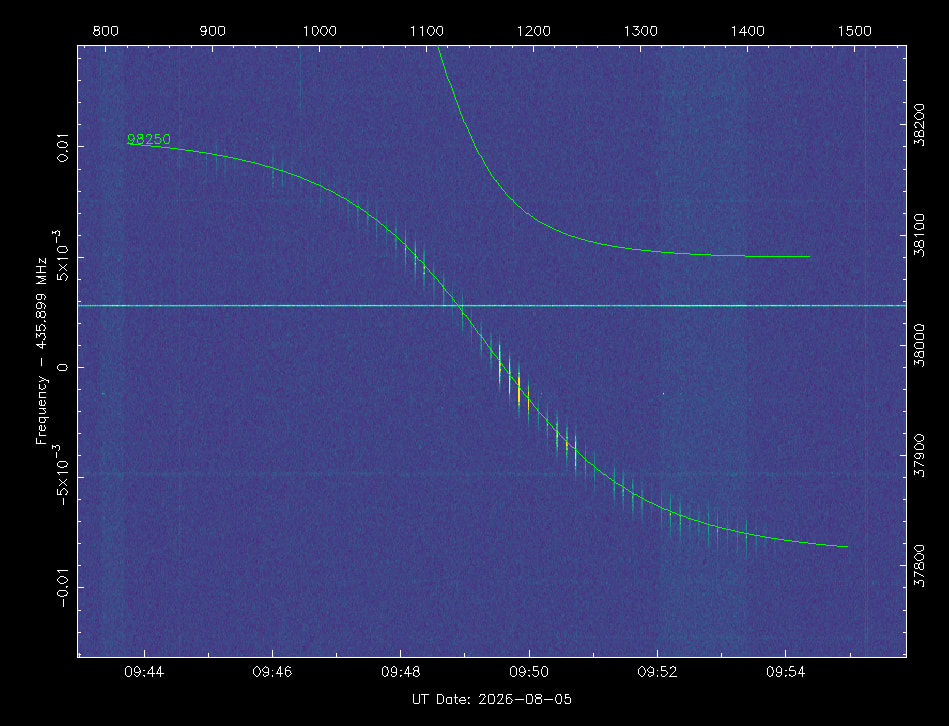
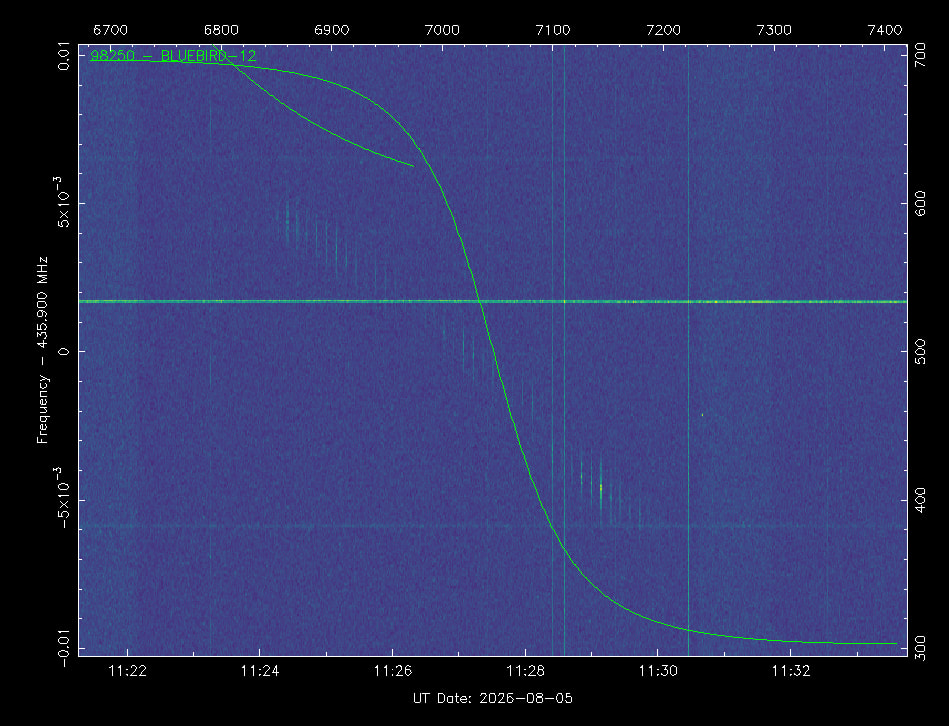
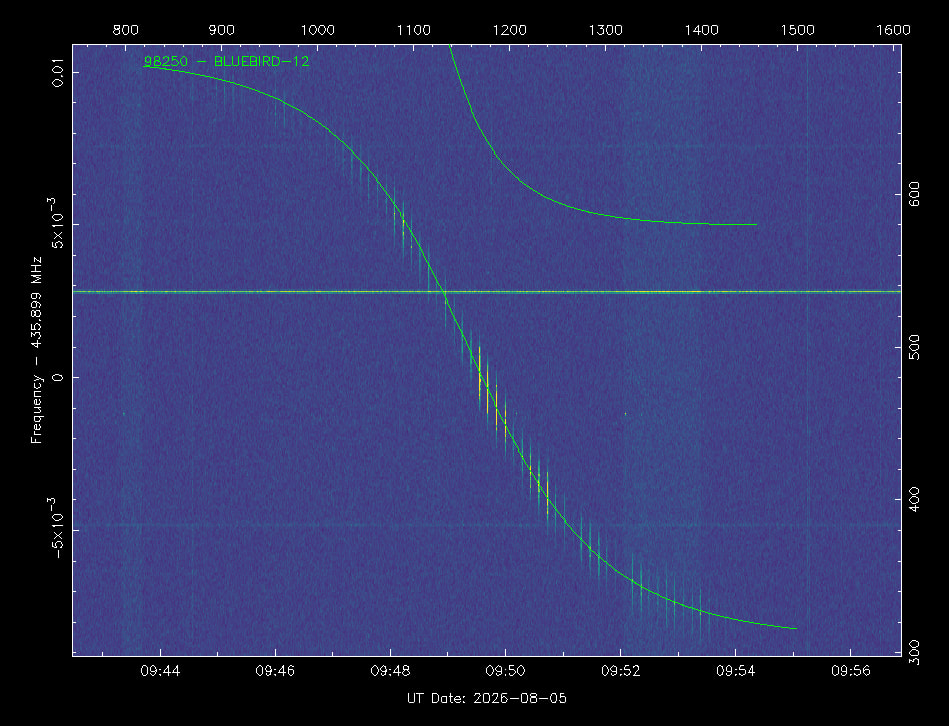
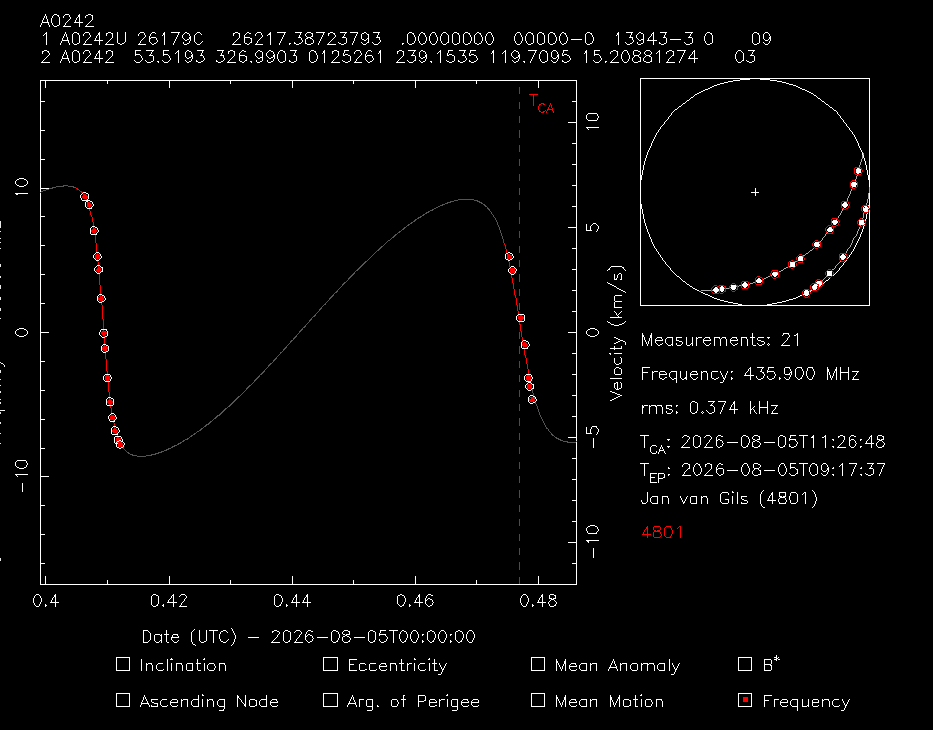
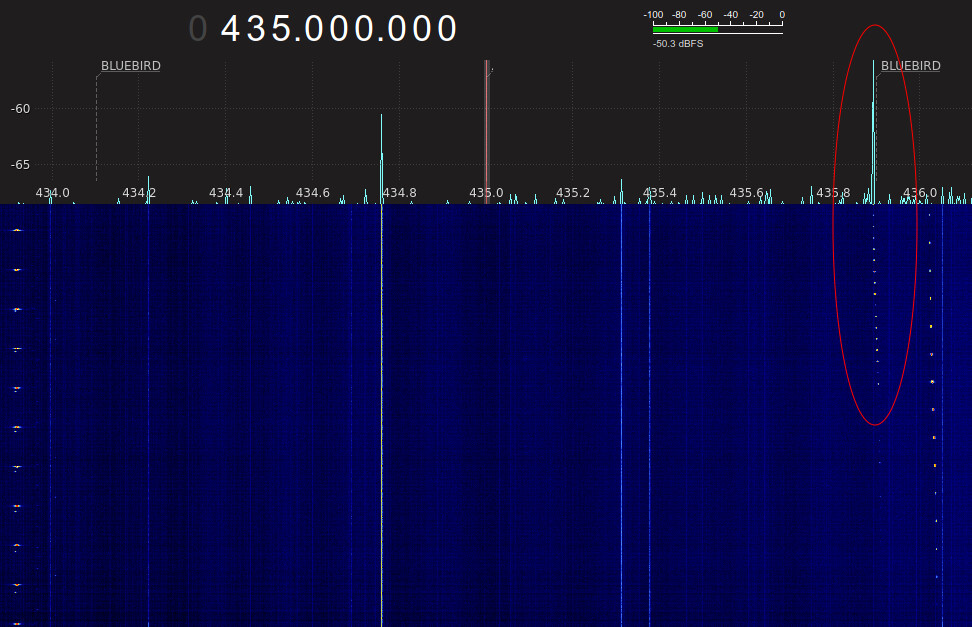
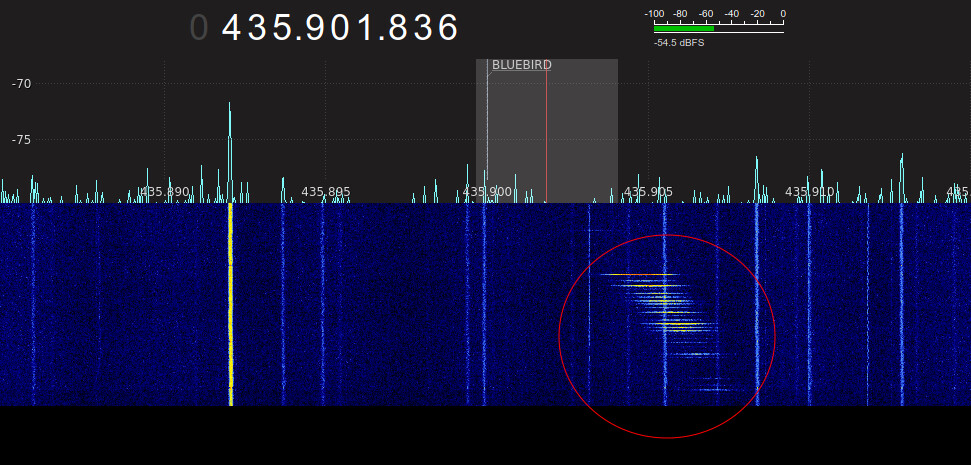
Also a signal at 435.900 MHz

Jan | PE0SAT

3 Likes

Some updated TLE generated by @PE0SAT and based on the above observations:

BLUEBIRD-11
1 98251U 26178A   26217.40926034  .00000000  00000-0  16487-3 0    07
2 98251  52.9722  65.3832 0002777 270.1617 151.7660 15.20712024    08
BLUEBIRD-12
1 98250U 26178A   26217.40926034  .00000000  00000-0  16487-3 0    06
2 98250  52.9722  65.3832 0002777 270.1617 151.7660 15.20712024    07
BLUEBIRD-13
1 98249U 26178A   26217.40926034  .00000000  00000-0  16487-3 0    04
2 98249  52.9722  65.3832 0002777 270.1617 151.7660 15.20712024    05

There are some signs that maybe the satellite have changed their orbit, but need more data to verify such a claim.

Based on the above I’m going to schedule a couple of observations in Network.

3 Likes

This pass with a signal on 435.900 MHz is causing some confusion.

Lets monitor the coming hours.

Jan | PE0SAT

3 Likes

With some updated calculations by @PE0SAT here are the updated TLE that fit better on the passes:

BLUEBIRD-11
1 98251U          26217.47711763  .00000000  00000-0  50000-4 0    01
2 98251  51.5900 331.3883 0001446   0.0000 127.5539 15.20563920    06
BLUEBIRD-12
1 98250U          26217.47711763  .00000000  00000-0  50000-4 0    00
2 98250  51.5900 331.3883 0001446   0.0000 127.5539 15.20563920    05
BLUEBIRD-13
1 98249U          26217.47711763  .00000000  00000-0  50000-4 0    08
2 98249  51.5900 331.3883 0001446   0.0000 127.5539 15.20563920    03


4 Likes

Interesting pass over the Eastern U.S…

No signals seen until the estimated TLE (thanks!!) place the objects over the Atlantic.

Unfortunately, they did NOT decode as the 2k4 Light-1 frames present on previous Bluebird deployments. However, I was sacrificing a lot of SNR to monitor 10M of spectrum, so I’ll check future passes zoomed in to more normal BW and will try again.

(as I’m already late for appointments, cannot do any further testing until tonight)

4 Likes

From this tweet:

https://x.com/planet4589/status/2085126201878737210

… it sounds like the TLEs for these objects are:

A0240
1 A0240U 26179A   26217.38767162  .00000419  00000-0  40463-4 0  9994
2 A0240  52.9936 327.7666 0005362  13.7124 346.4012 15.12901527    17
A0241
1 A0241U 26179B   26217.38766398  .00002403  00000-0  14967-3 0  9999
2 A0241  53.0029 327.7324 0003751 306.3228  53.7417 15.13411508    13
A0242
1 A0242U 26179C   26217.38723793  .00003463  00000-0  13943-3 0  9992
2 A0242  53.5193 326.9903 0125261 239.1535 119.7095 15.20881274    14
2 Likes

Using my yesterdays recordings:

A0240: 0.046700 kHz 434.099783 MHz | A0240
A0241: 0.049353 kHz 434.099762 MHz | A0241
A0242: 0.065339 kHz 434.099811 MHz | A0242
Identified 3 candidate(s), best fitting satellite is A0240 - A0240.

A0240: 0.437664 kHz 435.899545 MHz | A0240
A0241: 0.421521 kHz 435.899541 MHz | A0241
A0242: 0.374465 kHz 435.899841 MHz | A0242
Identified 3 candidate(s), best fitting satellite is A0242 - A0242.

Jan | PE0SAT

4 Likes

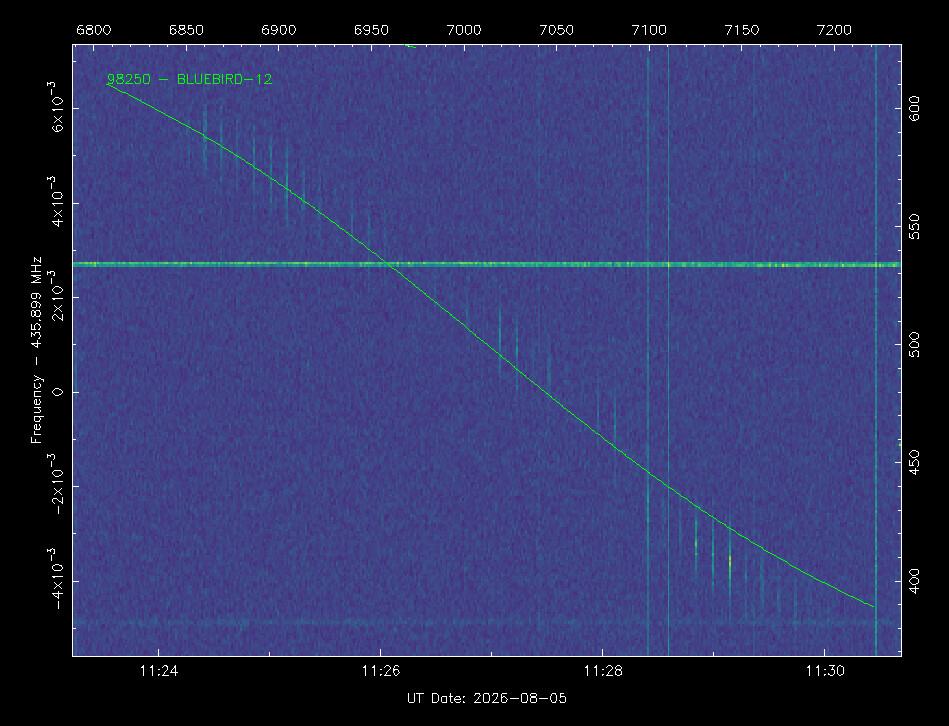
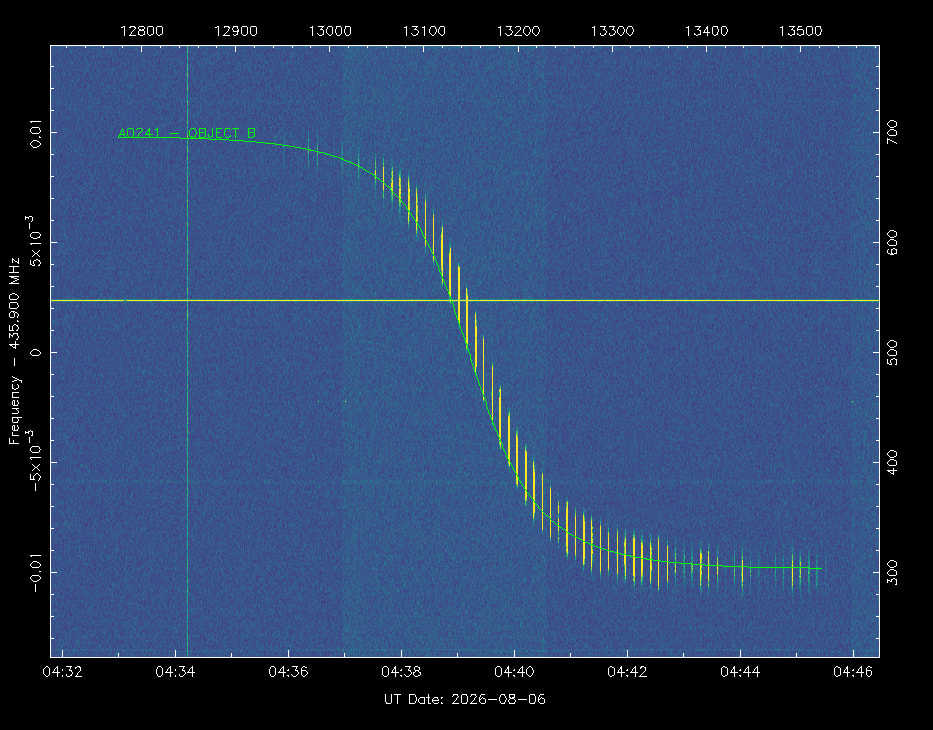
Looking at this mornings recording, we have a signal at 435.900 MHz following A0241, both A0240 nor A0242 are a match.

0 OBJECT B
1 A0241U 26179B   26217.38766398  .00002403  00000-0  14967-3 0  9999
2 A0241  53.0029 327.7324 0003751 306.3228  53.7417 15.13411508    13

Jan | PE0SAT

3 Likes

For tonight’s pass over the Eastern U.S., I zoomed in to only 2 of the freqs. The only signal this time was on 435.900 (along with an UNK signal slightly higher).

Still no luck decoding it, so next good pass I’ll zoom in to a normal bandwidth when watching a single freq and hope the signal is there on 435.900 again.

2 Likes

Well, the second (lower) pass tonight was particularly disappointing. Despite the fact that the satellites were very much over the U.S. land mass, the signal appeared on 435.900 right on time. Until… it… stopped!

Since I was setup with normal decimation & resulting bandwidth for standard decoding, just a LITTLE more SNR and we would have had 2k4 frames. I’ve tried both w/ I/Q and audio replay, but even that last / strongest packet was just below the threshold.

Jan, have you bothered to decode any of your strongest packets? If not, could I please borrow an I/Q or audio recording?

On the previous BlueBird deployments, we saw the UHF downlinks operate for just a few days and then those signals were halted - I would guess after the satellites were fully commissioned. Perhaps we just witnessed that moment here… of course I don’t know - only a guess.
2 Likes

I wonder what happened to the 3rd of the those three Buebird’s launched?

Based on the current GP data:

A0242 has an elliptic orbit Perigee x Apogee 417 x 589 km

The others:

A0240: Perigee x Apogee 524 x 531 km
A0241: Perigee x Apogee 523 x 528 km

It is to soon for conclusions.

Jan | PE0SAT

2 Likes