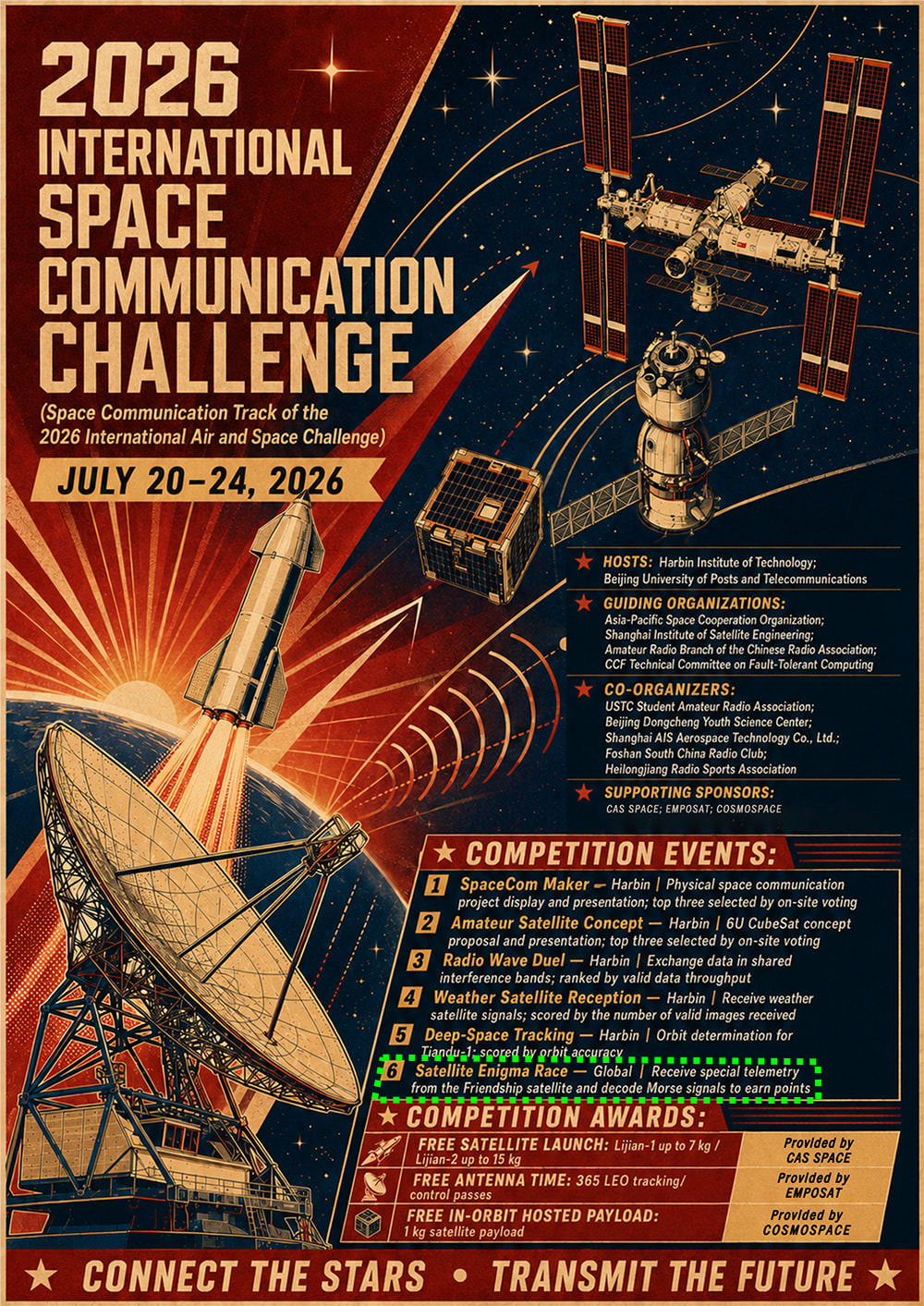
One of their six so-called competition tracks is "Satellite Enigma Race" :
This globally open amateur satellite-contact activity encourages teams to receive satellite telemetry signals faster and better. Within the designated competition window, teams or individuals earn points by receiving special telemetry signals from the ASRTU-1 “Friendship” satellite and performing decoding and puzzle-solving operations.
Unfortunately the organization committee missed to explain how to do puzzle-solving operations (6.6) and to send the special telemetry signals worldwide.
(Only) station LU3ARN picked up decodeable beacons (14593852 and 14579450).
Sorry for the very late reply — I only noticed this message now.
We eventually won the competition by a significant margin and received the opportunity to launch a satellite as the prize. This will help us continue our efforts to provide new amateur radio satellites for the community. Suggestions and feedback from the community are always welcome.
The competition was organized under a very tight schedule. The organizer, BG2BHC Wei, was extremely busy, so the event was mainly promoted on Twitter, and the final rules were only announced on-site and in the group chat a few hours before the competition started. Unfortunately, there was not much we could do about that.
According to Wei, there will be a truly global-scale competition in the future. I have shared some related information in the ASRTU-1 satellite Telegram group as well.
The special telemetry format was transmitted on 436.210 MHz, with one frame every 30 seconds. Each frame started with 03 22 00 00 FF, followed by ASCII-encoded pinyin names of objects related to Chinese aerospace and their unique keys.
Participants could submit the decoded information through the designated website:
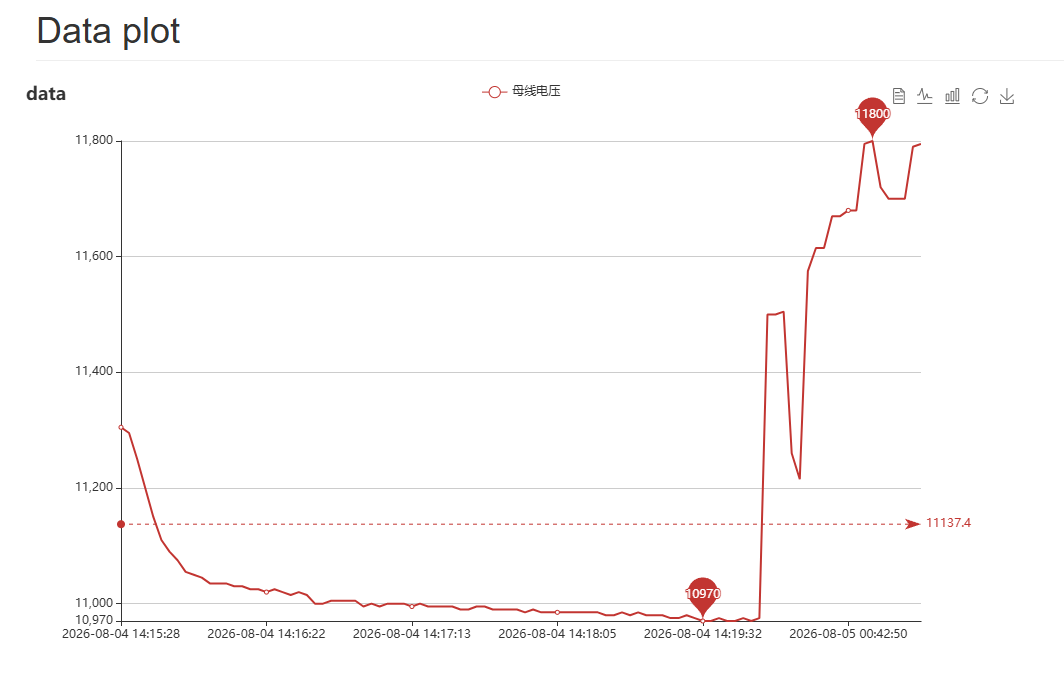
The satellite did indeed transmit a code every 30 s when it was activated from the ground station in China but it suspended the transmission when the battery level reached a certain limit. Therefore the satellite was active for 3-4 orbits. It was reactivated in the next orbit visible from China. That’s why the only colleague, apart from the Chinese, who received and uploaded several codes is CM6JVR from Cuba. I monitored all passes over Greece but the satellite was active during one pass only.
I am not sure whether everyone is aware of this. ASRTU-1 is equipped with deployable solar panels, but unfortunately, the deployment failed after launch. Therefore, the satellite has been facing power constraints throughout its mission. (In fact, just a few days ago, I uploaded new commands to help ASRTU-1 recover from an over-discharge state.)
During the competition, the transmissions were activated by uplink commands from the Harbin Institute of Technology ground station. Each activation enabled transmission for about four hours, followed by a charging period. Therefore, some regions may not have been able to receive the transmissions during their passes, depending on the satellite’s power status and operation schedule.