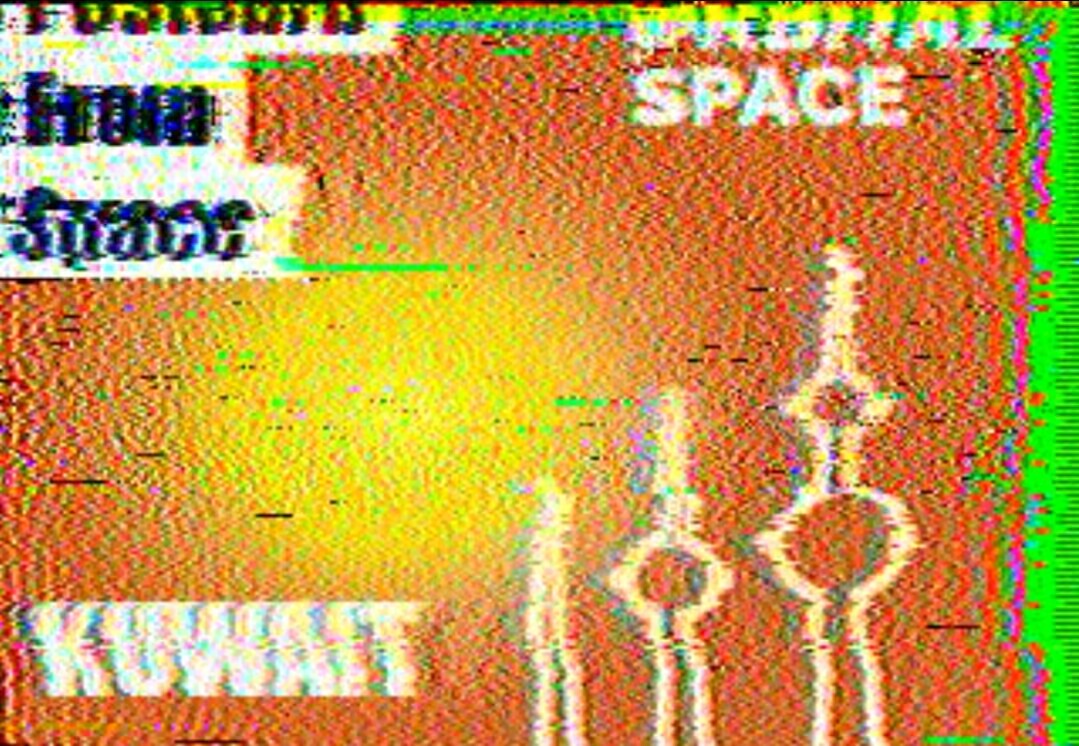
Same here.
9k6 is strong, but SSTV is too weak to get decoded.
2 Likes
First of all thanks for this event. We all understand that learning process is mostly not a easy straigth pass.
As for technical aspect - from my point of view the signal was weak but not so much weak as quiet. I made a screenshot during reception - your satellite (1W(?) TX) and Vizard-Meteo (0,63W) in similar (exept unknown satellite orientation) conditions and same setup (7 el. Yagi +RTL SDR V4).
Telemetry signal is still strong +15dB over -95 noice floor. SSTV +10..15db over NF
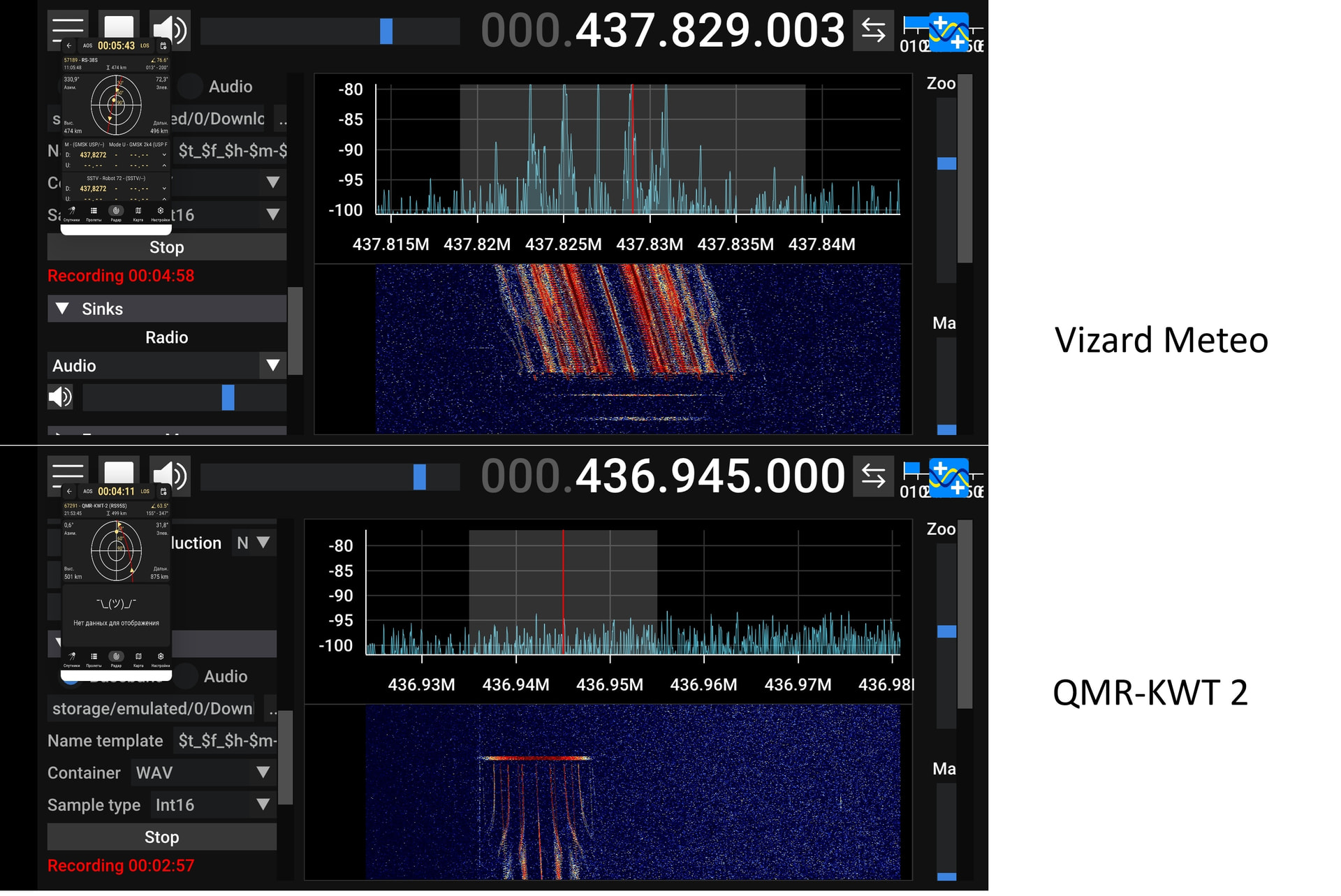
So the result was not so spectacular
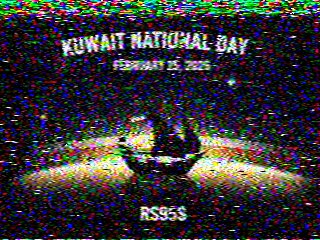
I`ll continue monitoring of your satellite automatically or manually as the event continues
I’ll keep IQ file for some time if needed
4 Likes
Thank you for your valuable insights. We will work on adjusting the transmission configuration to improve the quality of SSTV events
5 Likes
There are some technical details about settings dubai mentioned:
All telemetry is now transmitted at 9600. There are several reasons for this.
– This saves quite a lot of energy.
– Short bursts are less annoying when the repeater is operating.
– It’s easier for operators to load images for SSTV activity onboard.
Power is reduced to 30 dBm (initially it was 33 dBm), and the reason is to save power. However, the same power settings are used for telemetry, SSTV and repeater’s transmissions. So, additional reports about SSTV power are appreciated. Generally, it’s expected it will be harder to receive SSTV in good quality than take telemetry, just because it requires more signal-to-noise ratio.
About polarization used. 435 MHz antenna is cross-dipole, it transmits quite good RHCP in every direction, except two narrow nulls. However, 144 MHz antenna disturbs 433 MHz polarization in some directions, where it’s more elliptical, than circular (so BG2GFC was right in another topic). Dipole is used for 144 MHz, so polarization is linear here.
With software update fixing repeater volume issue, some additional power saving features were introduced. For example, receiver enters “sniff” mode, when repeater is not activated for a minute, saving a lot of power during ocean and Antarctic passing.
All power savings together allow to increase repeater activation time and SSTV sessions from about 12 hours to 24 hours, and may be even more in the future, with less battery resource usage. Power budget on 1U-cubesat is quite tight, so every 50 mW are noticeable, so it’s quite challenging balance between ease of receive and session time and we have a lot of discussions about it.
10 Likes
- I (and perhaps the community as a whole) appreciate that you’re giving us a target to chase and another resource in space to play with.
- I understand there’s a ton of variables you’re trying to balance to keep from running the battery to zero and breaking something.
- THANK YOU for sharing your thought processes. I will never build-and-launch a satellite. But I get joy and excitement from hearing your struggles and observing your successes… and listening to the results on my radio!
Keep up the work, and thank you for the feedback. I may not have posted the informative charts and measurements. I DID observe the same effects, and I find that feedback you sent VERY interesting!
C
3 Likes

By popular demand we are extending the SSTV event over the weekend with a new image 
4 Likes
Any details on specific times for weekend activation? I monitored 1056UTC pass over UK this morning (26-Feb) but only heard telemetry so I guess you had stopped SSTV before then.
1 Like
We didn’t stop SSTV! It is still on and will continue to be on over the weekend
2 Likes
Okay, I scheduled some observations and the satellite is only transmitting TLM…
1 Like
Same here - I received some SSTV signals here in Cambodia during the scheduled time, but too weak to decode. Then yesterday (Thursday) I received strong TLM signals around 3pm UTC but no SSTV  Anyway, I’ll monitor over the weekend, but unfortunately (for me), there are only low elevation passes.
2 Likes
About polarization used. 435 MHz antenna is cross-dipole, it transmits quite good RHCP in every direction, except two narrow nulls. However, 144 MHz antenna disturbs 433 MHz polarization in some directions, where it’s more elliptical, than circular (so BG2GFC was right in another topic). Dipole is used for 144 MHz, so polarization is linear here.
Hhh,Unexpectedly, I really guessed it right. I will continue to receive SSTV to see how things go.
0252UTC OVER PN27 MAX 62°el
Only hrd TLM NO SSTV
A technical issue stopped SSTV transmission. We are working on getting the transmission activated again as soon as possible
2 Likes
SSTV transmission is active now. Enjoy
4 Likes
1037+utc pass over UK. Sstv heard. Not tried to decode yet since working. Sounded like 2 images, 1st v. weak, 2nd probably OK but possibly incomplete.
1 Like
 .
.
… And another 2 images heard on1210utc pass io83og. Hopefully a couple of reasonable decodes in these recordings when I check later.
UPDATE: processing revealed 3 identifiable decodes and 1 almost pure noise. This is the best of the decodes
27-Feb-2026 1217utc
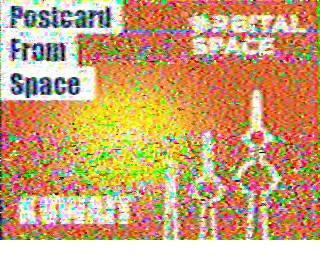
1 Like
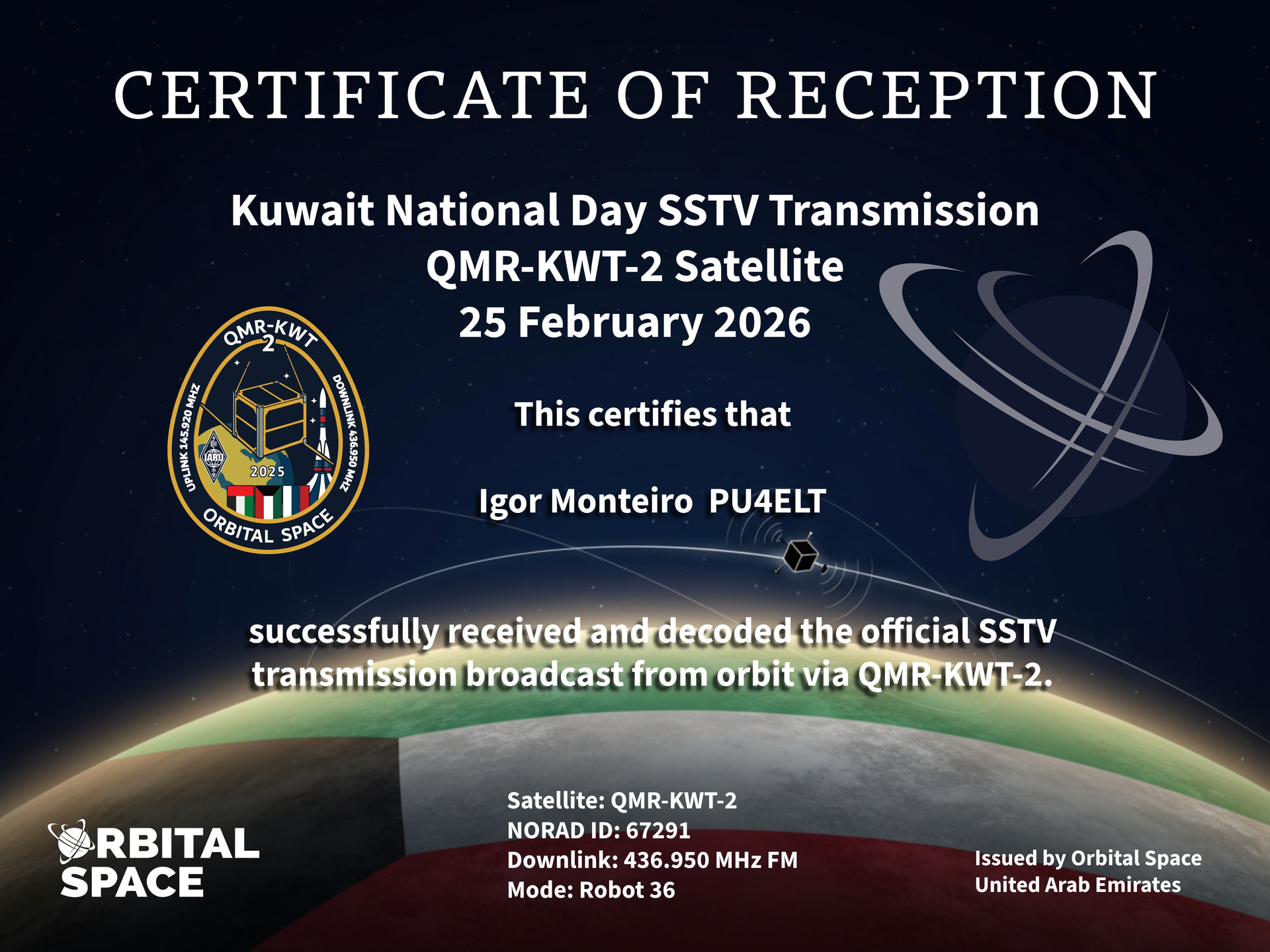
Thank you so much for the certificate @dubai !!!
- 2026-02-27 12:39UTC
QMR-KWT-2 (RS95S) over Brazil !!
!!

There has definitely been an improvement in SSTV transmission 
3 Likes