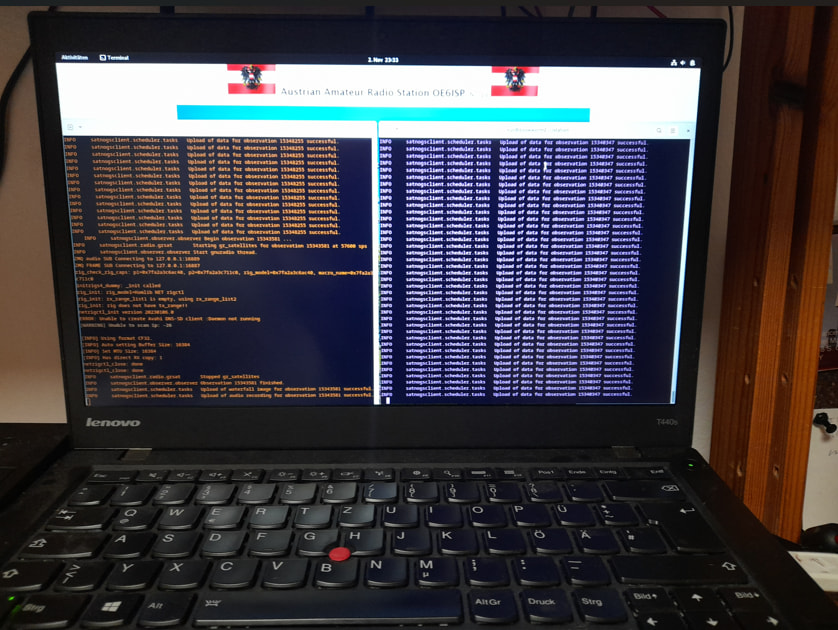
This topic might be interesting for users who run more than one Satnogs-client.
After running several Raspi’s and PCs for years - one for each station - I was looking for a more powerful, reliable and less complex solution.
Using the docker-based installation Tutorial: How to install satnogs groundstation for Newbie & PRO (for STATIC and ROTATOR) I now have my two SDR’s, the Lime and the Zynq put on a single notebook. The two instances are running in different station-directories. Care must be taken, when using identical SDR-devices. They must be identified by their serial-numbers for correct assignment to the client-instances.
I have tested this configuration for several weeks now and it is running absolutely stable.
And … no more slow and overheated Raspi’s and no more need to manage n devices.
I agree, cheap used or refurbished MiniPC’s (Dell, Lenovo, HP and alike) might be a much better and more stable solution now. Raspberry PI’s are getting more expensive and without special care they often tend to die.
I’m running several stations on such Linux MiniPC’s (Ubuntu or Mint), some of them with two or three SDR’s connected to it.. sharing the same satyaml directory..
That sounds wonderful! I am currently running multiple programs on a single PC, so running them in separate Docker containers seems like a great approach for the future. It would also eliminate the risk of device conflicts and mix-ups between SDR dongles!
Great to see this being adopted by more people, I have been running multiple SatNOGS clients (non docker) for many years.
And I can confirm that refurbished mini PC’s are a great way to combine multiple services.
As an example: Station PE0SAT-21 is running a SatNOGS client with a HydraSDR RFOne, two STRF observations, one for S-band (HackRF) and one for UHF 400 - 404 MHz (AirSPY mini) and an ADS-B receiver using the Ultrafeeder solution.
That is a very impressive setup!
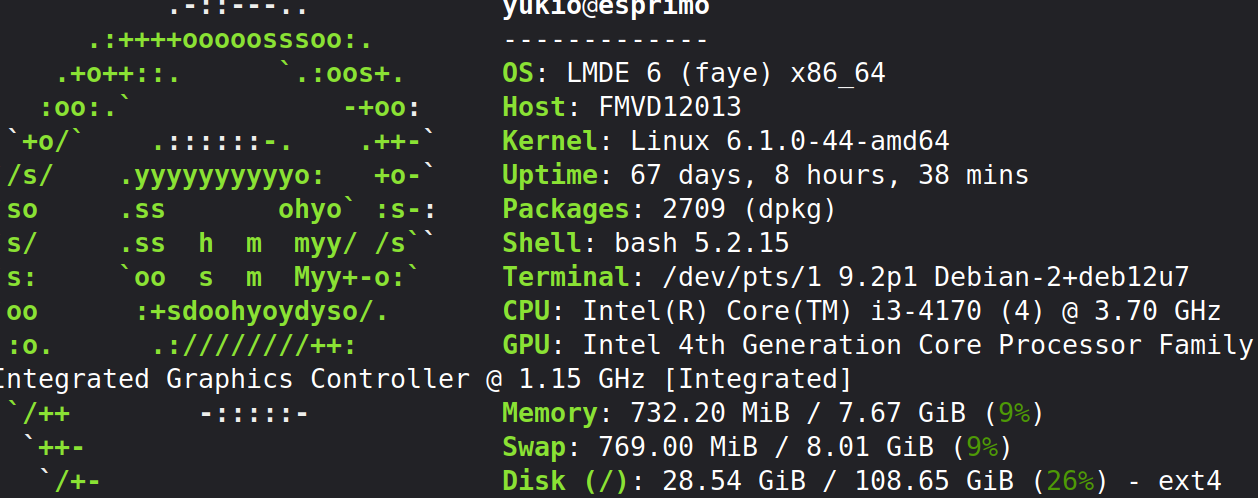
My refurbished Fujitsu ESPRIMO cost only around 7,000 JPY (about $45 USD), but it has been working tirelessly 24/7 for several months without a single break. Refurbished Mini PCs are truly amazing value for money!
Although I think that high up-time values are a great indication, make sure you update the host regular.
The last couple of weeks there have been some nasty security updates, also in the kernel so make sure to update.
Example:
Linux kernel version 6.1.0-44 (commonly found in Debian 12 Bookworm) is affected by critical security vulnerabilities, including local privilege escalation (LPE) flaws such as the “Dirty Frag” zero-day vulnerabilities (CVE-2026-43284 in ESP/IPsec and CVE-2026-43500 in RxRPC)
The lastest Debian Bookworm kernel should be:
The latest version of the 6.1 Linux kernel for Debian 12 (Bookworm) is package version 6.1.190-1
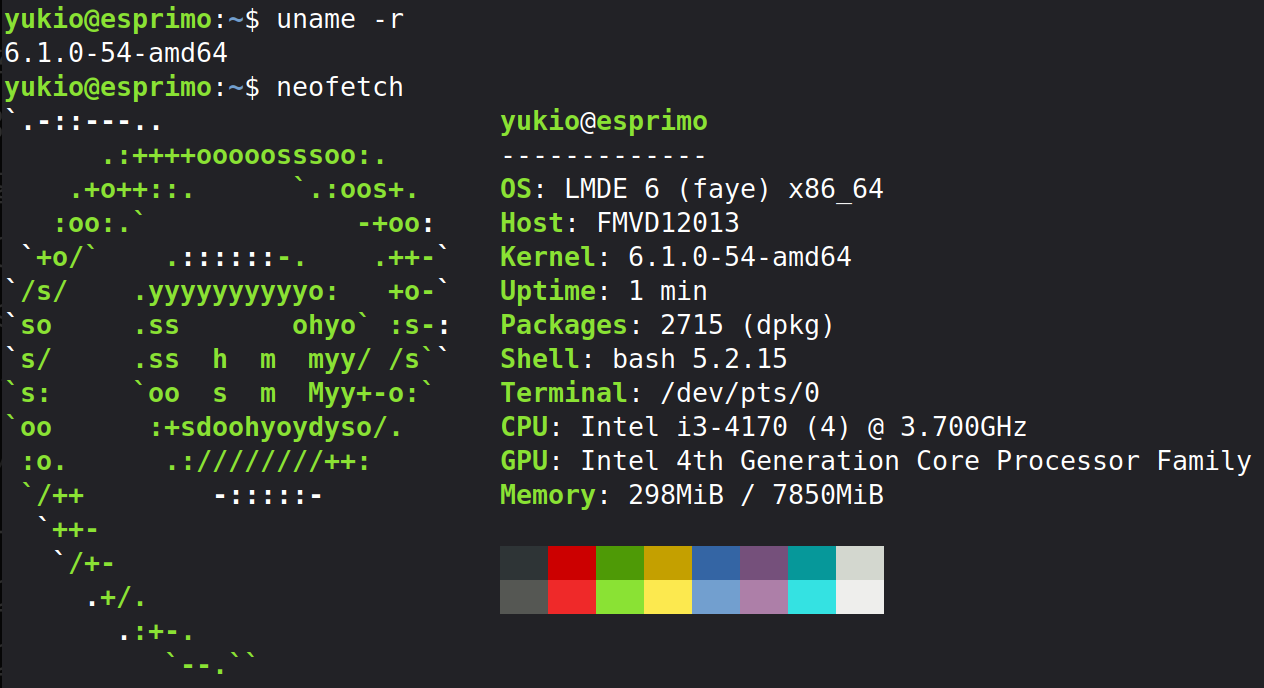
Thanks for the heads-up, Jan! I was almost a devout follower of the “If it works, don’t touch it!” rule, but I took your advice and updated right away. Now safely running on kernel 6.1.0-54-amd64. I really appreciate the security advice!